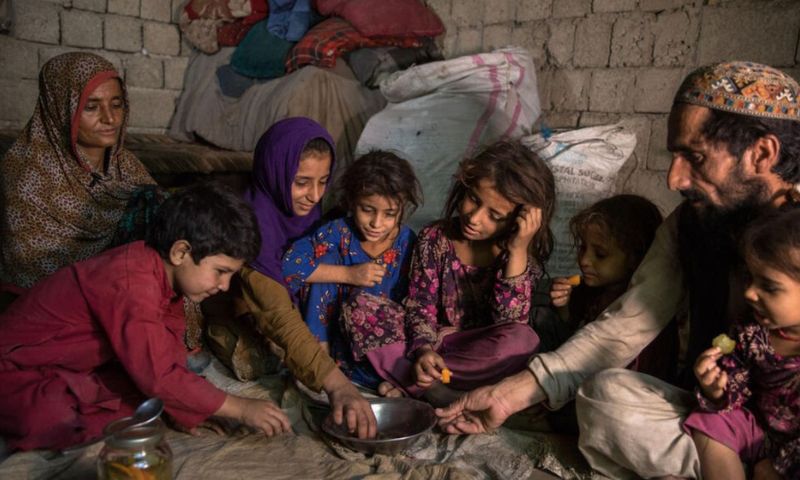
KABUL, Afghanistan: Malnutrition is rising across much of Afghanistan as soaring food prices, deepening poverty, repeated climate shocks and declining humanitarian assistance push vulnerable families further into crisis, according to a new United Nations-backed assessment.
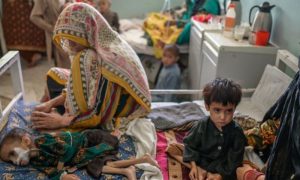
The Humanitarian Situation Monitoring (HSM) report found that 53% of surveyed communities had reported an increase in malnutrition cases identified by health workers or clinics.
Among those communities, 44% said the number of cases had doubled in the previous three months. The sharpest increases were reported in Panjshir, at 89%, Faryab at 85% and Laghman at 83%.
The assessment was conducted by REACH, a UN-backed initiative, between May 10 and June 7. It surveyed 12,854 key informants across all 401 districts of Afghanistan.
The findings point to worsening food insecurity and growing pressure on households already struggling with poverty and displacement.
The report said 21.9 million people, or nearly 45% of Afghanistan’s population, require humanitarian assistance.
Food prices and hunger worsen
The assessment found that 55% of communities had reported a significant increase in food prices during the previous 30 days.
Another 63% reported major and sudden price increases in local markets.
At the same time, 87% of communities said households were selling more livestock than usual because they lacked sufficient income or food. The finding suggested that many families were depleting their remaining assets to cope with the crisis.
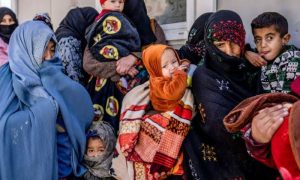
Overall, 65% of communities described food insecurity as a serious or very serious problem.
A quarter of communities said most residents had not had enough food during the previous month.
Children are also being pushed into work as families struggle to survive. Key informants in 60% of surveyed communities said children were working because households lacked enough food or money to meet basic needs.
Poverty drives displacement
Economic hardship remained the leading driver of displacement, the assessment found.
Some 80% of communities identified financial hardship as the main reason for displacement, while 79% cited unemployment and poverty.
Food shortages were reported as a reason for displacement in 75% of communities. Other factors included drought at 40%, limited access to basic services at 31%, conflict at 15% and flooding at 12%.
Recent flooding has further increased humanitarian needs.
Some 15% of surveyed communities reported severe damage to homes following floods, particularly in eastern and northern Afghanistan.
Flooding also displaced residents in several provinces. Uruzgan, Samangan and Baghlan were among the areas reporting the heaviest impacts.
The combination of climate shocks, rising prices and weak household incomes is adding to pressure on communities already facing severe food insecurity.
Healthcare remains out of reach
Access to healthcare also remains severely constrained.
According to the assessment, 77% of communities cited shortages of medicines and medical equipment as the biggest barrier to healthcare.
Some 59% said medical treatment had become unaffordable.
More than half of communities reported shortages of specialised medical staff.
In 17% of communities, respondents said women could not safely or easily reach health facilities because of long distances or travel restrictions.
Worsening child malnutrition
Meanwhile, the UN World Food Programme (WFP) said one in three Afghans was now facing acute food insecurity and warned that it lacked the resources needed to contain the deepening crisis.
"It's tragic that too few are speaking up about the dire situation in #Afghanistan. This nutrition crisis, which we feel is spinning out of control, calls for the international community to demonstrate humanity, solidarity, and shared values." – @wfp pic.twitter.com/BnMvxw6rAC
— United Nations Geneva (@UNGeneva) August 4, 2026
WFP said 12 provinces had reached critical levels of acute child malnutrition, the highest number ever recorded.
Conflict, widespread unemployment, soaring food prices, shrinking humanitarian funding and disruptions to supply routes were fuelling the crisis, the agency said.
WFP said it had been able to provide food to only one in nine of the 14 million people now acutely hungry in Afghanistan because of funding cuts.
Also Read: Five Years of Taliban Rule: Afghanistan’s Humanitarian Crises Deepens
It warned that lifesaving nutrition programmes were being scaled back as needs reached their peak.
Child wasting, the most dangerous form of malnutrition, has reached critical levels in one-third of Afghanistan’s provinces, WFP said.
“The number of children being rushed to health centres is soaring and we’re seeing this visibly,” WFP Country Director for Afghanistan Aylieff said.
“Eighty per cent of the worst cases are children under two years of age and NGOs report that too many of them are arriving too late to be saved,” he warned.
Aylieff said shrinking humanitarian funding meant that “millions of acutely malnourished Afghan children are being turned away without assistance at the very moment when their lives are at risk”.
He said this was leading to preventable deaths.