



Key points
- Japan will test guided weapons at Australian ranges.
- Tokyo and Canberra also advanced joint laser development.
- The partnership reflects growing Indo-Pacific security concerns.
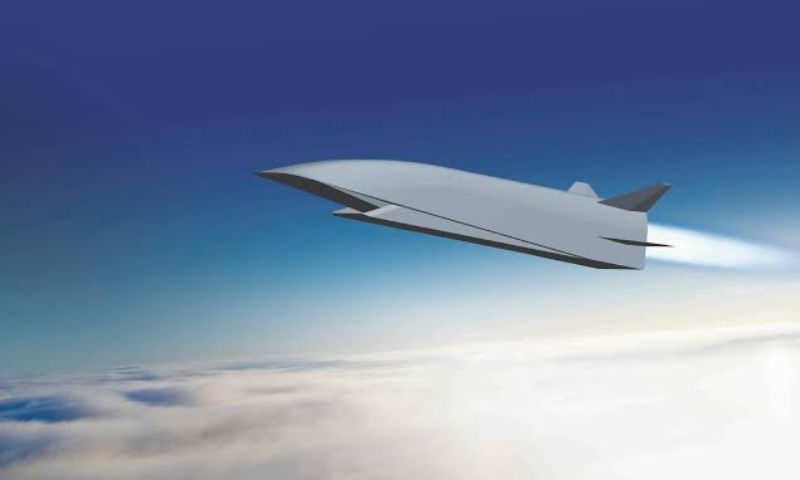
ISLAMABAD: Japan will test hypersonic missiles and other guided weapons at Australian military ranges under a new 10-year defence arrangement, according to a joint announcement on Tuesday.
The bilateral pact reflects a major expansion of security cooperation between the two countries amid growing strategic tensions in the Indo-Pacific.
Japanese Defence Minister Shinjiro Koizumi and Australian Defence Minister Richard Marles announced the agreement in Canberra on Tuesday.
Marles said it would provide an enhanced arrangement for Japan to use Australian missile-testing ranges over the next decade.
Koizumi described the planned hypersonic testing as a potentially “groundbreaking” step in bilateral defence cooperation.
Tokyo wanted to accelerate discussions to make the arrangement operational, he added. Australia has large, sparsely populated testing areas that can support trials of advanced long-range weapons.
Japan expands missile capabilities
Off late, Japan has rapidly expanded its missile capabilities and deployments.
Tokyo is developing hypersonic weapons capable of travelling at more than five times the speed of sound, alongside longer-range cruise and ballistic missile systems.
READ ALSO: Japan Deploys Long-Range Missiles Near China
Japan’s defence policy has increasingly shifted towards stronger stand-off capabilities in response to China’s expanding military power and North Korea’s missile programme.
Australia is pursuing a similar expansion of long-range strike capabilities.
Its 2026 Integrated Investment Program includes hypersonic weapons within a broader A$28-35 billion targeting and long-range strike investment category.
Canberra is also working with the United States on hypersonic capabilities.
The two ministers also announced successful field trials of a jointly developed high-energy laser system known as Project Boobook.
The system, developed by Australia’s Defence Science and Technology Group and Mitsubishi Electric, is designed to detect and counter aerial threats including drones and potentially incoming missiles.
The latest agreement builds on a rapid deepening of Japan-Australia defence ties.
The countries established a Framework for Strategic Defence Coordination in December 2025. It covers closer cooperation on defence policy, intelligence, military activities, industry and advanced capabilities.
In April, they also formalised cooperation around Australia’s acquisition of upgraded Japanese Mogami-class frigates.
The partnership is significant beyond the two countries. Japan and Australia are both key US security partners in the Indo-Pacific.
They have also intensified defence cooperation as China expands its military presence and North Korea continues developing advanced missile systems.
The bilateral plans for missile testing follow Australia joining dozens of countries in calling for greater transparency around missile tests.
Australia has also warned that launches without adequate advance notification can increase the risk of miscalculation.
For Japan, access to Australian ranges could provide valuable space for testing weapons that are difficult to trial on its densely populated home islands.
For Australia, closer cooperation with a technologically advanced country strengthens its access to advanced military technology and reinforces a network of security partnerships across the Indo-Pacific.