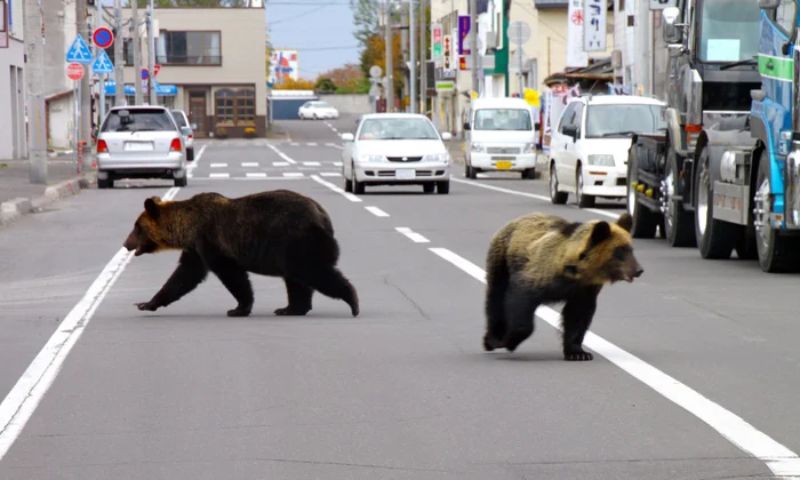
TOKYO: Japan has launched an extensive wildlife monitoring programme by deploying more than 800 cameras across its northern mountain regions, aiming to better understand bear populations amid a sharp rise in fatal attacks and increasing sightings in residential areas.
The nationwide initiative follows a series of deadly encounters that have heightened public concern. According to Japan’s Environment Ministry, at least five people have lost their lives in bear attacks since 1 April, all in the Tohoku region. The previous fiscal year recorded 13 fatal bear attacks, the highest annual toll on record.
Officials believe the expanding bear population, coupled with demographic changes in rural Japan, has contributed to the growing number of human-wildlife encounters. Experts suggest that the steady decline in rural populations has reduced human activity in forested areas, allowing bears to roam more freely and increasingly venture closer to towns and cities.
As part of the new survey, cameras will initially be installed across six major bear habitats in the Tohoku region before the programme is gradually extended nationwide over the next four years.
Speaking about the initiative, Environment Ministry official Yu Takahashi said the project aims to establish a more reliable understanding of bear numbers and movement patterns.
Unlike previous surveys, which were conducted independently by local authorities using different methods and schedules, the new programme will adopt a standardised approach focused on monitoring entire bear populations.
To attract the animals, researchers will place jars containing honey mixed with wine at approximately head height. When bears stand on their hind legs to investigate the scent, the cameras will capture images of the distinctive white markings on their chests, enabling officials to identify individual animals more accurately.
Residents across Tohoku continue to face frequent bear sightings, with Japanese media regularly reporting incidents near shopping streets, parks and schools. Authorities say the information gathered through the survey will help shape more effective wildlife management and public safety measures.
The concerns have intensified after officials began investigating what could become the sixth fatal bear-related incident this season, following the discovery of a man’s body bearing bite marks in a mountainous area of Tohoku earlier this week.
The Environment Ministry continues to advise hikers and visitors to avoid travelling alone in mountain areas, carry bear deterrent spray and attach bells to their bags to alert wildlife of their presence.
Bear spray, commonly sold in outdoor equipment shops, contains capsaicin—the active compound found in chilli peppers—which causes intense irritation and is designed to deter attacking animals.
Meanwhile, a separate incident in the city of Nagoya highlighted the widespread use of bear deterrents. Police arrested a 22-year-old Vietnamese national after anti-bear spray was accidentally discharged inside a post office, leaving five people requiring hospital treatment.
Authorities identified the man as Huynh Nhat Duy, who reportedly apologised and told investigators the spray had been released unintentionally. He was arrested on suspicion of obstructing business operations.
Bear incursions into urban areas have become increasingly common in Japan. In June, authorities in Utsunomiya, north of Tokyo, spent four days tracking and capturing a bear that roamed through the city, prompting widespread school closures.
Earlier, another bear in Fukushima attacked four people at two factories and evaded capture for several days after reportedly opening a window and turning on a water tap, earning descriptions in local media as an “extremely intelligent” animal.
The government hopes the expanded monitoring programme will provide the scientific data needed to reduce future conflicts between people and wildlife while improving long-term conservation and public safety strategies.