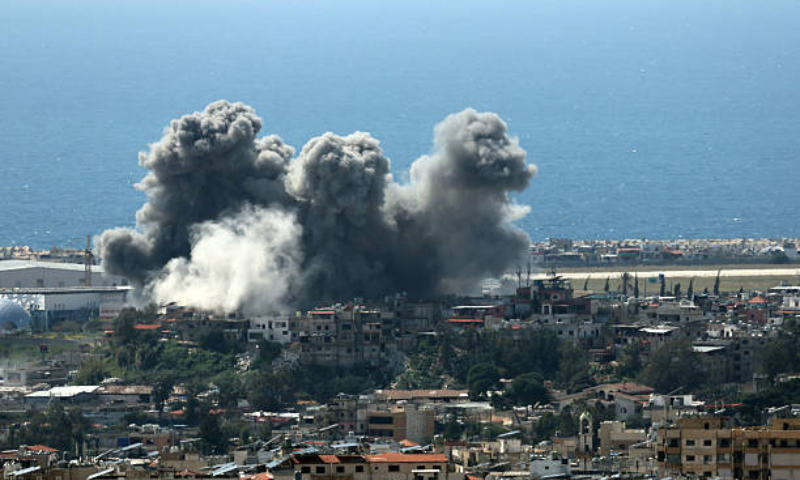



ISLAMABAD: Strong international condemnation has poured in following Israel’s large-scale air strikes on Lebanon, carried out just hours after a two-week ceasefire was announced in the United States–Iran conflict, raising fears of a wider regional escalation.
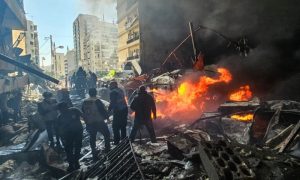
Israeli forces launched one of their most extensive bombardments in recent months, targeting multiple areas across Lebanon, including Beirut, the Bekaa Valley, Mount Lebanon, Sidon, and southern villages. According to Lebanon’s Civil Defence, at least 254 people were killed and 1,165 others wounded in the strikes.
The Israeli military described the assault as its largest coordinated attack since the start of its latest military operation on March 2, claiming it targeted more than 100 Hezbollah command centres and military sites.
The scale of the casualties has overwhelmed medical facilities, with Lebanon’s syndicate of doctors urgently calling on physicians of all specialties to report for duty, while major hospitals appealed for blood donations.
The strikes have also intensified diplomatic tensions, with conflicting claims over whether Lebanon was included in the ceasefire framework.
Widespread International Condemnation
Countries and international organisations swiftly condemned the attacks, warning of severe consequences for regional stability and international law.
Qatar denounced the strikes as a “dangerous escalation” and a “flagrant violation” of Lebanon’s sovereignty and international humanitarian law, calling on the global community to act decisively to halt the violence.
Egypt said the attacks reflected a “premeditated intent” to undermine diplomatic efforts and warned that they risk dragging the region into “total chaos”.
Türkiye also issued a strong condemnation, stating that the strikes were worsening the humanitarian crisis and urging immediate international action to protect civilians.
Spain’s Prime Minister Pedro Sanchez criticised Israel’s actions as intolerable, calling for Lebanon’s inclusion in the ceasefire, a clear condemnation from the international community, and accountability for what he described as violations of international law.
Italy’s Foreign Minister Antonio Tajani expressed solidarity with Lebanon, describing the strikes as “unjustified and unacceptable”, and warned against the risk of a broader conflict that could jeopardise the ceasefire and regional stability.
The United Nations strongly condemned the attacks, with a spokesperson for Secretary-General Antonio Guterres highlighting the heavy civilian toll and urging all sides to return to diplomatic channels.
UN human rights chief Volker Turk described the scale of destruction as “horrific” and said it placed immense strain on already fragile peace efforts.
The International Committee of the Red Cross (ICRC) said it was “outraged” by the devastation in densely populated areas, stressing that any regional agreement must prioritise the protection of civilians.
Rising Tensions and Warnings
Lebanese officials sharply criticised the strikes, with Parliament Speaker Nabih Berri calling them a “full-fledged war crime” and a blatant violation of international law.
Iran also issued a warning, with the Islamic Revolutionary Guard Corps stating it would respond if the attacks continued. Foreign Minister Abbas Araghchi said the terms of the ceasefire were “clear and explicit” and urged the United States to uphold its commitments.