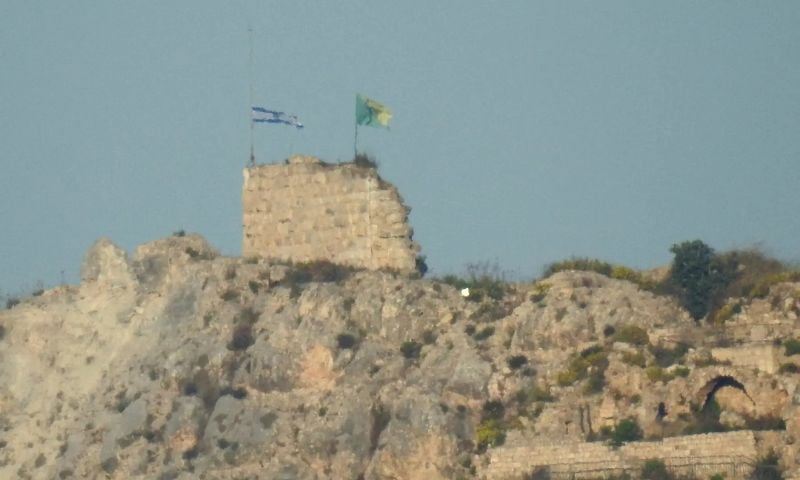



BEIRUT, Lebanon: Israeli forces captured the historic Beaufort Castle in southern Lebanon on Sunday and warned civilians to leave a large swathe of the south as the military expanded its ground offensive, marking Israel’s deepest incursion into Lebanon in 26 years.
The capture of the medieval fortress, perched on a strategic ridge overlooking southern Lebanon, represents a significant escalation in the conflict despite a US-backed ceasefire that came into effect in April.
The seizure of the 900-year-old castle and the surrounding Beaufort Ridge constitutes Israel’s deepest advance into Lebanese territory since its withdrawal from southern Lebanon in 2000, according to the Associated Press.
Smoke rose from the area and shelling could be heard around the ridge, while an Israeli flag was seen flying above the fortress, AFP reported.
The site previously served as an Israeli military base during Israel’s two-decade occupation of southern Lebanon.
Important strategic position captured
Israeli Defence Minister Israel Katz confirmed that troops had captured the stronghold as military operations expanded further into southern Lebanon.
“Forty-four years after the heroic Battle of Beaufort, and on this day commemorating the soldiers who fell in the First Lebanon War, our troops have returned to the summit of Beaufort and once again raised the Israeli flag there,” Katz said in a post on social media.
He added that Israeli forces had crossed the Litani River and captured the Beaufort Ridge, describing it as one of the most important strategic positions for protecting communities in Israel’s Galilee region and ensuring the security of Israeli troops.
44 שנים אחרי קרב הגבורה על הבופור, וביום האזכרה לחללי מלחמת שלום הגליל ובהם חיילי גולני שנפלו בקרב על הבופור – לוחמי צה"ל ובראשם חטיבת גולני, שבו אל פסגת הבופור והניפו עליה מחדש את דגל ישראל ואת דגל גולני.
בהנחיית ראש הממשלה נתניהו ובהנחייתי, צה"ל הרחיב את התמרון בלבנון, חצה את… pic.twitter.com/NjtlYSZqu4
— ישראל כ”ץ Israel Katz (@Israel_katz) May 31, 2026
Israeli forces had first captured the castle from the Palestine Liberation Organisation (PLO) during the 1982 Lebanon war before maintaining control of the site until Israel’s withdrawal in 2000, the Associated Press said.
Evacuation warnings and expanded offensive
The advance came as the Israeli military issued broad evacuation warnings covering areas south of the Zahrani River and north of the Litani River, extending roughly 40 kilometres from the Israeli border.
Israeli military spokesman Avichay Adraee warned civilians to leave areas where Hezbollah was believed to be operating.
“Anyone present near Hezbollah elements, facilities, or combat means endangers their life. Any building used by Hezbollah for military purposes may become subject to targeting,” Adraee said in a social media post.
#عاجل ‼️انذار عاجل إلى سكان جنوب لبنان وخاصة جميع السكان المتواجدين جنوب نهر الزهراني
🔸في ضوء قيام حزب الله الارهابي بخرق اتفاق وقف اطلاق النار واستهدافه للجبهة الداخلية الاسرائيلية يضطر جيش الدفاع للعمل ضده بقوةّ لا سيما في مناطقكم. جيش الدفاع لا ينوي المساس بكم.
🔸حرصًا على… pic.twitter.com/aJGrfLZT1m
— افيخاي ادرعي (@AvichayAdraee) May 31, 2026
The Israeli military said a substantial number of ground troops had begun offensive operations to expand what it described as a forward defence line and that the operation was extending into additional areas.
Lebanon condemns Israeli actions
Lebanese Prime Minister Nawaf Salam on Saturday accused Israel of implementing a “scorched-earth policy and collective punishment” in southern Lebanon.
Salam called for an immediate end to the fighting and said Israeli actions were destroying towns and villages while forcing residents from their homes.
من كلمتي اليوم في ضوء التصعيد الاسرائيلي ومفاوضات واشنطن:
"أريد أن أتحدث بمنتهى الصراحة مع اللبنانيين:
هل المفاوضات مضمونة النتائج؟ بالتأكيد لا. لكنها الطريق الأقل كلفة على وطننا وشعبنا، مقارنة بالخيارات الأخرى اليوم.
…
هذه الطريق ليست سهلة ولن تكون قصيرة، لكنها تصبح أقصر ونصبح… pic.twitter.com/hu4kGyA0ma— Nawaf Salam نواف سلام (@nawafsalam) May 30, 2026
The Lebanese premier also referred to ongoing diplomatic efforts aimed at reducing tensions.
Military delegations from Israel and Lebanon held security talks in Washington on Friday, with further US-mediated political discussions expected next week.
While acknowledging that success was uncertain, Salam described negotiations as “the least costly path for our country and our people”.
Fragile ceasefire
A ceasefire intended to halt hostilities between Israel and Hezbollah took effect on April 17.
However, both sides have repeatedly accused each other of violating the agreement and have continued military operations.
A statement issued by the United States following Friday’s talks described the discussions as “productive military-to-military discussions” that would help shape the next round of political negotiations.
The statement did not specifically mention the ceasefire.
Hezbollah has strongly opposed the direct negotiations between Lebanon and Israel.
On Saturday, the group said it had launched multiple attacks against northern Israel and engaged Israeli troops near several southern Lebanese towns.
Hezbollah said its fighters were confronting Israeli forces around the outskirts of Zawtar al-Sharqiyah, Yohmor al-Shaqif and Dibbine, adding that Israeli troops had not succeeded in taking control of those locations.
The Israeli military said more than 25 projectiles were fired from Lebanon into northern Israel on Saturday.
Air raid sirens sounded in the cities of Karmiel and Safed for the first time since the ceasefire began, according to Israel’s Home Front Command.
Israeli public broadcaster Kan aired footage circulating on social media showing rockets landing in the sea near the coastal city of Nahariya, prompting beachgoers to flee.
"מאות אנשים רצים לתוך ממ"ד קטן שבקושי יכול לאכלס 15 איש, פשוט סכנה": תיעוד מחוף הים בנהריה בזמן האזעקות
(אורלי אלקלעי) pic.twitter.com/44GE5paaNU
— כאן חדשות (@kann_news) May 30, 2026
Meanwhile, the Israeli military announced on Sunday that one of its soldiers had been killed the previous day in a Hezbollah explosive drone attack.
The death raised the number of Israeli military personnel killed in Lebanon since early March to 25, according to the army.
The Lebanese health ministry says Israeli attacks have killed more than 3,371 people since March 2.