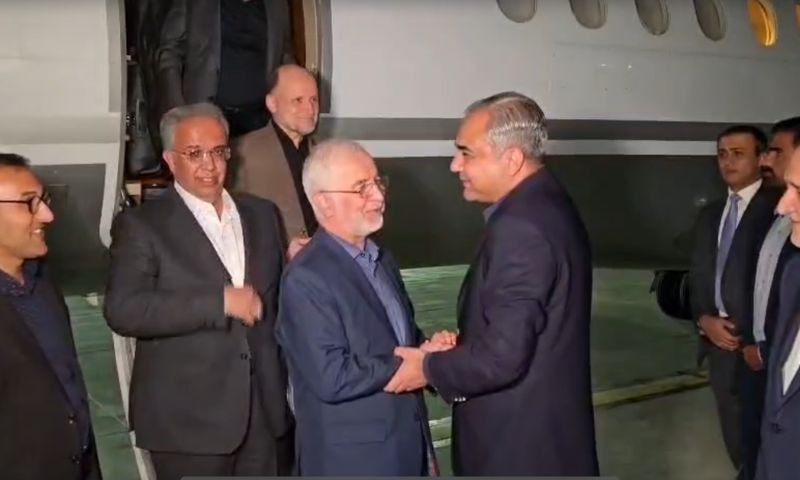
ISLAMABAD: Iranian Interior Minister Eskandar Momeni, leading a high-level delegation, arrived in Islamabad on Monday for talks with mediator Pakistan’s top leadership, amid Islamabad’s ongoing diplomatic efforts to de-escalate the renewed tensions between the United States and Iran.
Pakistan’s Interior Minister Mohsin Naqvi received the Iranian counterpart upon arrival at the Nur Khan Air Base on Monday evening. Iranian Ambassador to Pakistan Reza Amiri Moghadam was also present on the occasion.
ایران کے وزیر داخلہ اسکندر مومنی اعلی سطح کے وفد کے ہمراہ پاکستان کے دورہ پر اسلام آباد پہنچ گئے
وفاقی وزیرداخلہ محسن نقوی نے ائرپورٹ پر اپنے ایرانی ہم منصب اسکندر مومنی کا خیر مقدم کیا
وزیر مملکت داخلہ طلال چوہدری نے ایرانی وزیر داخلہ اسکندر مومنی کو گلدستہ پیش کیا pic.twitter.com/vUYuuMfaJV
— Ministry of Interior GoP (@MOIofficialGoP) July 20, 2026
Governor General of Sistan and Baluchestan, the Deputy Minister of Interior, the Deputy Minister of Urban Development and Transport, the Head of the National Iranian Oil Company, the Special Representative of the Minister of Agriculture, and other senior officials are also part of the Iranian delegation.
According to the Interior Ministry, Eskandar Momeni will meet with Pakistan’s Prime Minister Muhammad Shehbaz Sharif and Chief of Defence Forces and Chief of the Army Staff Field Marshal Syed Asim Munir, and Interior Minister Mohsin Naqvi.
“I hope that Iranian Interior Minister Eskandar Momeni has brought good news,” Mohsin Naqvi said. He further said the visit will not only strengthen bilateral relations, but progress is also expected on the regional situation.
ایرانی وزیر داخلہ کے ہمراہ اعلی سطح کا وفد میں گورنر جنرل سیستان بلوچستان، نائب وزیر داخلہ، نائب وزیر اربن ڈویلپمنٹ ٹرانسپورٹ، نیشنل ایرانی آئل کمپنی کے سربراہ، وزیر زراعت کے خصوصی نمائندے اور دیگر اعلی حکام شامل ہیں
— Ministry of Interior GoP (@MOIofficialGoP) July 20, 2026
The visit comes at a time of renewed tensions between the United States and Iran after Tehran announced it was suspending its commitments under the Islamabad Memorandum of Understanding (MoU), accusing Washington of violating the agreement.
The Islamabad MoU, brokered by Pakistan, was signed in June to end hostilities between the two countries and pave the way for a lasting peace agreement to permanently end the conflict.
The Islamabad MoU was signed on June 18 by US President Donald Trump, Iranian President Masoud Pezeshkian, and Pakistan’s Prime Minister Shehbaz Sharif, following Islamabad brokered a ceasefire between Washington and Tehran.
Under the Islamabad MoU, the US and Iran committed to halt military operations, reopen the Strait of Hormuz to commercial shipping, and negotiate a comprehensive agreement covering Iran’s nuclear programme, US sanctions, and a permanent ceasefire within 60 days.
US, Iran signal openness to diplomacy
The United States and Iran signalled on Monday that they remain open to diplomacy despite escalating military confrontation, raising hopes of renewed negotiations under the Islamabad Memorandum of Understanding (MoU) framework as mediators sought to de-escalate the conflict and revive dialogue between Washington and Tehran.
A senior Iranian official, cited by Reuters, said mediators had conveyed a proposal for a 10-day ceasefire aimed at de-escalating the conflict and reviving an interim agreement reached last month between Tehran and Washington.
At a weekly press conference in Tehran, Iranian Foreign Ministry spokesman Esmaeil Baghaei said intermediaries had delivered fresh proposals to Iran in recent days and that negotiations with the United States could continue if they served Iran’s national interests, AFP reported.
Asked whether the door to talks with Washington had closed, Baghaei rejected the notion that diplomacy and military action were mutually exclusive.
“I reject the duality of either war or diplomacy. Diplomacy is a tool through which we pursue our national interests, just like war,” he said.
Baghaei also accused the United States of targeting civilian facilities and infrastructure in several Iranian provinces during its military campaign, saying the attacks demonstrated “America’s destructive logic”, Iran’s Tasnim news agency reported.
“We condemn the attacks on infrastructure in the strongest possible terms,” he said.
Rubio says US will continue diplomacy with Iran
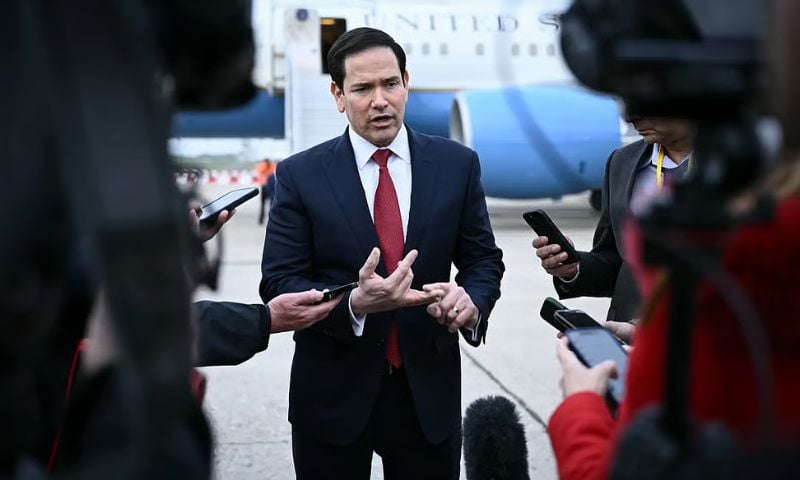
US Secretary of State Marco Rubio said Washington would continue pursuing a diplomatic solution while insisting that any agreement with Tehran must be meaningful and fully implemented.
Speaking before departing for the Philippines for the Association of Southeast Asian Nations (ASEAN) Foreign Ministers’ Meeting, Rubio accused elements within Iran of attempting to use the Strait of Hormuz as leverage against the international community.
.@SecRubio: “Iran is a rich country. One of the reason why Iran is in shambles is because every penny that this regime ever gets — be it through sanctions relief or through the oil they’re able to get out — they invest it in Hezbollah. They invest it in Hamas… They should be… pic.twitter.com/E3OrpuBAHa
— Rapid Response 47 (@RapidResponse47) July 20, 2026
“It is evident that some within Iran want to use the Strait of Hormuz as leverage against the rest of the world,” Rubio said.
He stressed that any disruption to one of the world’s busiest shipping lanes posed a threat to global maritime security and international trade.
Islamabad MoU framework
Washington and Tehran have been testing the limits of escalation since Trump announced last week that the ceasefire agreement with Iran is over.
The US military’s Central Command said it concluded its latest round of attacks by hitting surveillance sites, military logistics infrastructure, underground weapons storage and maritime capabilities.
The Islamabad MoU was signed on June 18 by US President Donald Trump, Iranian President Masoud Pezeshkian and Prime Minister Shehbaz Sharif after Pakistan brokered a ceasefire between Washington and Tehran.
Under the Islamabad MoU, the US and Iran committed to halt military operations, reopen the Strait of Hormuz to commercial shipping and negotiate a comprehensive agreement covering Iran’s nuclear programme, US sanctions and a permanent ceasefire within 60 days.
Pakistan and Qatar subsequently co-mediated the first round of high-level negotiations in Lucerne, Switzerland, on June 21.
The talks were attended by US Vice President JD Vance and Iranian Parliament Speaker Mohammad Bagher Ghalibaf.
Pakistan’s diplomatic efforts
Pakistan is the principal mediator between the US and Iran after it secured a ceasefire on April 08 and hosted the highest level of talks between the two nations on April 12 and 13 in Islamabad.
Pakistan, which brokered the ceasefire and has continued to mediate between Washington and Tehran, has urged all parties to honour the agreement.
The first round of Pakistan and Qatar mediated US-Iran talks, led by US Vice President JD Vance and Iran’s Parliament Speaker Mohammad Baqer Ghalibaf, was held in Switzerland a week ago, and Washington waived sanctions on Tehran.
After the talks, Pakistan and Qatar announced significant progress in diplomatic efforts between the US and Iran following the conclusion of the first round of high-level talks in Switzerland.