Key Points
- Iran says it struck two tankers in Hormuz.
- U.S. has not publicly confirmed the incident.
- Four additional vessels reportedly turned back.
- Shipping risks in the strategic waterway continue to mount.
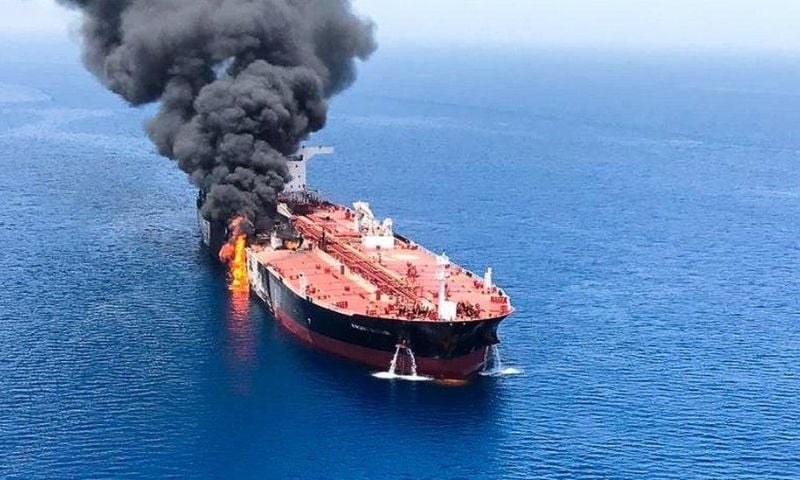
ISLAMABAD: Hostilities between the United States and Iran escalated on Friday after Tehran claimed it had struck two oil tankers attempting to transit the Strait of Hormuz under US air escort.
The claim has raised fresh concerns over the security of one of the world’s most critical energy corridors, which transits one-fifth of the world’s oil supply.
Iran’s Islamic Revolutionary Guard Corps (IRGC) said the “non-compliant oil tankers” were targeted and brought to a halt after allegedly attempting to pass through the strait using an undeclared route.
The IRGC added that four other tankers altered course and returned to their previous positions following the incident.
Iranian authorities did not identify the vessels or provide details regarding casualties, damage, or ownership.
The United States had not immediately commented on Iran’s claims at the time of filing.
Washington has, however, repeatedly pledged to protect freedom of navigation through the Strait of Hormuz. It has also supported escorted commercial transits in recent weeks as attacks on shipping intensified across the region.
ALSO READ: US Military Rejects Iran’s Claim of F-35 Losses in Jordan Airbase Strike
The reported strike comes amid an expanding confrontation between Tehran and Washington. US military has intensified attacks on Iranian targets.
Iran-US bone of contention
The Strait of Hormuz, which links the Arabian Gulf with the Gulf of Oman, carries roughly one-fifth of global seaborne oil supplies.
The waterway has witnessed repeated disruptions since the outbreak of the current conflict. The disruptions have prompted a sharp increase in war-risk insurance premiums and forced some shipping companies to reconsider voyages through the area.
Maritime security agencies have reported multiple incidents involving commercial vessels in and around the Strait of Hormuz in recent weeks. The situation has intensified fears that the conflict could increasingly spill over into international shipping lanes and energy markets.
The latest claims from Tehran could not be independently verified. However, analysts warn that any sustained disruption in Hormuz would have significant implications for global oil supplies, freight costs, and regional stability.