ISLAMABAD: Pakistan has recorded a dramatic decline in inflation, with average consumer prices rising by 6.7 per cent in FY2026 compared with 29.2 per cent in FY2023, according to the Pakistan Economic Survey 2025-26.
The reduction marks one of the most significant improvements among the country’s key economic indicators and reflects the impact of stabilisation measures introduced over the past three years.
High inflation had emerged as one of Pakistan’s most pressing economic challenges during FY2022 and FY2023, eroding purchasing power, increasing business costs and putting pressure on household budgets. The latest figures suggest that price stability has largely been restored, providing relief to consumers and businesses alike.
The decline in inflation has coincided with broader improvements across the economy. GDP growth reached 3.7 per cent in FY2026 after the economy contracted by 0.2 per cent in FY2023, while the size of the economy expanded to a record US$452.1 billion.
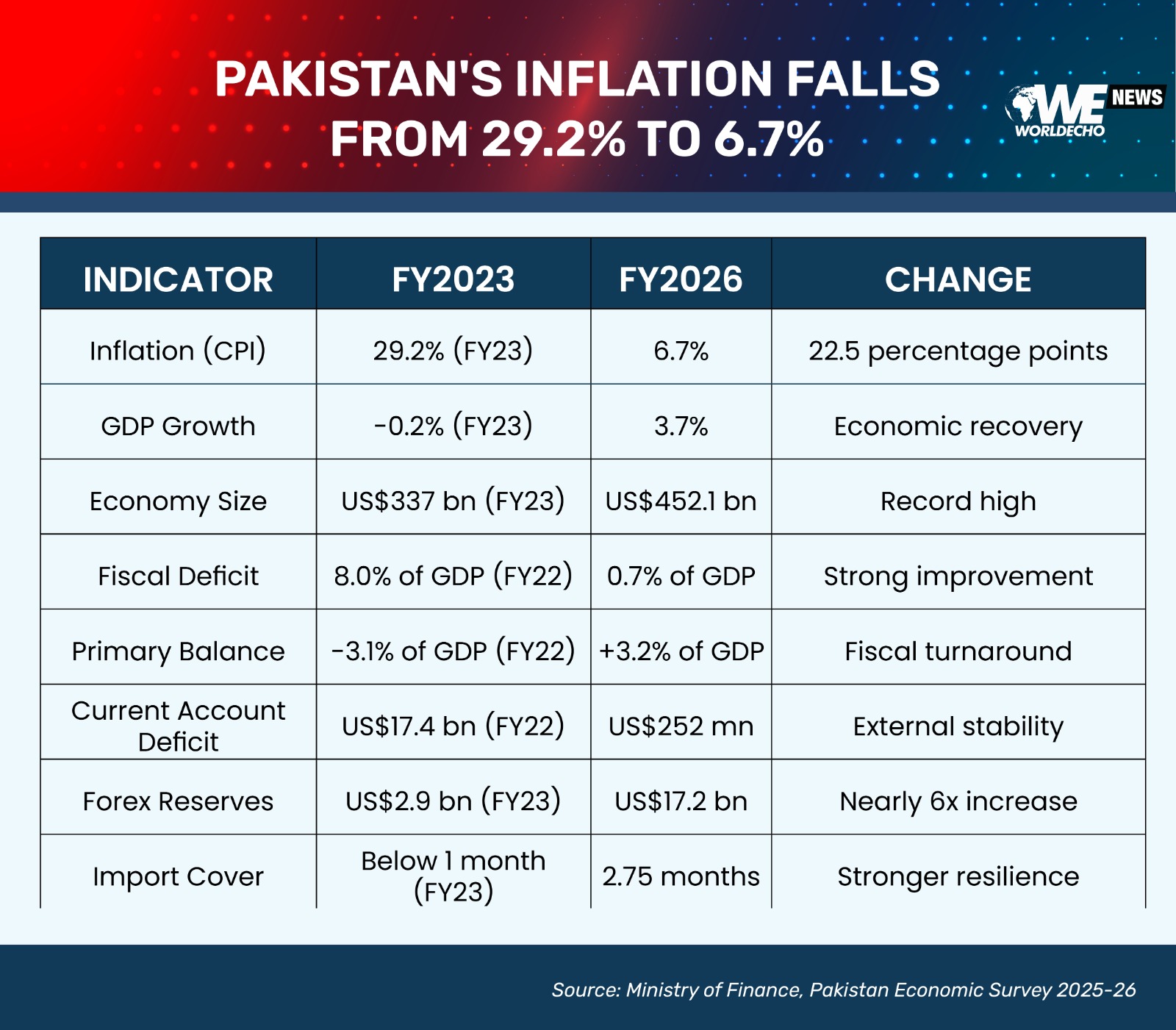
The Economic Survey also points to improvements in public finances and external accounts. The fiscal deficit narrowed to 0.7 per cent of GDP, while the country posted a primary surplus of 3.2 per cent. Meanwhile, the current account deficit fell sharply to US$252 million from US$17.4 billion in FY2022.
Pakistan’s foreign exchange reserves also strengthened considerably, rising to US$17.2 billion from around US$2.9 billion in early 2023. The improvement helped support exchange-rate stability and reduce pressure on import costs.
Economic analysts often view inflation as a key measure of macroeconomic health because it directly affects households, businesses and investment decisions. The latest figures indicate that Pakistan has made substantial progress in restoring stability after a period of severe economic stress.
Officials say continued fiscal discipline, structural reforms and prudent economic management will be essential to maintaining low inflation and supporting sustainable growth in the years ahead.