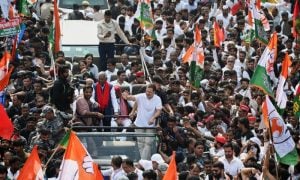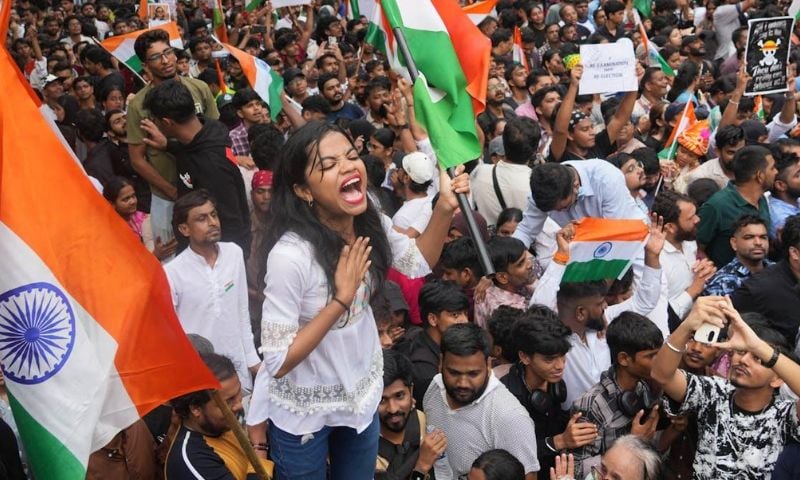
NEW DELHI: India’s youth-led protest movement has expanded into a broader campaign against India’s voter-roll revisions as protesters are demanding electoral accountability and raising concerns about democratic institutions under Prime Minister Narendra Modi.
The Cockroach Janata Party (CJP), a movement that emerged through satire, initially mobilised students over an examination paper leak and called for Education Minister Dharmendra Pradhan’s resignation.
The protests later widened to oppose the Special Intensive Revision (SIR) of electoral rolls, a nationwide exercise that has removed about 130 million names from voter lists.
The Election Commission says the revisions are intended to remove the names of deceased, duplicate and ineligible voters. Critics, however, fear that eligible voters could be excluded and allege that the process disproportionately affects Muslims.
The movement has since drawn support from civil society organisations, left-wing student groups and opposition parties. Its demands include a rollback of the voter-list revision, a review of recent state election results and the resignation of Chief Election Commissioner Gyanesh Kumar.
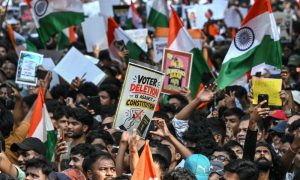
The dispute has broadened the movement’s appeal beyond student and community-specific campaigns, turning it into a wider challenge over voting rights, citizenship and public trust in electoral institutions.
Nationwide Campaign Challenging PM Modi
The movement began after India’s national medical entrance examination, held on 3 May, was cancelled on 12 May following a paper leak. A re-examination was held on 21 June. Several students committed suicide during the period amid anger over the examination process.
The controversy intensified longstanding concerns about India’s education system, in which entrance examinations for medical, engineering and other courses are organised centrally. Critics have also objected to curriculum changes that they say reflect the ruling Bharatiya Janata Party’s Hindu nationalist agenda.
The CJP channelled students’ frustration into a wider protest campaign. Student organisations helped organise demonstrations, while climate activist Sonam Wangchuk brought wider public attention to the movement. Opposition parties led by Rahul Gandhi also helped amplify its demands.
Education minister Pradhan resigned on 25 July. The resignation was a significant retreat by the government and encouraged protesters to pursue wider demands.
India’s youth face broader economic pressures. Young people account for about 83% of the country’s unemployed population, while nearly 90% of workers are employed informally. Similarly, communal divisions, security and women’s safety are among factors contributing to public discontent.
Voter-roll Revision Widens Protests
The movement subsequently turned its attention to the SIR, which has reportedly removed around 130 million names from electoral rolls, equivalent to about one-eighth of the electorate.
Civil society groups had raised concerns about the process before media reports, including those published by The Indian Express, highlighted disagreements within the Election Commission over voter registration and deletions.
Critics fear that eligible voters, particularly Muslims, could be excluded. The allegations have fuelled demands for greater transparency and an independent review of the process.
More than 300 civil society organisations have joined the campaign. Opposition parties and student groups have taken a leading role, with Neha Bora of the All India Students’ Association and Aishe Ghosh of the Students’ Federation of India among the prominent figures involved. The CJP continues to mobilise demonstrators.
The protesters are demanding a complete rollback of the SIR, a review of recent state election results they dispute and the resignation of Chief Election Commissioner Gyanesh Kumar.
Violent Police Crackdown
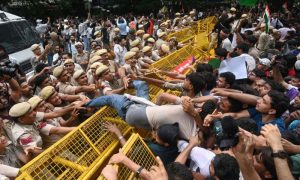
Indian authorities have responded to the youth-led protest movement with a large security deployment and mass detentions.
More than 30,000 police and paramilitary personnel were deployed in Delhi on 10 October, when more than 7,000 people were detained and others were prevented from reaching Jantar Mantar, a designated protest site near Parliament.
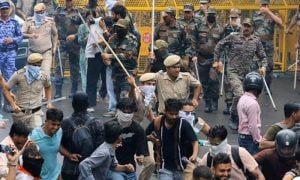
Metro stations were closed, internet services suspended and a sports stadium used to hold detainees. Two days later, Delhi Police removed Jantar Mantar from the list of approved protest locations.
Pro-government groups have targeted demonstrators and independent media. Members of a group calling itself the Hindu Raksha Dal were arrested over allegations that they assaulted students and manhandled women during a protest.
Women and girls have repeatedly faced beatings and detention, but have continued to participate in demonstrations.
The protests are unfolding amid broader concerns about restrictions on civil society and dissent in India.