
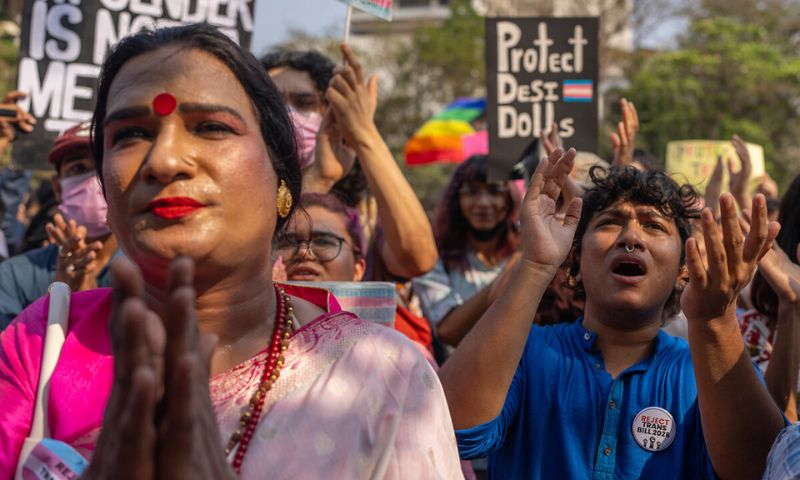
HYDERABAD: India’s amended transgender law has created uncertainty among some transgender people seeking medical care and identity recognition, with activists and doctors warning that unclear provisions have disrupted access to essential services.
The amendment introduced penalties for forcing someone to assume a transgender identity through surgical, chemical or hormonal procedures.
Authorities say the changes are intended to prevent exploitation, forced identity and trafficking, while maintaining protections for consensual, medically supervised care.
Healthcare Concerns Grow
Kali Sidharth Medepalli, a 23-year-old transgender woman from Hyderabad, said a clinic stopped providing her hormone treatment after the amendment was introduced, leaving her without medication for several days.
She later obtained her medicines through an existing prescription but said she had to manage her treatment without regular medical supervision.
Transgender rights activists and healthcare professionals say the lack of clarity has made some doctors cautious about providing gender-affirming care.
ALSO READ: Muslim Woman Police Officer’s Transfer in India Sparks Backlash Over ‘Double Standards’
“The healthcare system is very fearful right now,” transgender rights activist Vyjayanti Vasanta Mogli told the media, warning that uncertainty could discourage healthcare providers from supporting transgender patients.
Doctors Face Challenges
Sanjay Sharma, head of the Association for Transgender Health in India, said doctors are facing difficulties balancing legal concerns with their responsibility to provide medical care.
Some private clinics have continued offering treatment but have introduced additional paperwork, consent requirements and other safeguards.
Activists say people without family support, established healthcare providers or financial resources could face greater difficulties accessing services.
Identity Process Delayed
The amendment has also raised concerns around transgender identity certification. Some transgender people have reported difficulties updating official documents needed for employment and other services.
The government’s transgender identity card portal has faced issues since the amendment came into force, while new procedures require recommendations from a designated medical board before certification.
The amendment is being challenged in India’s Supreme Court, with petitioners citing constitutional protections related to dignity, privacy, autonomy and self-identification.
India does not have a current official estimate of its transgender population. The 2011 census recorded around 488,000 transgender people, while activists and experts have estimated a much larger population.