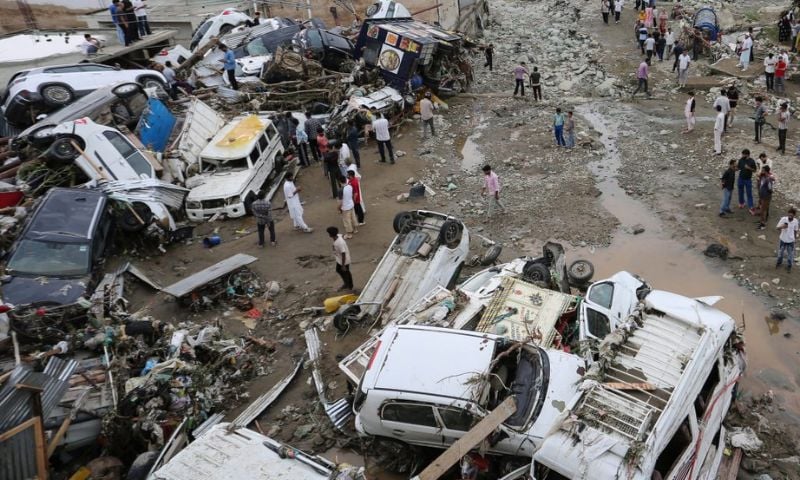
NEW DELHI: At least 19 people have been killed and 15 others injured after heavy monsoon rains triggered flash floods and landslides across parts of northeastern India and the Indian Illegally Occupied Jammu and Kashmir (IIOJK) region.
According to officials, rescue teams are continuing operations in several affected areas, while authorities have warned that the death toll could rise as search efforts continue and reports emerge of more people still missing.
Eight people lost their lives in Nagaland’s Mon district, which was among the worst-hit areas, while 11 others were killed in IIOJK region.
In Nagaland, torrential rainfall caused flash floods and landslides that swept away homes, damaged roads and disrupted transport links.
Mon district authorities said four bodies had been recovered, while rescue operations were underway to locate others trapped beneath debris.
Officials said four people trapped in Naginimora area were rescued with serious injuries. Multiple landslides were reported at around 10 locations across Mon district, damaging residential buildings, roads and public infrastructure.
In IIOJK, flash floods caused extensive damage in Rajouri and Poonch districts, affecting residential and commercial buildings, vehicles and public facilities.
The swollen Darahali River caused severe destruction in the Bela area of Rajouri city, where several structures and vehicles were damaged.
At least 15 people were injured in the flooding and landslides, while several others were reported missing in Jammu, according to local media reports.
Army personnel and emergency response teams rescued 11 people, including five children, from affected areas in Rajouri.
Teams from the district administration, police, disaster response authorities and the military are engaged in rescue and relief operations despite difficult weather conditions and damaged infrastructure.
Weather alerts issued, pilgrimages suspended
The India Meteorological Department (IMD) has issued warnings of extremely heavy rainfall in occupied Jammu and Kashmir over the next two days.
Red alerts have also been issued for parts of occupied Jammu and Kashmir, Himachal Pradesh and Uttarakhand, with forecasts of intense rainfall in several areas.
Authorities have temporarily suspended the annual Amarnath pilgrimage in Kashmir and the Vaishno Devi shrine pilgrimage in Jammu, citing safety concerns for pilgrims. The religious journeys will resume once weather conditions improve and routes are declared safe.
Flooding and landslides are common during India’s annual monsoon season, which generally lasts from June to September. However, this year’s monsoon has brought unusually intense rainfall after a delayed beginning.
According to weather officials, India recorded rainfall significantly above normal levels during the first week of July.
Scientists have linked increasingly severe rainfall events to climate change, which is believed to be contributing to more frequent and intense extreme weather conditions.