NEW DELHI: A New Delhi magistrate extended the detention of two leaders of India’s youth-led Cockroach Janta Party (CJP) movement by two days on Monday, after they were remanded in custody five days ago.
Indian Prime Minister Narendra Modi is facing renewed nationwide protests led by students and young activists over a controversial revision of electoral rolls that has removed more than 130 million voters to benefit the ruling Bharatiya Janata Party (BJP).
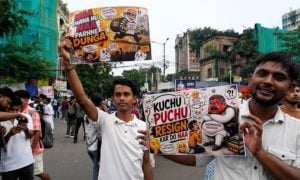
The cockroach movement activists and opposition parties have defied a security crackdown to demand the resignation of India’s chief election commissioner, accusing the poll body of manipulating voter rolls to benefit Modi’s ruling party.
The commission, which oversees voting in the world’s most populous nation, has denied any wrongdoing.
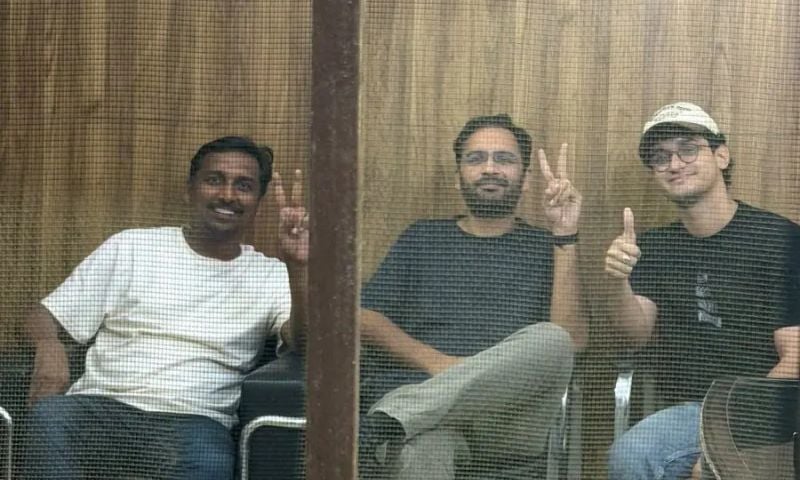
Television footage showed CJP leaders Ashutosh Ranka, 30, and Saurav Das, 27, being taken away in a blue police van from a police station where the hearing took place.
Two strong boys, one fearless spirit always putting the country before themselves and reminding us what true dedication looks like. 🇮🇳 https://t.co/Wdx8cYAIVi
— Cockroach Janta Party – CJP (@Cockroachisback) October 19, 2026
“This is an absolute mockery of the justice system,” the movement’s legal affairs head Ratna Singh told reporters.
Das and Ranka were taken into custody on October 14 for their “alleged repeated attempts to disturb public peace and violate the law”, the police said in a statement at the time.
The pair had jumped security barricades to wave the national flag at Jantar Mantar, a decades-old protest site that police have barred people from using.
Jantar Mantar, in the heart of the capital, has been sealed off with yellow metal barricades for more than a week and guarded by security personnel.
Delhi Police said last week they had removed the site from the list of designated protest venues.
Cockroach Movement Challenges Modi Govt
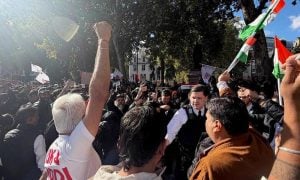
The protests, driven by the youth-led cockroach movement, have spread to several cities and drawn support from opposition parties, student groups and civil society organisations.
The young protesters pose a fresh political challenge to Modi in his third term, as critics question the neutrality of the Election Commission of India and allege that the voter verification exercise could disadvantage opposition parties.
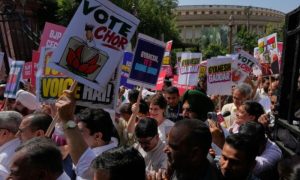
The Election Commission denies favouring any political party. It says the Special Intensive Revision (SIR) is intended to remove deceased, duplicate and otherwise ineligible entries from the electoral roll.
Opposition leaders say the exercise has disproportionately affected minority communities and voters likely to support parties opposed to Modi’s Bharatiya Janata Party (BJP).
Abhijeet Dipke, founder of the CJP, was released on Saturday, a day after police detained him as he attempted to join a protest rally in the capital’s Connaught Place area.
All India Students’ Association President Neha Bora, who was detained during a protest in New Delhi on Friday, was released later that evening.
Protests Spread Amid Police Crackdown
The campaign has intensified in recent days, with demonstrations in New Delhi and Bengaluru and opposition leaders joining calls for Chief Election Commissioner Gyanesh Kumar to resign.
Thousands of supporters of the CJP movement and student groups demonstrated in Bengaluru on Thursday.
The rally came a day after opposition leader Rahul Gandhi was briefly detained by police during a protest in New Delhi. Images of officers dragging Gandhi towards a vehicle circulated widely on social media.
Gandhi’s Congress party and other opposition lawmakers also staged protests in the capital, demanding action over the voter roll revision.
The campaign has gathered momentum since an Indian Express investigation last month reported that two fellow election commissioners had raised objections to the process and that Kumar had not acted on their concerns.
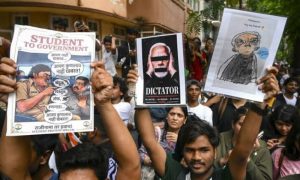
Opposition parties say the revision risks excluding eligible voters. They have also questioned the procedures for restoring names to the electoral rolls, arguing that confusing requirements and a lack of older government documents could make appeals difficult for some people.
Those whose names have been removed can appeal, but critics say the process could prevent eligible voters from exercising their rights if their registrations are not restored in time.
Controversial Electoral Roll Revision
The SIR has been conducted across most Indian states and federally administered territories. More than 130 million names have been removed from the electoral rolls since the exercise began last year.
The scale of the removals has become a central point of contention. Opposition parties say the deletions could affect millions of eligible voters and disproportionately harm communities and groups less likely to support the BJP.
The controversy has also raised questions about the appeals process. Critics say some people may struggle to provide the documents required to restore their names, particularly if they lack older official records.
The latest protests come as Modi faces mounting criticism over governance and political accountability midway through his third term.
His party’s failure to win a parliamentary majority in 2024 weakened its position compared with previous elections, although it retained power through its coalition.
The CJP has called for further demonstrations in New Delhi, with protesters expected to seek access to Jantar Mantar. Police have already barricaded the area ahead of the planned rallies.