Key Points
- India is strengthening strategic autonomy and multi-alignment
- Experts say US support in a China border crisis cannot be assumed
- Defence cooperation between India and US remains extensive
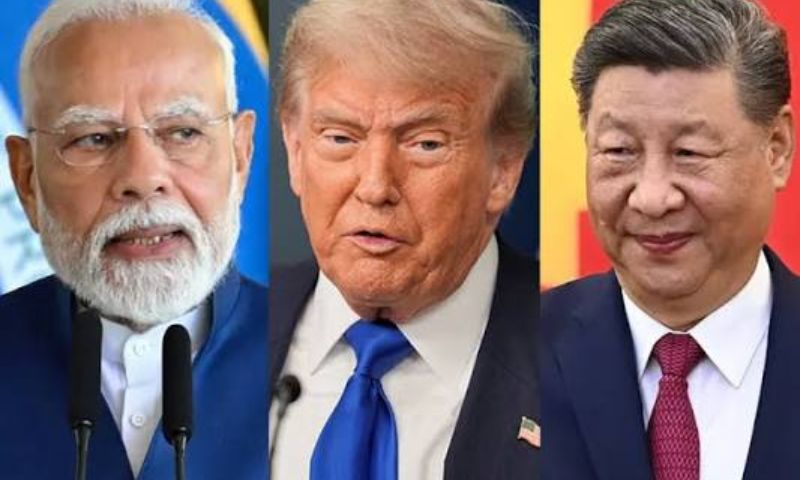
ISLAMABAD: India cannot assume automatic US support in a future military crisis with China, Indian strategic affairs experts have warned, highlighting the limits of New Delhi’s growing defence partnership with Washington and the continued importance of strategic autonomy.
The assessment comes as Chinese President Xi Jinping and Indian Prime Minister Narendra Modi seek to stabilise relations after years of tensions following the deadly 2020 clashes along the disputed Himalayan border.
Former Indian foreign secretary Nirupama Rao said American assistance “cannot be treated as automatic.” At the same time, she expected US support would likely be substantially stronger if China attempted a significant unilateral alteration of the border status quo.
“US partnership should multiply Indian capability, not substitute for it,” Rao said.
Aparna Pande, a senior fellow at the Hudson Institute, said New Delhi was returning to its “default position” of strategic autonomy and multi-alignment. “Concerns over the global order under US President Donald Trump’s second administration had reinforced that approach,” she added.
Trump has criticised US allies and partners over defence spending, launched trade measures and questioned the costs of maintaining American security commitments in Europe and Asia.
India-US ties face trade strains
Indo-US relations have also faced strains over trade and tariffs, oil sanctions, visa restrictions and political rhetoric.
Despite the tensions, Washington and New Delhi maintain extensive defence ties. The relationship includes arms sales, technology cooperation, plans for greater defence co-production and military exercises covering air, land, sea, space and cyberspace.
During the 2020 border crisis with China, Washington provided New Delhi with surveillance drones and logistical assistance. The US also shared real-time intelligence on Chinese positions along the Line of Actual Control in 2022, according to reports.
Sameer Lalwani, a senior fellow in the South Asia Programme at the Carnegie Endowment for International Peace, said he remained confident that Washington would support New Delhi in another major border crisis.
He said the relationship was stronger than it had been in 2020, pointing to greater structural support for defence cooperation.
The two countries have also expanded joint exercises, including the Tiger Triumph and Malabar naval exercises. They also cooperate through the Quad, alongside Japan and Australia, on maritime security, maritime domain awareness, coastguard cooperation and disaster response.
Rao said the precedent established during the 2020 crisis remained important, but any future US assistance would probably be discreet.
READ ALSO: Indian Officials Face Backlash Over Snacking at BRICS Summit
“The essential qualification is that India is not a US treaty ally,” Rao said.
Border arrangements since 2024 have eased tensions and helped revive high-level dialogue, regular flights and people-to-people exchanges between Beijing and New Delhi. The latest eight-point consensus includes an “early and substantial” effort toward boundary delimitation and border management.
However, thousands of troops remain deployed on both sides, and the two continue expanding infrastructure across the difficult terrain.
India’s Defence Ministry said in its latest annual report that there had been a “significant reduction” in the deployment of Chinese People’s Liberation Army forces along the northern front.
It estimated that about 40,000 to 50,000 Chinese troops remained at the border, with a similar number in designated training areas.
Pande said India was seeking to balance relations with a strong China, a weaker Russia and what she described as a less dependable, transactional and “semi-isolationist” America.
Rao said difficulties with Washington were reinforcing New Delhi’s instinct for strategic autonomy and increasing the value of stabilising relations with China.
The India-China stabilisation process, she noted, had begun before the recent deterioration in India-US relations.
Despite the latest border arrangements, Lalwani said a meaningful thaw between India and China remained unlikely, describing the two countries as “clearly rivals, if not adversaries”.