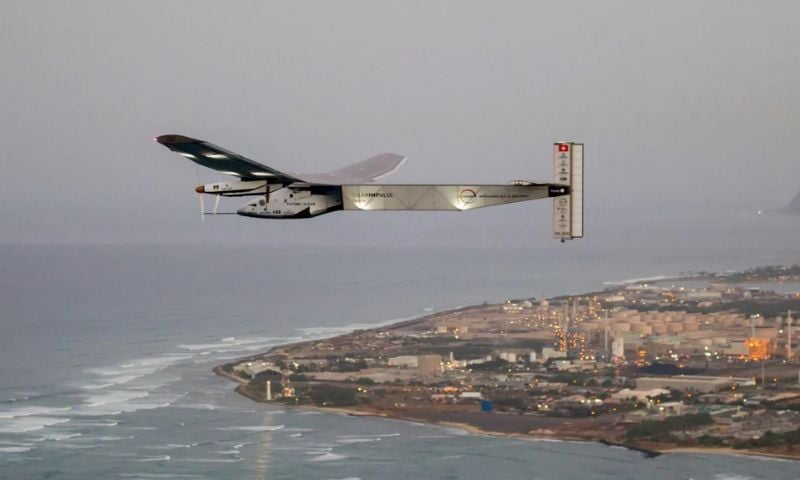
WASHINGTON: The pioneering solar-powered aircraft Solar Impulse 2, which made global aviation history in 2016 by completing a round-the-world journey without consuming any fuel, has crashed into the Gulf of Mexico during a recent experimental mission, its current owner confirmed this week.
The aircraft, originally piloted by Swiss aviators Bertrand Piccard and Andre Borschberg, became internationally recognised after successfully circumnavigating the globe using only solar energy.
The ambitious voyage demonstrated the potential of clean-energy aviation and was widely regarded as a landmark achievement in aerospace innovation, according to AFP.
During the 2016 mission, Solar Impulse 2 completed 17 stages across four continents, crossing two oceans and three seas. The aircraft travelled approximately 26,700 miles (43,000 kilometres) over 23 days of actual flying time, relying entirely on energy generated by thousands of solar cells mounted across its wings.
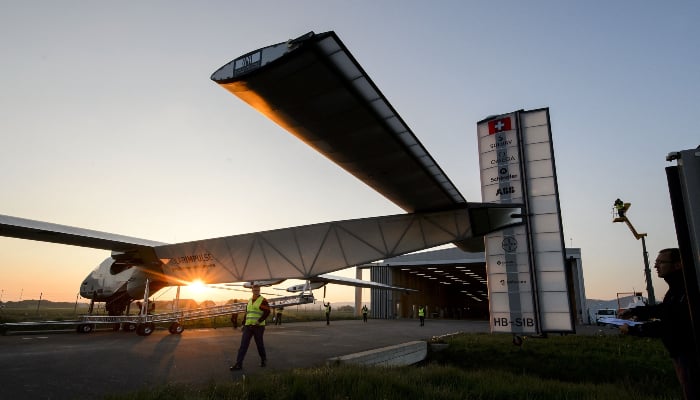
Following its historic journey, the aircraft was sold in 2019 to aerospace company Skydweller Aero, which later modified the plane into an autonomous unmanned aircraft designed for long-endurance operations.
In a statement released on Tuesday, the company said the aircraft had departed from Stennis, Mississippi, on April 26 as part of a testing programme connected to a United States Navy exercise. However, the aircraft later crashed into the Gulf of Mexico on May 4 during what the company described as a “controlled ditching”.
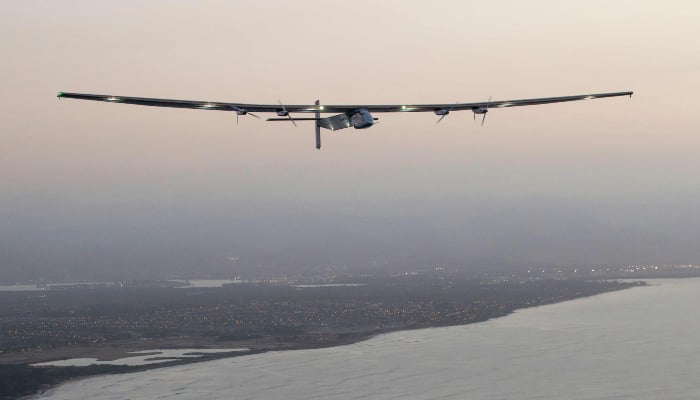
Despite the loss of the aircraft, Skydweller Aero portrayed the mission as a technological success, highlighting that the aircraft remained airborne continuously for more than eight days.
“Ultimately, a record-breaking flight of eight days and 14 minutes validates the reality of perpetual, solar-powered flight in a military mission-relevant environment,” the company said in its statement.
The firm has been developing solar-powered unmanned aircraft capable of remaining in the air for extended periods without refuelling. Such platforms are seen as potentially useful for surveillance, communications, environmental monitoring and defence-related missions.
The crash has now drawn the attention of US aviation safety authorities. The National Transportation Safety Board confirmed that it has launched an investigation into the incident to determine the circumstances surrounding the aircraft’s loss.
Solar Impulse 2 had long been celebrated as a symbol of innovation in sustainable aviation. Its original global journey captured worldwide attention and demonstrated how renewable energy technologies could reshape the future of air travel, even though commercial solar-powered passenger aviation remains a distant prospect.