
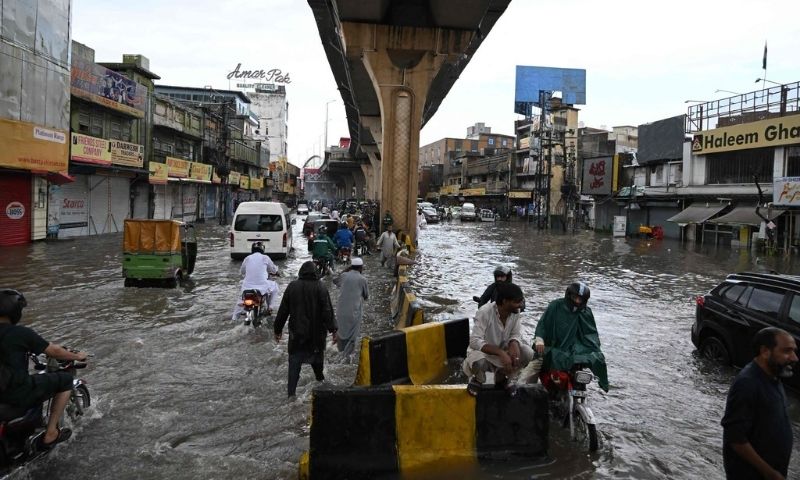
ISLAMABAD/RAWALPINDI: Torrential rains that lashed Pakistan’s capital and its twin city on Tuesday have exposed the severe shortcomings in urban planning and drainage infrastructure, with the newly renovated Raja Bazar among the low-lying areas submerged under floodwaters, raising urgent questions about the preparedness of civic agencies responsible for sanitation and water management.
The relentless downpour, which began at 3:20am and continued until 8am, brought the twin cities to a standstill as water levels in Leh Nullah (Nullah Lai) surged to dangerous levels, prompting authorities to declare emergencies and order evacuations. The Pakistan Meteorological Department (PMD) recorded unprecedented rainfall figures, with Shamsabad receiving 201mm of rain and New Kattarian witnessing 186mm, the highest in three years.
🚨⚠️Current situation Raja Bazar Rawalpindi. pic.twitter.com/eb0F76XUAg
— Hamza ⚓️ (@Humzazi) September 1, 2026
Urban infrastructure failure
The flooding of Raja Bazar, a recently developed commercial area, has become a symbol of the systemic failures plaguing the city’s infrastructure. Citizens and experts alike questioned how a new development could be overwhelmed by seasonal rains, pointing to inadequate drainage systems and poor urban planning.
The rain in Rawalpindi-Islamabad from last night has brought the cities to a dangerous tipping point. @ndmapk @CDAthecapital @IslamabadMci pic.twitter.com/6hha4wyoo5
— SenatorSherryRehman (@sherryrehman) September 1, 2026
“The situation in the twin cities has once again exposed the weaknesses of our disaster management system,” said PPP Vice President Senator Sherry Rehman, expressing serious concern over the flooding. “Is this really the level of preparedness we have for dealing with heavy rains and floods?”
وفاقی دارلحکومت خصوصا ای الیون میں چند ہی منٹس میں 150 ملی میٹر بارش ہونے کے بعد نالہ اوورفلو کرنے سے وجہ سے پانی سڑک پر آگیا جبکہ ضلعی انتظامیہ کی جانب سے پہلے سے ہی سیل کی گئی چند بیسمنٹس میں بھی داخل ہوگیا، ڈپٹی کمشنر اسلام آباد کی زیر نگرانی ڈی واٹرنگ کا عمل تیزی سے جاری ہے…
— DC Islamabad (@dcislamabad) September 1, 2026
Islamabad Deputy Commissioner Irfan Nawaz Memon reported that “record” rainfall in E-11 had resulted in overflowing drains, with water inundating roads and “entering illegal basements that had already been sealed.” He also noted that residents in the “illegal society Ghauri Town Phase 2 had blocked the drain with slabs,” directly contributing to the flooding.
Emergency response and evacuations
Rawalpindi Deputy Commissioner Captain (retd) Nadeem Nasir placed all relevant departments on high alert, ordering residents living around Nullah Lai to move to safer locations. Rescue 1122 operations successfully evacuated 60 people, while the Pakistan Army’s 111 Brigade remained on standby to assist the district administration.
Read Also: Pakistan Braces for Rain, Thunderstorms Across Upper Parts
The Water and Sanitation Agency (WASA) declared a rain emergency in Nullah Lai’s catchment areas, deploying teams and heavy machinery to low-lying areas including Liaquat Bagh, Committee Chowk underpass, Murree Road, and Sadiqabad. Water flow at Kattarian reached 29 feet, while the level at the Gawalmandi bridge rose to 24 feet.
Tragedy and response
The rains claimed at least one life when a mud-built house collapsed in Sector G-14/3, trapping two people beneath the debris. Both victims were recovered and shifted to the Pakistan Institute of Medical Sciences (PIMS), where one succumbed to injuries while the other remains hospitalised.
وفاقی دارالحکومت میں موسلا دھار بارش کے باعث متعدد علاقے زیر آب آنے پر ڈپٹی کمشنر کی جانب سے مختلف ایریاز کے دورے کرتے ہوئے نکاسی آب کے عمل کی نگرانی کی گئی، انہوں نے کہا کہ ای الیون میں ریکارڈ بارش کی وجہ سے نالہ اووفلو ہونے کے بعد پانی شاہراہوں اور غیر قانونی بیسمنٹس میں داخل… pic.twitter.com/KPBMVYxojF
— DC Islamabad (@dcislamabad) September 1, 2026
CDA Chairman and Islamabad Chief Commissioner Sohail Ashraf, accompanied by Deputy Commissioner Irfan Memon, inspected affected areas including E-11, reviewing drainage arrangements and directing authorities to ensure timely removal of accumulated water.
Special teams comprising officials from CDA, Emergency and Disaster Management, Metropolitan Corporation Islamabad (MCI), and district administration were deployed to handle drainage-related issues.
Calls for systemic reform
Senator Rehman emphasised that emergency measures following heavy rainfall were no longer sufficient, calling for “permanent and effective reforms” instead. She urged federal and provincial institutions to stop “shifting responsibility and instead work through a coordinated strategy to protect citizens.”
“Recurring municipal challenges remain evident, including unchecked construction, poor urban planning, and a gap between development spending and climate-resilient infrastructure,” she said, adding that these same issues contributed to severe flooding every year.
The former climate minister termed today’s rainfall a “clear warning” that the government needed to establish a “permanent, effective and resilient system for managing urban flooding” instead of repeated emergency responses.
بارش کے دوران مزید احتیاط سے ڈرائیونگ کریں اور ٹریفک قوانین کی مکمل پاسداری کرتے ہوئے اپنے سفر کو محفوظ بنائیں۔#WeRIslamabadPolice pic.twitter.com/8QXuIVa9FO
— Islamabad Police (@ICT_Police) September 1, 2026
Educational institutions closed
The district administrations of both cities announced a public holiday for educational institutions, with authorities urging citizens to avoid unnecessary travel.
Islamabad traffic police issued an advisory asking motorists to allow extra travel time, reduce speed, and maintain safe distances from other vehicles as water accumulation affected traffic flow.
🌧️ اہم اطلاع — عام تعطیل
راولپنڈی شہر میں شدید بارش اور نالہ لئی میں پانی کی سطح میں مسلسل اضافے کے پیشِ نظر، راولپنڈی سٹی کی حدود میں واقع تمام تعلیمی اداروں میں عام تعطیل کا اعلان کیا جاتا ہے۔
عوام سے اپیل ہے کہ غیر ضروری سفر سے گریز کریں۔
ضلعی انتظامیہ راولپنڈی
— Deputy Commissioner Rawalpindi (@DCRawalpindi) September 1, 2026
Climate concerns
Planning Minister Ahsan Iqbal acknowledged that raised water levels had led to “urban flooding risks in low-lying areas” of the twin cities, stating that “all relief and emergency departments” were on high alert and deployed on the ground to manage drainage and ensure safety.
Heavy downpours in Islamabad & Rawalpindi today have raised water levels in Nullah Lai, causing urban flooding risks in low-lying areas.
All relief & emergency departments—including WASA, Rescue 1122, & district administration—are on high alert and deployed on the ground to…
— Ahsan Iqbal (@betterpakistan) September 1, 2026
The PMD had earlier predicted more rain in the country’s upper parts until September 5, warning that heavy rains may cause urban flooding in low-lying areas of Islamabad and Rawalpindi.
Read Also: Army Called in to Help Civil Administration After Heavy Rain Floods Rawalpindi’s Low-Lying Areas
The ongoing situation has highlighted the urgent need for modernized drainage systems, regular cleaning and maintenance of storm-water channels, and effective early warning systems to protect citizens from the recurring threat of urban flooding.