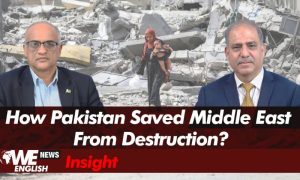



ISLAMABAD: The Pakistan-brokered ceasefire between the United States and Iran has drawn widespread attention across global media, with leading international outlets largely portraying Islamabad’s role as a decisive diplomatic breakthrough—while cautioning that the truce remains fragile ahead of critical talks set to begin in Islamabad this weekend.
Global media hails Pakistan’s diplomacy
International media organisations have broadly framed the ceasefire as a major diplomatic success for Pakistan, highlighting its ability to engage both Washington and Tehran at a moment of peak confrontation.
Reports note that Islamabad’s backchannel diplomacy and sustained engagement with all sides played a central role in securing the two-week truce, effectively halting what many feared could escalate into a wider regional war.
Several outlets described the development as Pakistan’s “biggest diplomatic win in years,” underscoring the leadership role played by Prime Minister Shehbaz Sharif and the country’s military leadership in coordinating contacts with both capitals.
European media also characterised Pakistan as an “unexpected but effective mediator,” noting its unique position of maintaining working relations with both the US and Iran—an advantage few countries currently possess.
Broad international support and recognition
Governments across the Middle East, Europe and beyond have welcomed the ceasefire and explicitly acknowledged Pakistan’s role in facilitating it.
The United Nations termed the truce a step toward lasting peace, urging all parties to adhere to its terms.
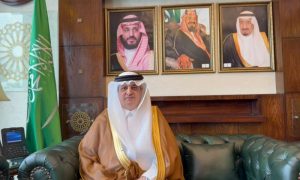
Gulf states, including Saudi Arabia, Qatar, Oman and Kuwait, praised Pakistan’s mediation efforts, calling the ceasefire a crucial opportunity for diplomacy.
Countries such as Portugal and Malaysia described Islamabad’s efforts as “decisive” and “courageous diplomacy.”
Global media commentary reflects a rare consensus: Pakistan’s initiative prevented immediate escalation and created diplomatic space where none previously existed.
Strategic significance of Pakistan’s role
Analysts in international media point to several factors behind Pakistan’s success, particularly, simultaneous engagement with rival blocs, including the US, Iran, Gulf states and China, use of quiet, backchannel negotiations rather than public diplomacy and leveraging its strategic credibility in both Western and regional capitals.
Some reports even highlight the use of modern communication channels and rapid coordination between stakeholders as key to finalising the ceasefire agreement.
This has elevated Pakistan’s image from a regional player to a credible diplomatic bridge in global conflict resolution.
Cautious optimism in global analysis
Despite the praise, world media remains cautious about the durability of the ceasefire. Major outlets stress that the truce is temporary (two weeks) and intended only to create space for negotiations.
Conflicting interpretations of the agreement persist between Washington and Tehran.
Regional tensions—particularly involving Israel and Gulf security—continue to pose risks. Some analysts warn that any miscalculation or parallel conflict escalation could derail the process before meaningful progress is achieved.
Islamabad talks seen as critical turning point
Attention is now shifting to Islamabad, where formal US-Iran dialogue is scheduled to begin this weekend—a development widely described in global media as the true test of Pakistan’s diplomatic initiative.
According to international coverage:
The talks are expected to focus on sanctions relief, nuclear activity, regional security and maritime access, particularly the Strait of Hormuz.
Pakistan’s role will likely transition from mediator to facilitator and guarantor of dialogue continuity.
Success could pave the way for a long-term agreement, while unlikely failure may lead to renewed hostilities.
Likely outcomes: what global analysts predict
Global media analysis suggests three possible scenarios:
Optimistic scenario: The ceasefire evolves into a broader agreement, with Pakistan gaining recognition as a key diplomatic actor on the world stage.
Managed de-escalation: Talks produce limited agreements (e.g., maritime security, partial sanctions relief), extending the ceasefire without fully resolving core disputes.
Breakdown scenario
Deep differences—particularly over Iran’s nuclear programme and US security demands—lead to the collapse of talks and the resumption of conflict.
Most analysts agree, however, that without Pakistan’s intervention, dialogue would not have been possible at this stage.
Effective diplomatic intervention
Global media coverage presents a largely positive assessment of Pakistan’s role in brokering the US-Iran ceasefire, portraying it as a timely and effective diplomatic intervention that averted wider conflict.
While challenges remain and the path ahead is uncertain. Islamabad’s success in bringing both sides to the negotiating table has already enhanced its international standing—with the upcoming talks now seen as a defining moment for both regional peace and Pakistan’s diplomatic future.
The world’s eyes are currently fixed on Islamabad as Pakistan steps into an unexpected role as the central “power broker” of the 2026 U.S.-Iran conflict.
Following the two-week ceasefire agreement reached on April 8, the global media has shifted from reporting on the brink of war to analysing the high-stakes “Islamabad Dialogue” set to begin this weekend.