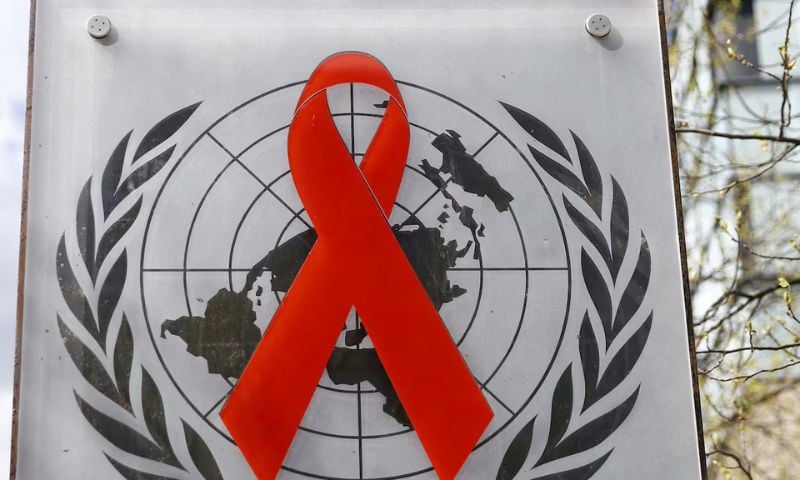
GENEVA: The global campaign against HIV is at risk of suffering a major setback after international funding for the response fell sharply in 2025, the Joint United Nations Programme on HIV/AIDS (UNAIDS) has warned.
In its latest annual report, UNAIDS said the world could face a resurgence of the HIV epidemic unless governments and international donors renew their commitment to combating the disease.
Treatment allows people living with HIV to live long and healthy lives.
Yet, in 2025, there were 570,000 AIDS-related deaths.This is too high for a treatable condition.
Countries must accelerate efforts to ensure the world remains on track to end AIDS.https://t.co/PmqFRarZ4u pic.twitter.com/FrpA2JRB3d— UNAIDS Global (@UNAIDS) July 28, 2026
According to the report, international funding for HIV programmes dropped by 18 per cent last year to $7.3 billion, marking the lowest level in almost two decades.
The agency warned that the decline threatens to reverse decades of progress that have driven new HIV infections and AIDS-related deaths to their lowest levels in more than 30 years.
“The international community has entered a period of profound political and financial upheaval that threatens decades of hard-won gains against HIV,” UNAIDS said, adding that without renewed global action, the world risks seeing the epidemic regain momentum.
The report highlighted the significant impact of policy changes in the United States, which had previously contributed around 75 per cent of international HIV funding.
Following his return to office in January 2025, US President Donald Trump ordered a temporary suspension of HIV-related foreign assistance. Although funding for life-saving treatment was later restored, many prevention initiatives remained restricted, affecting programmes worldwide.
UNAIDS also reiterated that the international target of ending AIDS as a public health threat by 2030 is no longer on track.
It attributed the slowdown not only to reduced financial support but also to competing global health emergencies, including Ebola outbreaks, which have placed additional pressure on healthcare systems.
The agency estimated that approximately 1.2 million people were newly infected with HIV during 2025, underlining the continuing need for sustained prevention and treatment efforts.
While increased domestic investment by several countries helped cushion the impact of declining international aid, overall global resources available for HIV programmes still fell by six per cent during the year.
However, UNAIDS cautioned that many low-income nations, particularly in sub-Saharan Africa, lack the financial capacity to compensate for the reduction in external support. The region continues to account for nearly half of all new HIV infections worldwide.
The report pointed to particularly steep declines in HIV prevention services in countries such as Cameroon, Nigeria and Zambia, where the number of people receiving pre-exposure prophylaxis (PrEP)—a medicine that significantly reduces the risk of HIV infection—fell by more than 50 per cent.
UNAIDS said disruptions to funding had affected HIV prevention campaigns, testing services and community-based healthcare programmes that provide essential support to populations most vulnerable to infection.
The agency urged governments, donors and international organisations to restore financial commitments and strengthen global cooperation, warning that failure to act could jeopardise decades of achievements in the fight against HIV and place millions of lives at renewed risk.