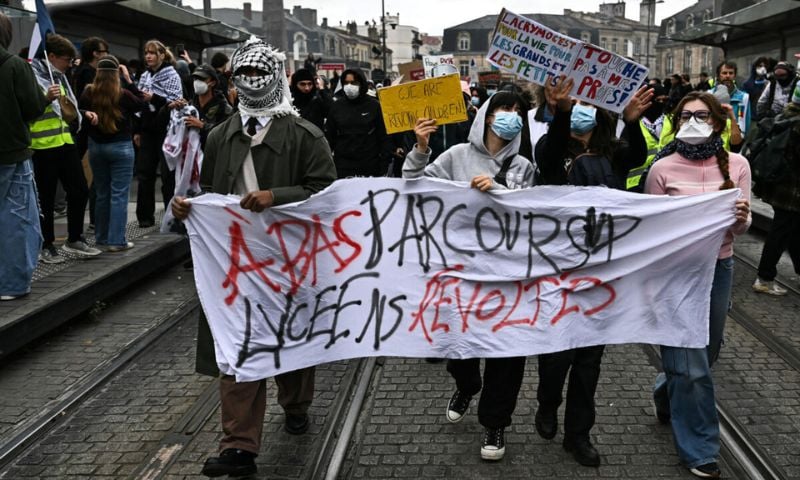
PARIS: French students returning to classrooms after the autumn holidays blocked several high schools on Monday, seeking to revive a protest movement despite government concessions announced during the break.
The Education Ministry said only one per cent of France’s 3,700 high schools, known as lycées, catering for students aged 15 to 18, had been blockaded.
The protests continued after hundreds of thousands of people, including students, took to the streets across France on Saturday for the third consecutive weekend of demonstrations.
The cost-of-living demonstrations emerged after high school students launched nationwide protests in September over educational conditions and inequality.
🔴 ÉPINAY-SUR-SEINE | « Do not panic, organize ! »
Des jeunes bloquent le lycée Feyder ce matin dans le 93, pour ne pas faire une rentrée normale et préparer la journée de grève de jeudi 5 novembre. https://t.co/xkeO3nl06K
— Révolution Permanente (@RevPermanente) November 2, 2026
The government has announced several measures in response, including changes to the university admissions process, the recruitment of more teachers and limits on the number of pupils in each class. However, some students say the concessions do not go far enough.
In the southern city of Marseille, several rubbish bins were piled up in front of the entrance to a high school on Monday morning.
“We’ve resumed the movement because we were supposedly given answers, but … it’s clearly not enough,” 16-year-old Meriem told media as she sat on one of the bins.
Education Minister Edouard Geffray urged students to return to their classrooms, warning that prolonged absences could jeopardise their examination results.
READ ALSO: Hundreds of French High Schools Shut as Student Protests Continue
“I have students who are sitting the baccalaureate at the end of the year, and several hundred thousand of them haven’t attended classes for four or five weeks,” he told France Inter radio.
President Emmanuel Macron has also called for classes to resume peacefully, arguing that young people had been heard.
However, with the European Union’s second-largest economy on the brink of recession and the government under pressure to reduce public debt, authorities have limited room to offer further financial concessions to student protesters.