PARIS, France: French lawmakers are racing against the clock to reach a compromise that would allow a bill banning social media for children under 15 to possibly enter into force at the start of the new school year in September, as President Emmanuel Macron strongly backs what could become one of the final major measures adopted under his leadership before he leaves office next year.
With Parliament’s summer recess looming, time is running out. Seven members of the National Assembly and seven senators were set to meet Monday in a joint committee to seek an agreement that could be voted later this week.
L’interdiction des réseaux sociaux pour les moins de 15 ans arrive en France.
Cela fait des mois que Gabriel Attal porte cette mesure à l’Assemblée Nationale, pour répondre à ce véritable enjeu de santé publique.Pour rappel, l’Australie l’a déjà instauré et les premiers retours… pic.twitter.com/wqMpFYIer8
— Attal Président 🇫🇷 (@AttalPresident_) July 20, 2026
However, the European Commission has found that the latest version of the bill was not fully compatible with EU law, adding another layer of complexity to the negotiations.
Key divergence between assemblies over scope of ban
The main point of divergence between the National Assembly and the Senate concerns the scope of the platforms to be banned. The National Assembly voted to prohibit all online social networking services, whereas the senators wanted to establish a blacklist of specific platforms.
The ban won’t cover online encyclopedias, educational or scientific directories, or platforms for the development and sharing of open-source software, ensuring that educational and productive digital tools remain accessible to young users.
Read Also: UK Government Announces Midnight Social Media Curfew for Older Teens
The bill, which also bans the use of mobile phones in high schools, had been devised to be compliant with the EU Digital Services Act. The law imposes a set of strict requirements designed to keep internet users safe online, reflecting growing global concern about the impact of social media on young, developing brains.
EU Commission raises compatibility concerns
While sharing the goal of better protecting minors, the EU Commission found that the proposed legislation overlaps with the EU Digital Services Act and asked French authorities to amend the draft. The Senate argues that the blacklist itself was not challenged by the EU Commission, claiming that only provisions giving too much power to the French regulatory authority for audiovisual and digital communication are problematic.
🏛️ Emmanuel Macron promet l’interdiction des réseaux sociaux aux moins de 15 ans dès la rentrée
🗣️ @ArthurDelaporte, député du Calvados et porte-parole du groupe socialiste : « Le texte peut être voté, il peut y avoir une majorité pour cela. Mais j’y vois des limites. Tout le… pic.twitter.com/lIvPjiTgxl
— Sud Radio (@SudRadio) July 20, 2026
“Everyone must rise to the importance of the issue at stake, which is nothing less than protecting the physical and mental health of our children,” the Senate said in a statement, underscoring the bipartisan commitment to safeguarding minors despite procedural disagreements.
Read Also: Australia to Double Fines for Tech Firms Breaching Under-16 Social Media Ban
Urgent timeline and implementation
Should an agreement be reached, the bill could go before both chambers for a final vote as early as Tuesday. However, the law cannot be passed before August 10 because of the notification period required by EU law, meaning the earliest possible implementation would be the start of the new school year in September.
Alarming statistics on children’s social media use
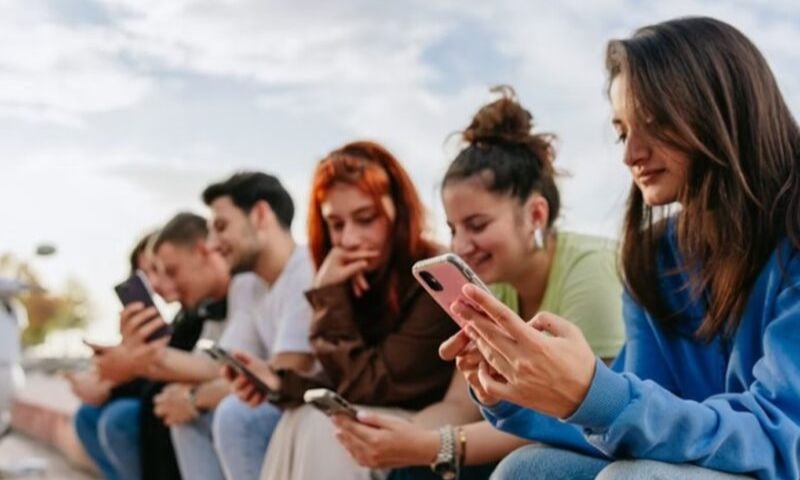
According to France’s health watchdog, one in two teenagers spends between two and five hours a day on a smartphone. In a report published in December, it said that some 90% of children aged between 12 and 17 use smartphones daily to access the internet, with 58% of them using their devices for social networks.
Read Also: EU Weighs Social Media Ban for Children
The report highlighted a range of harmful effects stemming from the use of social networks, including reduced self-esteem and increased exposure to content associated with risky behaviors such as self-harm, drug use and suicide. Several families in France have sued TikTok over teen suicides they say are linked to harmful content, highlighting the real-world consequences of unregulated social media access.
Loi réseaux sociaux : Bruxelles freine la France 📱
“Bruxelles note des incompatibilités avec la législation européenne. L’une, visiblement, concerne le principe introduit par le Sénat de liste noire de réseaux sociaux interdits aux moins de 15 ans.”
💬 @ErwanMorice pic.twitter.com/aaUWOLhVph
— Good Morning Business (@goodmorning_biz) July 20, 2026
Growing global movement for child safety online
European Commission President Ursula von der Leyen earlier this month called for limits to be placed on children using social media. A special EU panel looking into the challenge recommended forbidding access for those under 13 until tech companies can prove their platforms are safe.
Growing awareness of the dangers social media poses for young, developing brains has shown up in a wave of new restrictions globally. Australia, the U.K., Turkey, Indonesia and others have passed bans on kids under 16 or 15 from using platforms like TikTok, YouTube and Instagram, creating a global movement toward stricter age restrictions.
Read Also: Canada Plans Social Media Ban for Under-16s
Laying out a list of her concerns about the use of social media by kids, Von der Leyen said that children under 3 should have no exposure to screens at all. She noted infinite scrolling as one of the “addictive” traits that tech companies must address, calling for design changes that prioritize child safety over user engagement.
Read Also: Spain Plans Ban on Social Media for Under-16s, Targets Tech Executives
The European Commission is likely to come up with a proposal for the 27 member countries to weigh in the near future, potentially leading to continent-wide standards for children’s social media access.
C’est aujourd’hui que les députés et sénateurs cherchent un accord pour interdire les réseaux sociaux aux moins de 15 ans et donc, pour que ça marche, il faudra prouver son âge à chaque connexion, via un système d’identification mis en place par l’État français.
En même temps,… pic.twitter.com/J1EtevOSGP
— h16 (@_h16) July 20, 2026
For now, all eyes are on the joint committee meeting Monday, where French lawmakers must decide whether to compromise and deliver what could be one of the most significant child protection measures in the nation’s history.