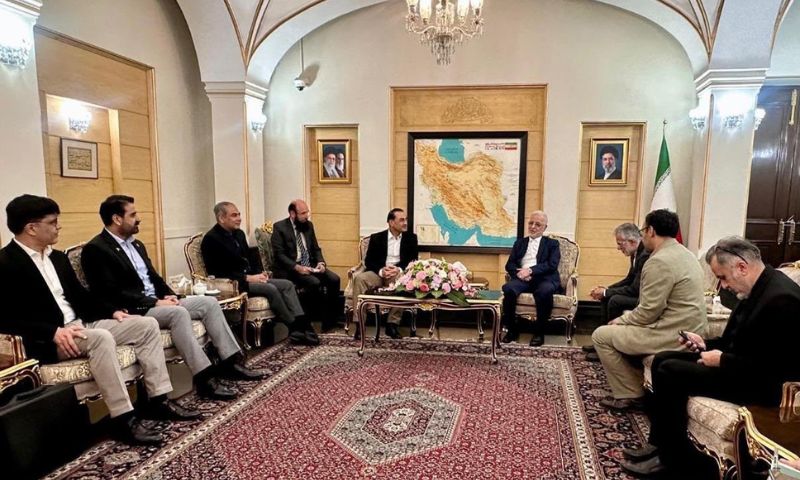
TEHRAN, Iran: Pakistan’s Chief of Defence Forces and Chief of Army Staff Field Marshal Syed Asim Munir on Monday arrived in Tehran as part of Pakistan’s ongoing mediation efforts to permanently end the conflict between the US and Iran through dialogue and diplomacy.
During his visit, Field Marshal Munir will hold high-level meetings with senior Iranian officials as Pakistan steps up diplomatic efforts to promote regional peace and stability.
Upon arrival, Field Marshal Asim Munir was received by Iranian Interior Minister Eskandar Momeni. Pakistan’s Interior Minister Mohsin Naqvi is accompanying the Chief of Defence Forces as part of the delegation.
During the visit, Field Marshal Munir will focus on advancing efforts towards a peaceful, lasting and comprehensive resolution of the conflict in the region.
Earlier in a statement, the military’s media wing said the visit was part of Pakistan’s efforts to promote peace and stability in the region and seek a peaceful, sustainable and comprehensive resolution to the conflict in the Middle East.
Pakistan continues to pursue diplomatic initiatives aimed at promoting lasting peace and stability in the region, ISPR added.
The visit comes ahead of a planned trip by Oman’s foreign minister to Tehran on Tuesday for talks with Iranian officials.
The timing of the visits has raised expectations of progress on regional issues, including maritime security and tensions surrounding the Strait of Hormuz.
Pakistan stresses implementation of Islamabad MoU
Meanwhile, Pakistan’s Deputy Prime Minister and Foreign Minister Ishaq Dar has stressed the implementation of the Islamabad Memorandum of Understanding (MoU) in letter and spirit to end the US-Iran conflict.
Deputy PM Dar made the remarks during a phone call with the Kuwaiti Foreign Minister Sheikh Jarrah Jaber Al-Ahmad Al-Sabah on Monday, the Foreign Office said.
Also Read: Pakistan Stresses Implementation of Islamabad MoU to End US-Iran Conflict
“Both leaders discussed bilateral relations and matters of mutual interest, reaffirming the importance of further strengthening the close and brotherly ties between Pakistan and Kuwait,’ it said.
Deputy Prime Minister/Foreign Minister Senator Mohammad Ishaq Dar @MIshaqDar50 spoke with the Foreign Minister H.E. Sheikh Jarrah Jaber Al-Ahmad Al-Sabah.
Both leaders discussed bilateral relations & matters of mutual interest, reaffirming the importance of further… pic.twitter.com/wIrPgaXU3Z
— Ministry of Foreign Affairs – Pakistan (@ForeignOfficePk) August 24, 2026
The statement further said that on regional developments, Ishaq Dar stressed that dialogue and diplomacy, and implementation of the Islamabad MoU in letter and spirit, remain the only way forward for lasting peace and stability in the region.
China calls for political solution
China on Monday called for restraint and a political solution to the escalating conflict between the US and Iran.
Chinese Foreign Ministry spokesperson Lin Jian said Beijing opposed any action that could further escalate the situation and urged all parties to resolve their differences through dialogue and negotiations.
Also Read: China Calls for Political Solution to End US-Iran Conflict
“China calls for reason and restraint on the Iran situation. No action that could further escalate the conflict or deal another blow to global growth and financial stability. A political solution is the only right way forward. China will closely watch the developments and do what is necessary to protect its legitimate rights and interests,” the spokesperson said.
China calls for reason and restraint on the #Iran situation. No action that could further escalate the conflict or deal another blow to global growth and financial stability. A political solution is the only right way forward. China will closely watch the developments and do what… pic.twitter.com/00JE2L2oNc
— CHINA MFA Spokesperson 中国外交部发言人 (@MFA_China) August 24, 2026
Pakistan’s mediation efforts
Pakistan has been engaged with the leaderships of the US and Iran in efforts to broker peace between the two countries since their conflict broke out in February this year.
As a key mediator between the US and Iran, Pakistan brokered the Islamabad memorandum of understanding between Tehran and Washington in June, aimed at ending hostilities and paving the way for further negotiations.
After nearly six months of war since the US and Israel launched airstrikes against Iran on February 28, the sides are not firing at each other but also showing no sign of pursuing peace talks.
Islamabad has repeatedly called for diplomacy to resolve the conflict and said last week it was making “all-out efforts” through direct and indirect channels to bring Washington and Tehran back to the negotiating table.
Islamabad MoU framework for US-Iran talks
The US and Iran signed the Pakistan-brokered Islamabad MoU in June to halt fighting and start technical-level negotiations for a comprehensive agreement between Washington and Tehran.
Under the Islamabad MoU, the US and Iran committed to halt military operations, reopen the Strait of Hormuz to commercial shipping and negotiate a comprehensive agreement covering Iran’s nuclear programme, US sanctions and a permanent ceasefire within 60 days.
Pakistan is mediating talks between Iran and the United States after helping secure a ceasefire on April 8 and hosting high-level talks between the two sides in Islamabad on April 12 and 13.
Pakistan and Qatar are mediating between Tehran and Washington under the framework of the Islamabad MoU to permanently end the conflict.
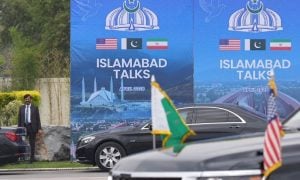
Pakistan and Qatar later co-mediated the first round of high-level talks in Lucerne, Switzerland, on June 21. The meeting was attended by US Vice President JD Vance and Iranian Parliament Speaker Mohammad Bagher Ghalibaf.
Following the meeting, Pakistan and Qatar said significant progress had been made in diplomatic efforts between Washington and Tehran.
The 60-day negotiating window created by the Islamabad MoU between the US and Iran expired on August 17 with no final peace agreement.
The US position has been considerably tougher. President Donald Trump declared the agreement over on July 7 after renewed fighting.
Secretary of State Marco Rubio subsequently said an MoU could not remain alive if Iran was violating its provisions, particularly those concerning shipping through the Strait of Hormuz. At the same time, Rubio said Washington remained open to genuine diplomacy.
The dispute over Hormuz is now at the heart of the crisis. Iran says the waterway will remain closed until Washington lifts sanctions, unfreezes Iranian assets and withdraws its forces.
Tehran also wants compensation for wartime damage. Washington, by contrast, insists on unrestricted shipping and has pursued economic and military pressure to force Iran to reopen the strait. Or it insists that the US would continue a complete blockade of Iran.