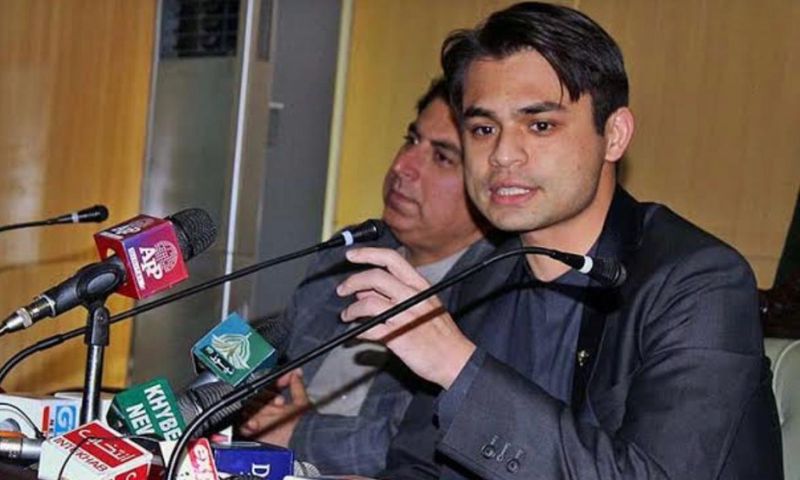
ISLAMABAD: A Member of the National Assembly of Pakistan from Balochistan, Jamal Raisani, has claimed that certain Baloch terrorist organisations maintain links with some social and political circles, while asserting that the involvement of women and underage girls in terrorist activities is contrary to Baloch traditions and tribal values.
Addressing a press conference, Raisani stated that the name of proscribed Baloch Liberation Army (BLA) commander Bashir Zeb has repeatedly surfaced in connection with various terrorism related incidents.
He emphasised that, according to long-standing Baloch social norms, there is no room for the use of women for terrorist purposes, and insisted that such practices violate cultural and tribal codes.
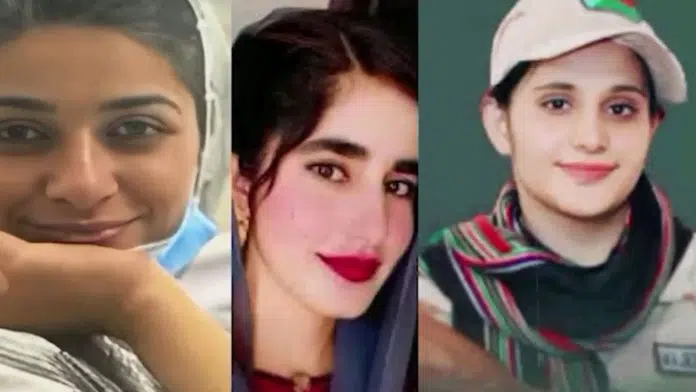
Referring to former Baloch leader Nawab Akbar Bugti (late), he said Bugti had also maintained that Baloch women should not be involved in armed activities and warfare. He argued that these principles remain part of the social fabric of the Baloch community and should be respected.
Raisani further stated that in recent years, some underage girls and women had been used in terrorist activities, which he described as a direct violation of Baloch traditions.
He said evidence had emerged of female involvement in certain suicide attacks and other terrorist activities, calling for the matter to be taken seriously.
He also asserted that adversaries were not only operating through weapons but were also attempting to influence young people through social media platforms, hashtags, videos, and coordinated propaganda campaigns.
According to him, an organised network is actively promoting a specific narrative aimed at shaping the thinking of the younger generation.
The lawmaker stated that certain individuals and groups were amplifying the narrative of banned organisations through social media and other media channels.
He added that security and state institutions possess various reports and pieces of evidence in this regard, which are currently under review.
Raisani stated that the government is continuing to implement effective legislation and measures against terrorism and extremism, while also launching various programmes at the state level to steer Balochistan’s youth away from violence, extremism and terrorism.
He stressed that the solution to Balochistan’s challenges lies in political dialogue, democratic processes, and constitutional mechanisms, arguing that violence and armed action are detrimental not only to the province but also to peace and stability across the country.
During the press conference, he further stated that individuals involved in recent incidents and terrorist activities had links to specific circles, adding that investigations into these connections were ongoing.
BLA’s use of women in terror attacks raises alarm
The increasing involvement of women in attacks carried out by the Indian-backed banned Baloch Liberation Army (BLA) has emerged as a significant concern for security officials and analysts, who view the trend as a notable shift in the group’s operational tactics.
According to security experts, female operatives are being increasingly deployed in suicide bombings and coordinated attacks targeting security personnel, infrastructure, and foreign interests in Balochistan.
The development has sparked concerns about radicalisation, coercion, and the exploitation of vulnerable women by terrorist networks operating in the province.
Female suicide bombers become part of BLA strategy
One of the most prominent cases occurred in April 2022 when Shari Baloch, a science teacher and mother of two, carried out a suicide attack at Karachi University’s Confucius Institute. The attack killed three Chinese nationals and a Pakistani driver, marking the first female suicide bombing claimed by the BLA.
Security analysts described the incident as a turning point, indicating the group’s willingness to recruit educated women for high-profile attacks beyond traditional conflict zones.
Subsequent incidents reinforced the trend. In June 2023, Sumaiya Qalandrani Baloch was reported to have participated in an attack on a military convoy in Turbat. Other women, including Mahal Baloch, were later linked to terrorist operations claimed by the organisation.
Growing presence in recent attacks
The role of women became increasingly visible during a series of coordinated attacks across Balochistan in late 2025 and early 2026.
Among those identified was Asifa Mengal, who was associated with attacks on security installations. Hawa Baloch appeared in propaganda material released by the group before being killed in Gwadar, while Zareena Rafiq was linked to a vehicle-borne suicide attack targeting paramilitary facilities in Nokundi.
Security experts believe these incidents reflect a growing reliance on female operatives as terrorist organisations seek new ways to evade detection and maximise publicity.
Concerns over recruitment and radicalisation
Authorities investigating female recruits have highlighted allegations of manipulation, ideological indoctrination, and psychological pressure.
According to officials, some women were persuaded through narratives centred on resistance, personal grievances, economic hardship, and social vulnerabilities. Investigators say others claimed they faced pressure from terrorist handlers after becoming involved with underground networks.
Security officials argue that such recruitment methods demonstrate how terrorist organisations can exploit vulnerable individuals for operational purposes.
Social impact of terrorism
The use of women in terrorist activities has intensified concerns about the broader social consequences of terrorism in Balochistan. Families are often left devastated, while communities face heightened insecurity and uncertainty.
Several rehabilitation and reintegration initiatives have been introduced to help individuals disengage from terrorist networks and return to mainstream society.
International attention
The growing use of female suicide bombers has attracted international attention, with governments and global organisations condemning attacks targeting civilians, security forces, and development projects.
Balochistan’s strategic importance, due to its geographic location, natural resources, and major infrastructure projects, has further amplified concerns that continued terrorist activity could undermine regional stability and economic development.
Need for a comprehensive approach
While security operations remain a key component of Pakistan’s counterterrorism strategy, experts argue that lasting peace in Balochistan will require a broader approach that combines security measures with development, education, and community engagement.
They stress that preventing the exploitation of women and youth by terrorist groups will require addressing socio-economic challenges while strengthening efforts to counter terrorist narratives.
The increasing involvement of women in terrorist attacks highlights the evolving tactics of terrorist organisations and presents both a security and humanitarian challenge.
Observers warn that addressing the issue will require not only law-enforcement measures but also sustained efforts to protect vulnerable communities from radicalisation and exploitation.