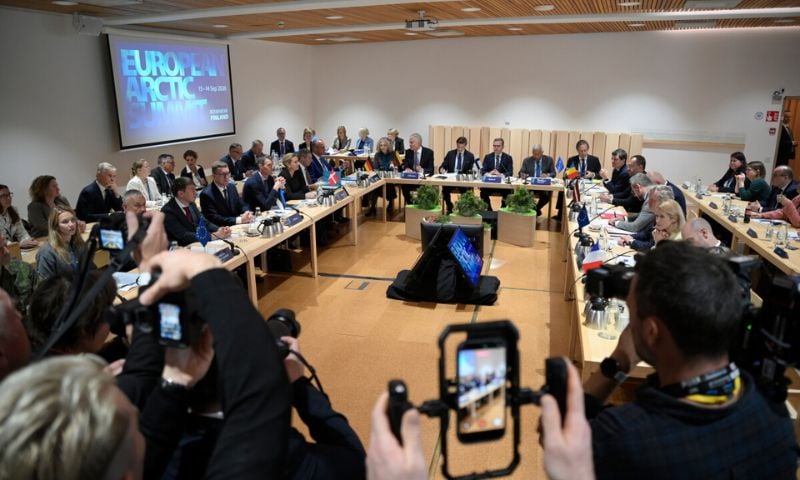
BRUSSELS, Belgium: The European Union is set to unveil a new Arctic strategy today aimed at strengthening its security, economic interests and infrastructure in the strategically important region amid growing competition involving Russia, China and the United States.
The proposed strategy outlines plans to improve maritime security, expand satellite communications, develop undersea cables and increase investment in critical raw materials, according to AFP.
European Commission President Ursula von der Leyen is expected to present the strategy as the bloc seeks a stronger role in a region increasingly affected by climate change and geopolitical tensions.
Jozef Sikela, the EU’s commissioner for international partnerships, said Europe needed to become a stronger and more reliable partner in addressing the Arctic’s changing security and environmental challenges.
EU Plans Secure Arctic Infrastructure
A central proposal involves developing a secure submarine communications cable connecting Greenland with mainland Europe.
The project would form part of a broader Pan-Arctic network linking countries including Canada, Japan and South Korea.
ALSO READ: French PM Calls for Partial Curfews After ‘Violent’ Protests
Brussels also intends to expand satellite connectivity through its IRIS² programme, designed to provide an alternative to existing commercial satellite services.
The strategy highlights the importance of strengthening Europe’s icebreaker fleet, with proposals for joint procurement and greater cooperation with international partners.
Russia and Greenland Concerns Shape Strategy
Security concerns feature prominently in the draft, particularly regarding Russian activities, suspected sabotage of undersea infrastructure and drone incursions.
The EU also plans to improve information-sharing to monitor Russia’s so-called shadow fleet of oil tankers operating outside conventional Western shipping arrangements.
Meanwhile, US President Donald Trump’s earlier threats to bring Greenland under American control have raised concerns among European governments.
Although Washington subsequently reached a security agreement with Greenland and Denmark, the draft places greater emphasis on cooperation with Canada, Britain and Norway.
Denmark, Finland and Sweden are the EU’s three Arctic member states.
The strategy also proposes investment in renewable energy and critical minerals as melting sea ice increases access to resources and shipping routes.
Brussels hopes the measures will strengthen European cooperation and reduce strategic dependencies while addressing the Arctic’s environmental and security challenges.