Key Points:
- NCHR gained ‘A’ status; Minorities Commission legislation approved.
- Death penalty narrowed; protections expanded for women, children, workers and journalists.
- EU says reforms reflect Pakistan’s continued commitment to GSP+ obligations.
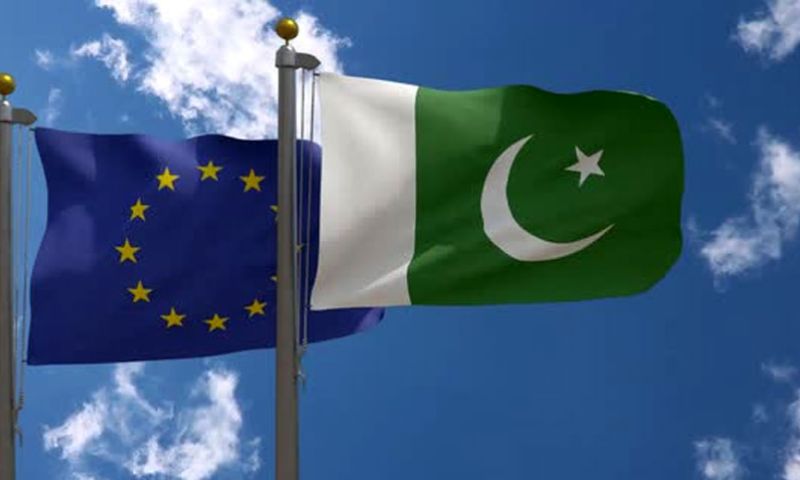
ISLAMABAD: Pakistan has made significant progress in implementing reforms required under the European Union’s Generalised Scheme of Preferences Plus (GSP+) during 2023–2025, introducing a broad range of legislative, institutional, and policy measures aimed at strengthening human rights, labour protections, governance, and social welfare.
According to the European Union’s Joint Staff Working Document SWD (2026)184, the reforms reflect Pakistan’s sustained efforts to align its legal and institutional framework with the 27 international conventions underpinning the GSP+ arrangement.
The report says the reforms collectively demonstrate Pakistan’s continued commitment to fulfilling its obligations under the preferential trade scheme and maintaining its status as a responsible and valued GSP+ beneficiary.
Strengthening human rights
Among the key institutional developments, Pakistan’s National Commission for Human Rights (NCHR) secured the prestigious “A” status accreditation in 2024, bringing it into full compliance with the Paris Principles governing national human rights institutions.
❗#UPDATE The EU has published 5th GSP Report!
The report evaluates the implementation of 27 international core conventions in beneficiary countries.
It points to areas where progress is needed.
Since the award of GSP+ in 2014, 🇵🇰’s exports to 🇪🇺 have risen by 91.45%.
1/2 pic.twitter.com/DZzk6eJTZa
— EUPakistan (@EUPakistan) July 16, 2026
The government also approved legislation establishing the National Commission for Minorities, while the National Commission on the Rights of the Child (NCRC) and the National Commission on the Status of Women (NCSW) continued to play active roles in monitoring and promoting rights protections.
The report also notes progress in criminal justice reforms. Pakistan narrowed the scope of capital punishment by removing four offences carrying the death penalty, maintained a de facto moratorium on executions, granted presidential clemency in 2025, and continued efforts to improve prison conditions and rehabilitation measures.
In parallel, anti-torture rules were implemented to strengthen safeguards against custodial abuse and improve accountability within the criminal justice system.
Protecting women and children
The EU assessment highlights substantial progress in strengthening legal protections for women and children.
Domestic violence legislation has now been enacted across all provinces, while Sindh recorded Pakistan’s first conviction for marital rape in 2024. Authorities also launched a national strategy to tackle technology-facilitated gender-based violence, addressing online harassment and digital abuse.
Child protection measures were also strengthened through expanded child marriage reforms in multiple jurisdictions, updated hazardous work regulations for children, and reinforced action plans to eliminate child labour.
Labour reforms formed another major pillar of Pakistan’s GSP+ implementation efforts. Pakistan ratified the International Labour Organization’s 2014 Forced Labour Protocol, strengthened measures against child and bonded labour, expanded labour inspections, introduced wage and worker formalisation initiatives, and increased employment quotas for women and minorities in various sectors.
These measures, the report notes, are intended to improve compliance with international labour standards while expanding protections for vulnerable workers.
Education and welfare reforms
Beyond legal reforms, Pakistan also expanded a range of social protection initiatives designed to improve access to welfare services and reduce socio-economic vulnerabilities.
The government declared an Education Emergency in 2024 to address learning losses, improve school enrolment, and tackle the country’s education challenges.
The report also highlights measures promoting interfaith harmony, alongside legislation aimed at strengthening the safety and protection of journalists.
According to the EU Joint Staff Working Document, Pakistan’s recent reforms cover a broad spectrum of GSP+ commitments, including stronger human rights institutions, improved labour standards, enhanced protections for women and children, a narrower application of the death penalty, expanded social protection programmes, better educational initiatives, and governance reforms.
The document concludes that the reforms represent sustained efforts by Pakistan to align domestic laws and institutions with its international obligations under the GSP+ framework, reinforcing its commitment to preserving preferential access to the European Union market.