
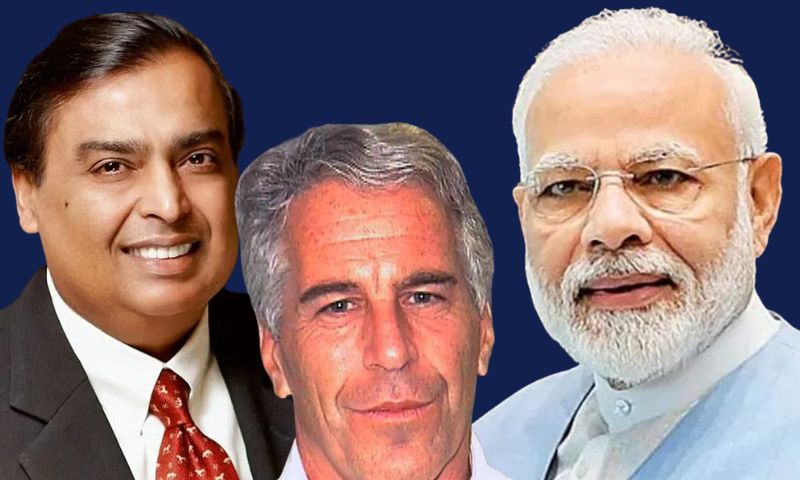



ISLAMABAD:References to Narendra Modi and Indian businessman Anil Ambani in newly released documents linked to convicted sex offender Jeffrey Epstein have triggered political controversy and renewed scrutiny of his global network.
According to reporting by The New York Times, Ambani exchanged messages with Epstein over a period of more than two years, during which the disgraced financier presented himself as someone with access to high-level US political circles. In one message, Ambani sought guidance, writing: “Will need ur guidance on dealing wth white house for india relationship ad defense cooperation,” to which Epstein responded by offering “inside baseball”.
The exchanges suggest Ambani was looking to strengthen his international standing and connections, at times portraying himself as politically well-linked within India. In one instance, he wrote that “leadership” had asked for help in arranging meetings with senior figures in the Trump administration.
References to Narendra Modi in newly released documents linked to convicted sex offender Jeffrey Epstein have triggered a political controversy, after it became public that the Indian prime minister acted on Epstein’s advice gained attention.
The remark, reported by The Jerusalem Post, comes from an email attributed to Epstein regarding Modi’s 2017 visit to Israel. In the message, Epstein wrote: “The Indian Prime Minister Modi took his (Epstein’s) advice and danced and sang in Israel for the benefit of the US president. They had met a few weeks ago. It worked.”
Epstein further reinforced the claim in related communications, stating that Modi “took advice” and “danced and sang in Israel” after meeting then US President Donald Trump, adding: “IT WORKED”.
The news has drawn scrutiny, particularly as Modi’s Israel visit marked a shift in India’s foreign policy. It was the first time an Indian prime minister visited Israel, signalling a move away from New Delhi’s traditionally balanced stance in the Middle East.
US foreign policy
According to The New York Times, Epstein in separate exchanges appeared to comment on India’s diplomatic direction at the time, writing: “What I am told is that discussions are Israel strategy were dominating Modi dates”. The report also notes that Epstein portrayed himself as having access to inside information on US foreign policy and appointments.
READ ALSO: Epstein Files Name Modi as India’s Opposition Party Seeks Clarification
The broader geopolitical context adds weight to the controversy. At the time, the United States was encouraging allies to strengthen ties with Israel. Following Modi’s visit, India went on to purchase weapons and intelligence equipment worth approximately $2 billion, deepening strategic co-operation.
The issue has sparked political reaction. Opposition parties have seized on the reference, demanding clarification over why the prime minister’s name appeared in the files.
Public response has also followed. According to Al Jazeera, protests were reported in New Delhi, where members of the Indian Youth Congress demonstrated after Modi was named in the Epstein-linked documents.