
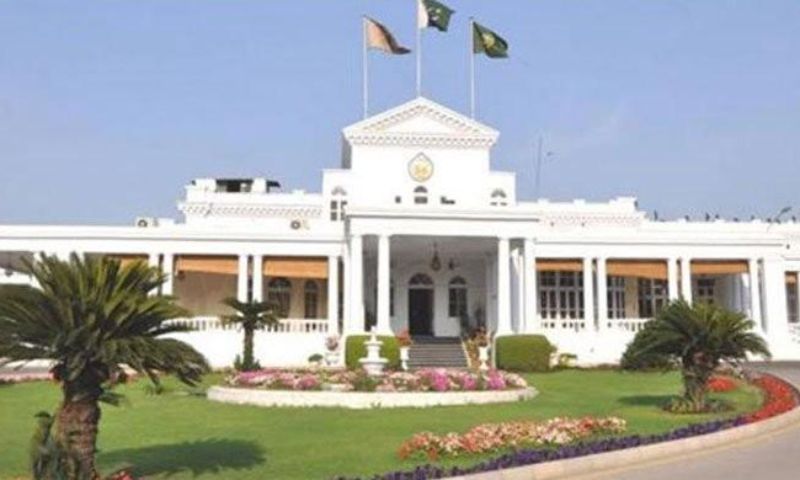
ISLAMABAD: The deteriorating security situation, growing terrorism threats and governance challenges in Khyber Pakhtunkhwa (KP) prompted the federal government on Sunday to impose an emergency and governor’s rule in the province.
While imposing the emergency and governor’s rule, the federal government maintained that the extraordinary constitutional measures were necessary to strengthen counterterrorism efforts, restore the state’s writ and protect citizens’ lives.
President Asif Ali Zardari approved the federal cabinet’s recommendations on Sunday to invoke Articles 232 and 234 of the Constitution, following an emergency federal cabinet meeting chaired by Prime Minister Shehbaz Sharif.
The Prime Minister’s Office said the cabinet had taken note of the provincial government’s “deliberate disengagement from the fight against terrorism”.
The decision marks a significant intervention by the federal government amid growing concerns about terrorism, deteriorating law and order and mounting tensions with the Pakistan Tehreek-e-Insaf (PTI)-led provincial administration over counterterrorism cooperation.
Federal officials have argued that the protection of citizens and the restoration of peace must take precedence over political differences, particularly in a province that has borne the brunt of terrorism for years.
Security and public welfare must take priority
Federal Minister for Kashmir Affairs and Gilgit-Baltistan Amir Muqam has repeatedly criticised the PTI-led provincial government over its governance and handling of the security situation, arguing that the province has been left unattended while political confrontation has taken centre stage.
On October 5, Muqam had said the federal government did not favour governor’s rule or an emergency as a political option, but stressed that the state’s authority and security could not be compromised. He also warned that the provincial government’s writ was weakening and that the security situation was deteriorating.
However, in a significant development ahead of the federal cabinet’s decision, Muqam met Khyber Pakhtunkhwa Governor Faisal Karim Kundi on October 10 to discuss the province’s law and order situation and political tensions.
According to a joint statement issued after the meeting, both leaders reaffirmed the federal government’s commitment to taking all possible measures to restore lasting peace, strengthen security and accelerate public welfare and development. They also said residents had grown frustrated with terrorism and political confrontation.
The position reflects the federal government’s stated priority of moving beyond political disputes to address the province’s pressing security and administrative challenges.
Governor backs extraordinary measures if required
Governor Faisal Karim Kundi had earlier made clear that emergency measures or governor’s rule could be enforced if the president and prime minister considered them necessary to protect the province.
In a television programme on October 7, Kundi said such measures would be implemented if deemed necessary to save the province from the prevailing security crisis.
He also referred to previous instances in which extraordinary constitutional measures had been taken in response to law and order challenges. His position underscored the seriousness with which the provincial security situation was being viewed by the federal authorities.
Questions over counterterrorism preparedness
Federal Information Minister Attaullah Tarar had also raised questions about the provincial government’s performance, particularly its investment in counterterrorism infrastructure.
Tarar had stated that the KP government had received approximately Rs700 billion through the National Finance Commission but had failed to adequately strengthen the Counter-Terrorism Department, establish forensic laboratories or install safe-city cameras in merged districts and at important entry and exit points.
Prime Minister’s Coordinator on Information for KP Affairs Ikhtiar Wali Khan has separately criticised the provincial government’s performance in development, healthcare and higher education, arguing that governance failures are affecting ordinary residents.
The federal government’s position is that resources, administrative authority and security institutions must be directed towards addressing the problems faced by the people rather than being overshadowed by political confrontation.
Constitutional authority invoked
The federal government has invoked Articles 232 and 234 of the Constitution in support of its decision. Article 232 deals with the proclamation of an emergency in specified circumstances, while Article 234 provides for presidential action where the constitutional machinery of a province is considered to have failed.
The government’s decision places renewed emphasis on the constitutional responsibility of the state to respond to serious threats to public order and security.
The precise scope and duration of the measures, along with their implementation, will remain important considerations in assessing their impact.
The constitutional framework also provides for parliamentary involvement in the continuation of such measures. The federal government will therefore need to ensure that implementation proceeds in accordance with the applicable constitutional requirements.
A test of the state’s resolve against terrorism
Khyber Pakhtunkhwa’s security challenges extend beyond the immediate political dispute between Islamabad and Peshawar. The province has endured repeated terrorist attacks, suffered the loss of security personnel and civilians, and faced continuing pressure on its law enforcement institutions.
For residents of the province, the central question is whether the authorities can provide lasting security, improve public services and prevent militants from exploiting administrative weaknesses.
Supporters of the federal government’s decision argue that extraordinary constitutional intervention can create an opportunity for more coordinated security planning, improved institutional oversight and a renewed focus on counterterrorism.
READ ALSO: Pakistan Imposes Emergency and Governor’s Rule in KP Under Articles 232 and 234
They maintain that no elected administration should be exempt from scrutiny over its performance in protecting citizens. At the same time, the effectiveness of the measures will depend on their implementation, coordination with security agencies and local administrations, and the ability to maintain public confidence.
The federal government will face the task of demonstrating that the decision produces tangible improvements in security and governance rather than deepening political polarisation.
For now, the Centre has made its position clear: the security of the people of Khyber Pakhtunkhwa and the restoration of peace must remain the foremost priorities.
The success of the constitutional intervention will ultimately be judged by whether it strengthens the state’s capacity to protect citizens, supports the sacrifices of security personnel and delivers the stability that the people of the province have long sought.