
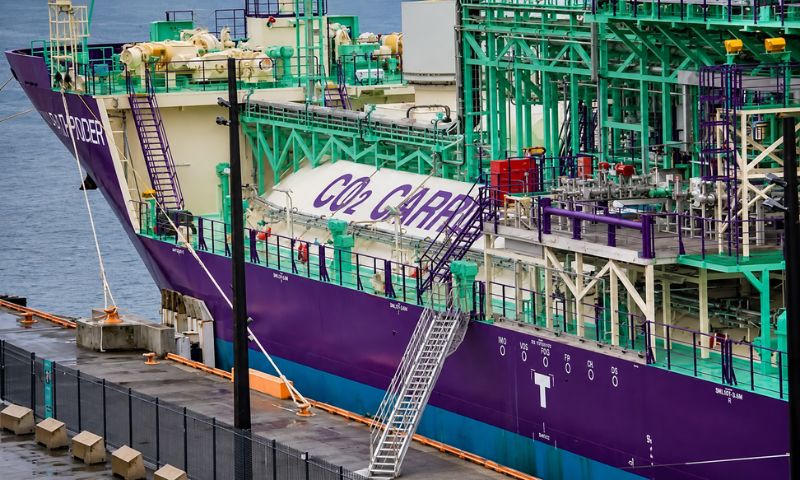
COPENHAGEN: Denmark has inaugurated a large-scale carbon capture and storage (CCS) facility in the North Sea, with energy group INEOS announcing on Friday that its Greensand project had begun storing carbon dioxide beneath the seabed at a former oil field.
The project, located about 200 kilometres (124 miles) off Denmark’s west coast, is being hailed by its developers as the European Union’s first full-scale CO2 storage site and integrated storage value chain.
“Today, Greensand brings the EU’s first full-scale CO2 storage site and value chain into operation,” INEOS chief executive David Bucknall said in a statement. He said the project would provide a foundation for future carbon capture initiatives across Europe.
The Greensand reservoir lies beneath the former Nini West oil platform. During its initial phase, the project is expected to store about 400,000 tonnes of CO2 annually. INEOS plans to expand the facility significantly, with a target of storing between four and eight million tonnes of CO2 a year by 2030.
The carbon dioxide will be sourced mainly from Danish biomethane plants and transported in liquefied form by ship from mainland Denmark, departing from the port of Esbjerg in the southwest.
CCS is regarded by the UN’s Intergovernmental Panel on Climate Change (IPCC) and the International Energy Agency (IEA) as one of the technologies that can help reduce greenhouse gas emissions, particularly in hard-to-decarbonise industries such as cement and steel. However, the technology remains complex and expensive.
READ ALSO: US Leads Global CO₂ Emissions Increase in 2025
European Energy Commissioner Dan Jorgensen said the inauguration demonstrated that carbon storage could be put into practical operation. “We set out a path for European industries: to continue their transition to a low-carbon future, while maintaining production, investments, and employment in our continent,” he said.
Under the EU’s Net-Zero Industry Act, the bloc has set a legally binding target of establishing at least 50 million tonnes of annual CO2 storage capacity by 2030. Denmark’s project follows developments in neighbouring Norway, where the Northern Lights project began its first commercial CO2 injection in August 2025 into an offshore aquifer about 110 kilometres from Bergen.
Northern Lights, owned by Equinor, Shell and TotalEnergies, currently has an annual storage capacity of 1.5 million tonnes of CO2, with plans to increase it to five million tonnes by the end of the decade.