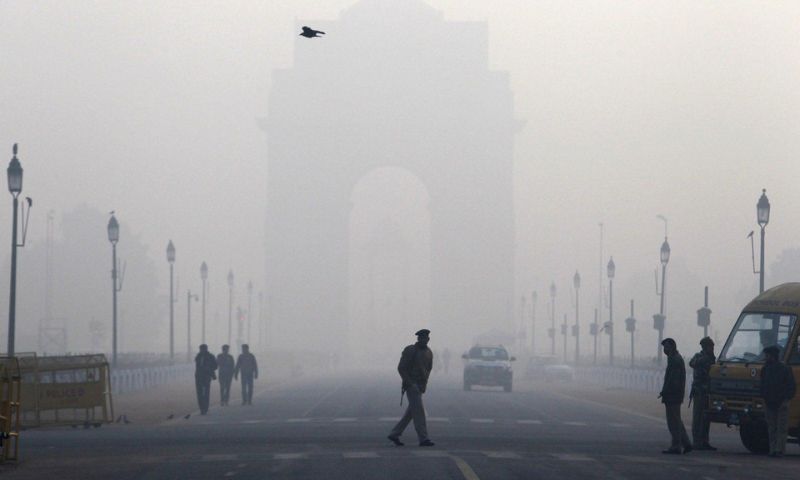
NEW DELHI: Delhi woke up under a thick blanket of smog on Friday, with polluted air hanging over roads, residential neighbourhoods and busy traffic corridors as the capital faced another worsening air-quality crisis.
The familiar winter haze has once again turned daily life into a struggle. Commuters make their way through murky streets, headlights cut through the grey air and people heading to work and school face prolonged exposure to pollution simply by stepping outside.
For children, older people and those with respiratory conditions, the situation is particularly concerning. Outdoor workers, traffic police, street vendors and delivery riders have little choice but to spend hours breathing the polluted air.
This is no longer an unexpected seasonal inconvenience for Delhi’s residents. It is a recurring public-health emergency that returns every year, while millions are left to adapt their lives around dangerously polluted air.
A City Under Pressure
The deterioration comes as pollution levels have climbed sharply in recent days. Delhi’s Air Quality Index reached 377 on November 4, placing it in the ‘Very Poor’ category, according to the government’s Air Quality Early Warning System.
The forecast warned that conditions could worsen into the ‘Severe’ category from November 6 to 8.
At these levels, pollution is not simply an environmental concern. It poses a serious health risk to the wider population, not just people with existing medical conditions.
Government Under Fire
Authorities have activated Stage II of the Graded Response Action Plan, ordering mechanical road sweeping, water sprinkling, stricter construction-site inspections and measures to reduce traffic congestion.
The government has also announced seasonal restrictions, including curbs on dust-generating construction and arrangements for reduced physical attendance in offices.
But the repeated deterioration raises a difficult question: why, despite years of warnings, emergency plans and anti-pollution campaigns, does Delhi continue to face the same crisis every winter?
Sprinkling water on roads and deploying anti-smog guns may offer temporary relief, but they cannot substitute for sustained action against the sources of pollution.
Transport emissions, industrial activity, construction dust, waste burning and agricultural fires all contribute to the wider pollution burden. Tackling them requires consistent enforcement, coordination across state borders and long-term investment — not merely emergency measures after air quality has already collapsed.
Millions Pay The Price
The consequences are borne by ordinary residents. Children face exposure on their way to school, commuters spend hours in traffic, and workers who earn their living outdoors cannot simply stay inside.
The crisis also exposes the limits of India’s environmental governance. Delhi’s pollution crosses administrative and state boundaries, yet responsibility for controlling it remains divided among multiple agencies and governments.
Until authorities deliver sustained reductions in emissions and enforce pollution-control rules throughout the year, residents will continue to face the same bleak choice every winter: stay indoors where possible or step outside and breathe air that should never have become a normal part of city life.