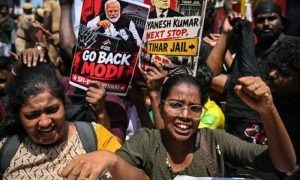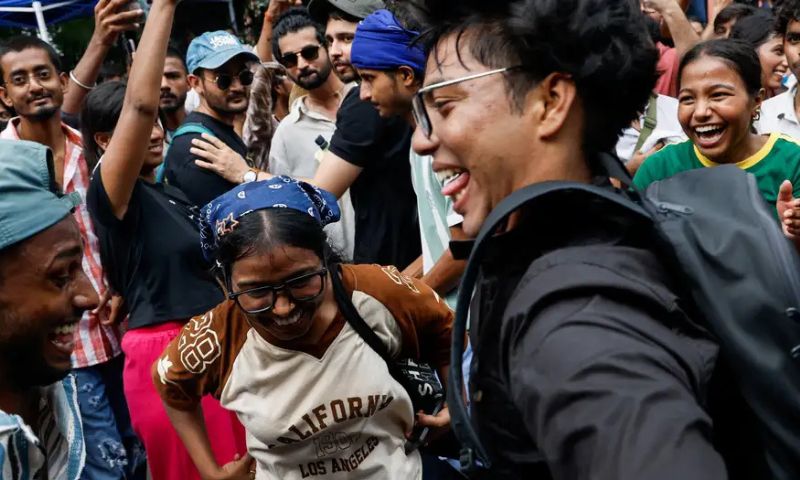
NEW DELHI, India: The Cockroach Janata Party (CJP) on Saturday officially called off its 36-day sit-in at Jantar Mantar after the central government accepted all of its core demands, including the resignation of Union Education Minister Dharmendra Pradhan and the withdrawal of criminal cases against protesters.
The announcement came shortly after Pradhan announced on X that he had submitted his resignation to Prime Minister Narendra Modi, marking a significant victory for the student-led movement that had paralysed the national capital for over a month.
🚨 BREAKING NEWS
CJP Announces End of Its Protest at Jantar MantarIn a statement issued during the press meet, the Cockroach Janata Party (CJP) declared:
“We withdraw our agitation in good faith, with the understanding that the terms agreed upon will be executed within the… pic.twitter.com/gnQr6FLlop
— Jayanth N G (@jayanth_updates) July 25, 2026
Government capitulates on three key demands
At a joint press conference with Union Ministers JP Nadda and Jitendra Singh, the government confirmed it had agreed to the CJP’s three primary demands:
- Resignation of Education Minister Dharmendra Pradhan– Accepted
- Withdrawal of all FIRs against protesters– Accepted
- Compensation for families of suicide victims– Accepted (Rs 1 crore)
Nadda announced that the government would provide “honourable compensation” to the families of students who died by suicide following the cancellation of the NEET examination. He further assured that all FIRs registered against protesters would be withdrawn.
“We declare withdrawal of our protest with immediate effect. We urge all protesters to go home as the government has accepted our demands,” said CJP spokesperson Saurav Das.
“The CJP declares that we withdraw the agitation in good faith and understanding that the agreed upon terms will be executed within the agreed upon timeline,” he added.
Pradhan’s resignation: A surrender dressed as sacrifice
In his resignation letter posted on X, Pradhan framed his departure as a selfless act to prevent “anti-national forces” from exploiting the situation at Jantar Mantar and elsewhere in the country. The BJP MP claimed it was not a matter of “individual prestige” for him.
However, the CJP was quick to mock this framing. “Cockroaches won. Democracy won!” the movement declared on X, celebrating what is arguably the Modi government’s most significant political defeat since the farmers’ protests of 2021.
The government’s complete capitulation on all three demands represents a stunning reversal for a regime unaccustomed to yielding to public pressure. For 36 days, the administration had dismissed the protesters as “anti-national elements,” restricted the CJP’s social media presence, and deployed police forces against peaceful demonstrators. Yet, in the end, it was the government that blinked.
🚨CJP Cockroach Announce To End Their Protest At Jantar-mantar! pic.twitter.com/WWYWlxrmSx
— p. (@_Real_PR) July 25, 2026
What the CJP achieved
The CJP had been staging a sit-in at Delhi’s Jantar Mantar since June 20, demanding accountability over the alleged NEET-UG 2026 paper leak and irregularities in the CBSE’s on-screen marking process.
The movement’s key achievements include:
- Forced a ministerial resignation– Pradhan’s ouster marks the first time a union minister has been forced to step down due to sustained street protests since the Modi government came to power in 2014.
- Secured FIR withdrawals– All criminal cases registered against students who participated in the protests will be scrapped, protecting thousands of young demonstrators from legal harassment.
- Won compensation for victims– The government has agreed to provide Rs 1 crore to families of students who died by suicide following the NEET cancellation, a significant concession that acknowledges state responsibility for the tragedy.
- Exposed systemic failures– The movement brought national attention to the deep-rooted corruption and mismanagement in India’s examination system.
- Demonstrated Gen Z’s political power– The movement proved that digitally native youth can mobilise, organise, and force political change using social media platforms.
Pending demands: The struggle continues
While the CJP has secured significant victories, several of its broader demands remain unfulfilled:
| Demand | Status |
| Resignation of Education Minister Dharmendra Pradhan | ✅ Achieved |
| Withdrawal of FIRs against protesters | ✅ Achieved |
| Compensation for families of suicide victims (Rs 1 crore) | ✅ Achieved |
| Systemic reforms to public examination conduct | ❌ Pending |
| Accountability for those responsible for paper leaks | ❌ Pending |
| Overhaul of education system | ❌ Pending |
CJP founder Abhijeet Dipke, while celebrating Pradhan’s resignation, acknowledged that the agitation was far from over. The movement’s demands for systemic reforms to the conduct of public examinations remain unfulfilled.
As CJP chief spokesperson Saurav Das stated: “This is a long fight. We will have to engage in a very long struggle for this. Because you have to change an entire system, the nexus of that system is very deep-rooted.”
CJP Protest End….Hatss Off Gen Z👍#jantarmantar #cjp #NEET #protest #studentprotest #Dharmendrapradhan #GENZ #delhi #youthpower pic.twitter.com/vskY1lmPnM
— अविनाश कुमार सिंह / Avinash Kumar Singh (@avinashkrlive) July 25, 2026
The protest movement in numbers
- 36 days– Duration of the sit-in at Jantar Mantar
- 22 million+– CJP’s Instagram followers (more than double the BJP’s 9 million)
- 3 million– Aspirants affected by the NEET cancellation
- 150,000– Available medical seats for 2.3 million candidates
- 12+– Reported student suicides following the NEET cancellation
- 100+– Students injured in police crackdown on July 20
Key players in the movement
- Abhijeet Dipke– CJP founder, 30-year-old Boston University graduate who started the movement with a satirical tweet
- Sonam Wangchuk– Veteran reform activist whose 26-day hunger strike became a powerful symbol of the protests
- Saurav Das– CJP chief spokesperson who announced the protest withdrawal
- Dharmendra Pradhan– Former Education Minister, forced to resign
- JP Nadda– Union Minister who led government negotiations
What the victory means for India’s youth
The CJP’s success represents a watershed moment in Indian politics. For the first time, a movement born entirely on social media—without traditional political backing, financial resources, or organisational infrastructure—has forced the government to capitulate.
The movement has demonstrated that:
- Gen Z is a political force– Young Indians are no longer passive observers but active participants in shaping the nation’s future.
- Digital platforms can bypass mainstream media– When television news ignored the protests, social media ensured the world watched.
- Satire can be a weapon– Humour and memes proved more effective than traditional protest methods in building a mass movement.
- Unity transcends divisions– Students from all religions and regions came together, proving that common grievances can overcome communal fault lines.
The road ahead
With the government’s acceptance of the CJP’s demands, the immediate agitation has ended. But the deeper battle has only just begun. The movement has exposed the systemic rot in India’s education system and the authoritarian instincts of a government that responds to peaceful dissent with batons and censorship.
Read Also: Activist Sonam Wangchuk Announces Next Phase of India’s ‘Cockroach’ Movement
Critics argue that merely changing a minister will not solve the systemic crisis of an education system that breeds insecurity and despair. As Hotmail co-founder Sabeer Bhatia noted: “The Cockroach Party may have expressed the discontent of millions of unemployed youth, but can making a minister resign solve the unemployment problem? I don’t think so. True change must start from the root of the problem, not just finding a scapegoat.”
Whether the CJP can sustain its momentum and translate its victory into lasting systemic change remains to be seen. But one thing is clear: India’s youth have made their voice heard, and they will not be silenced.
Read Also: How India’s ‘Cockroaches’ Expose Modi’s Hindutva Illusion
Key takeaways
- What was achieved:Education Minister resigned, FIRs withdrawn, compensation secured
- What remains pending:Systemic reforms to examination conduct, accountability for paper leak perpetrators
- Movement’s legacy:First Gen Z-led movement to force government capitulation, demonstrated power of digital resistance
- Future challenges:Sustaining momentum, building organisational structure, translating victory into systemic change