
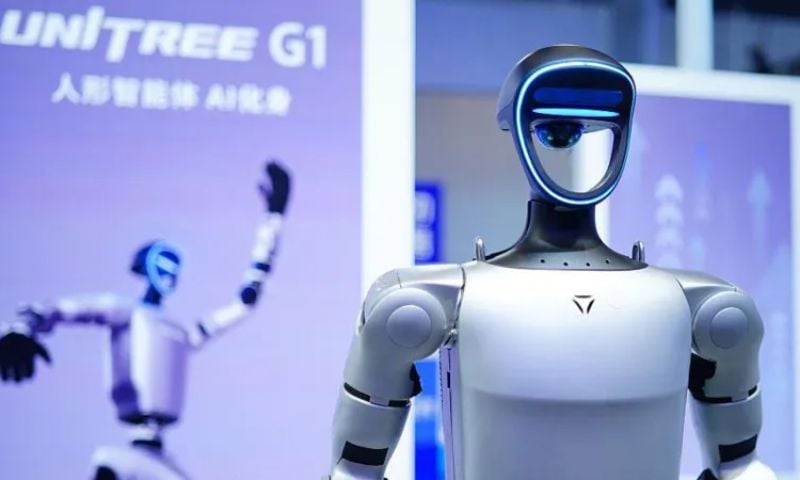
SHANGHAI: Chinese humanoid robot maker Unitree Robotics surged more than 600 percent on its Shanghai stock market debut on Wednesday, marking a major milestone for China’s rapidly expanding robotics industry.
Shares in Unitree, officially Yushu Technology Co Ltd, opened at 1,100 yuan ($163), before retreating to around 900 yuan as early gains moderated.
The highly anticipated listing on Shanghai’s technology-focused Star Market, often compared with the US Nasdaq, makes Unitree the first Chinese humanoid robot manufacturer to debut on a mainland stock exchange.
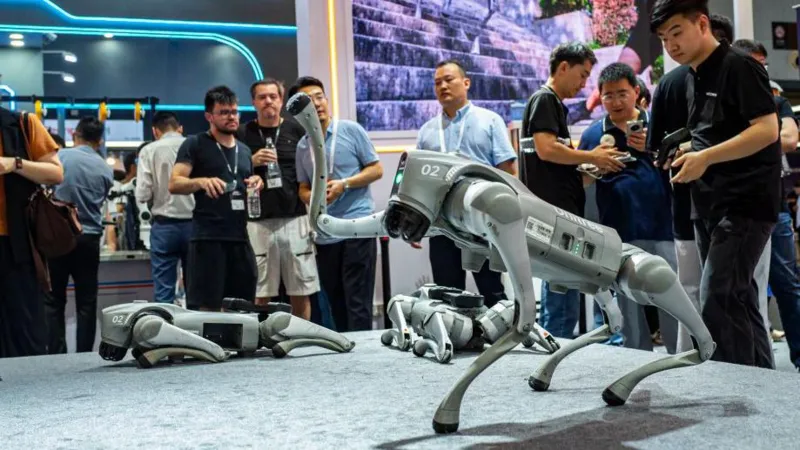
Founded in 2016 and headquartered in Hangzhou, Unitree has emerged as one of China’s leading robotics companies, producing humanoid machines, four-legged robots, sensors and automated arms.
The company shipped more than 5,500 humanoid robots last year and recorded a net profit of 278 million yuan in 2025.
China pushes robotics ambitions
Unitree’s growth comes as Beijing treats robotics as a strategic technology industry, with artificial intelligence-powered machines expected to play an increasing role in factories, hospitals and potentially homes.
Chinese manufacturers have also gained attention for offering robots at substantially lower prices than some US competitors.
ALSO READ: Google Opens First Office in Pakistan, Marking New Era of Digital Partnership
Unitree’s four-legged robots start at around $2,700, while its child-sized G1 humanoid model, launched in 2024, costs about $13,500.
The company has also mounted a major publicity campaign. Its machines are competing at the 2026 World Humanoid Robot Games in Beijing after G1 robots attracted attention with a martial arts performance during China’s Spring Festival Gala.
US-China race intensifies
Unitree’s debut comes amid intensifying competition between China and the United States over robotics and AI.
Washington announced restrictions on new Chinese-made humanoid and quadruped robots in July, citing national security and domestic manufacturing concerns. Beijing rejected the move as politicisation of trade.
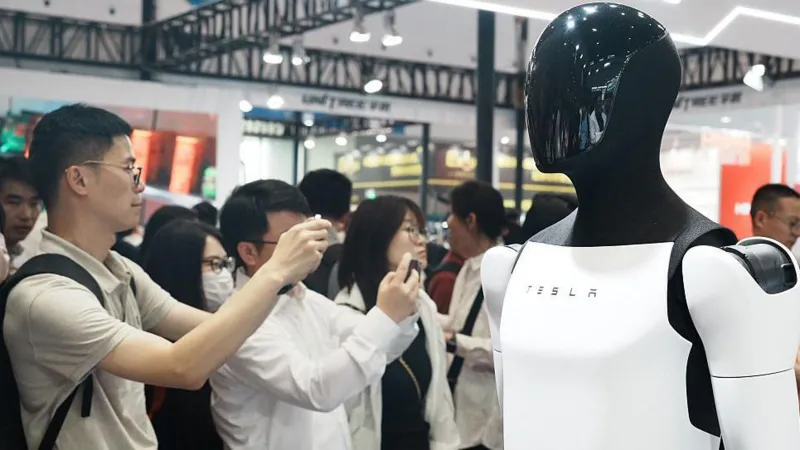
Tesla, Amazon and Boston Dynamics are among US companies developing or testing humanoid robots, although several projects remain in development.
Experts say Unitree’s market performance could become a benchmark for other Chinese robotics companies considering listings, including Leju Robotics and AgiBot.
Despite growing investment, challenges remain around battery life, reliability and privacy, particularly for robots designed for homes.
For now, factories and other commercial settings are expected to drive much of the sector’s demand.