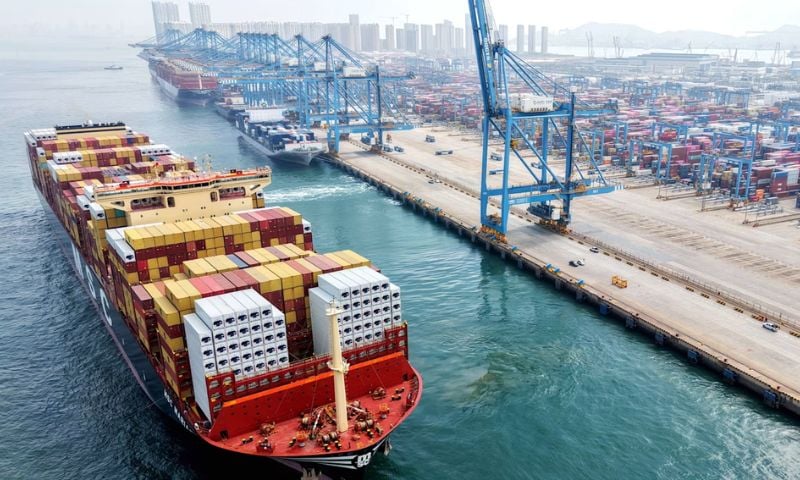



Key Points
- Exports rise 23.9 per cent year on year
- Imports jump 27.5 per cent in July
- Semiconductor shipments nearly double amid AI demand
ISLAMABAD: China’s external trade, both exports and imports, surged in July, with strong global demand for high-tech products, particularly semiconductors, providing fresh momentum to the world’s second-largest economy despite weak domestic demand.
Exports rose 23.9 per cent year on year in US dollar terms, according to data released by China’s General Administration of Customs on Friday.
The increase was slower than the 27 per cent growth recorded in June but exceeded economists’ expectations for a 22.2 per cent rise.
Imports increased 27.5 per cent from a year earlier, easing from June’s 36 per cent surge but coming close to the 27.9 per cent increase forecast by economists.
ALSO READ: China Exports Soared In June, Beating Forecasts: Official Data
The stronger-than-expected trade performance highlights the continued importance of external demand to China’s economy. Chinese policymakers are striving to support growth amid subdued consumption, weak investment and persistent pressure on the property sector.
China’s trade surplus narrowed to $112.5 billion in July from $125.6 billion in June, as imports expanded faster than exports.
The country’s cumulative trade surplus for the first seven months of the year reached $687.4 billion, according to the Financial Times.
Technology exports were a key driver of the July performance.
China’s high-tech exports rose 40.7 per cent year on year, with semiconductor exports almost doubling in value.
Integrated-circuit exports reached a monthly record of $38.7 billion, accounting for nearly 10 per cent of China’s total exports, the Financial Times reported.
The figures underline the growing importance of advanced manufacturing to China’s export sector. It also aligns with global investment in artificial intelligence, chips, electronic components and other technology products.
The strength of technology exports has helped China offset weakness in some traditional export categories and maintain strong momentum in overseas markets.
The July data also showed that China’s imports were growing faster than exports, potentially offering some relief to trading partners that have long criticised Beijing for maintaining an exceptionally large trade surplus.
China’s trade surplus: source of friction
However, China’s trade surplus remains enormous and is a likely source of friction with major economies, particularly the United States and the European Union.
Washington and Beijing continue to face disagreements over tariffs, industrial policy and technology restrictions.
The United States has tightened measures targeting Chinese technology and manufacturing sectors, whereas China has introduced its own export controls on selected products in retaliation.
Even though Chinese trade surged significantly, China’s domestic economy continues to face challenges.
China’s economic growth slowed in the second quarter, with weak consumer spending and investment adding to concerns about the durability of its recovery.
The government has pledged further fiscal support but has so far avoided a major new stimulus programme.
For global markets, stronger Chinese imports could support international manufacturers and suppliers, particularly those linked to technology and industrial production. Continued growth in Chinese exports, however, could increase competitive pressure on producers in other economies.
China’s energy imports have presented a less robust picture. Reuters reported that crude oil and natural gas imports declined during the first seven months of the year, suggesting that the overall rise in imports has been driven more by manufactured and technology-related goods than by broad-based commodity demand.
The July trade figures therefore, offer a mixed picture of China’s economic health.
The strength of exports shows that Chinese manufacturers continue to benefit from powerful global demand, especially for high-tech goods linked to artificial intelligence. At the same time, the country’s large trade surplus and relatively weak domestic demand underline the structural challenge facing policymakers.
China’s ability to sustain export growth while strengthening domestic consumption will remain crucial to the outlook for its economy and for global trade.