BEIJING: China on Tuesday reiterated its claim over the Indian state of Arunachal Pradesh, asserting that the region—referred to by Beijing as “Zangnan” —is part of its sovereign territory, amid renewed tensions between the two Asian powers.
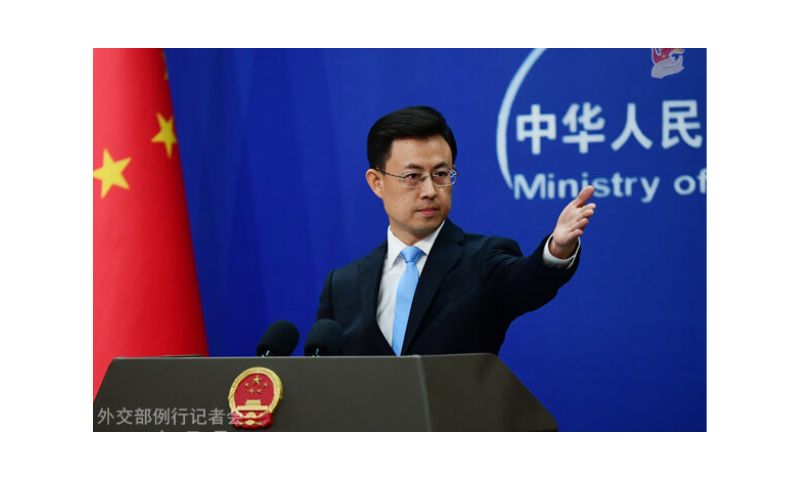
Speaking at a regular press briefing, Chinese Foreign Ministry spokesperson Guo Jiakun said China has never recognized what it calls the “so-called Arunachal Pradesh,” describing it as an area “illegally established” by India.
Zangnan is China’s territory, and China has never recognized the so-called “Arunachal Pradesh” illegally set up by #India. It is entirely within China’s sovereignty to standardize the names of some places in Zangnan region, Chinese Foreign Ministry spokesperson Guo Jiakun said on… pic.twitter.com/Z1SSD3UMeW
— Global Times (@globaltimesnews) April 14, 2026
His remarks came in response to objections raised by India following China’s recent move to release a sixth batch of standardized names for locations in the disputed region on April 10. New Delhi had criticized the step, saying it undermines ongoing efforts to stabilize bilateral relations.
Defending the move, Guo said it falls “entirely within China’s sovereignty” to standardize place names in what Beijing considers its territory. China has consistently maintained that assigning Chinese names to places in “Zangnan” is a sovereign decision.
According to statements by the Chinese Ministry of Foreign Affairs, the region is part of China in terms of history, geography and administration, and the naming of locations is described as an “internal matter.”
India, however, rejects these claims and considers the region an integral part of its territory under the name Arunachal Pradesh, while China regards it as part of southern Tibet.
Despite the exchange, the Chinese spokesperson struck a measured tone regarding broader ties, noting that relations between China and India are “generally stable.”
“China’s policy of improving and developing China-India relations remains unchanged,” he said, adding that Beijing hopes both sides will “meet each other halfway” and take steps conducive to strengthening bilateral ties.
The disputed Himalayan region has long been a source of friction between the two countries, despite multiple rounds of diplomatic and military-level talks aimed at easing tensions along their contested border.