
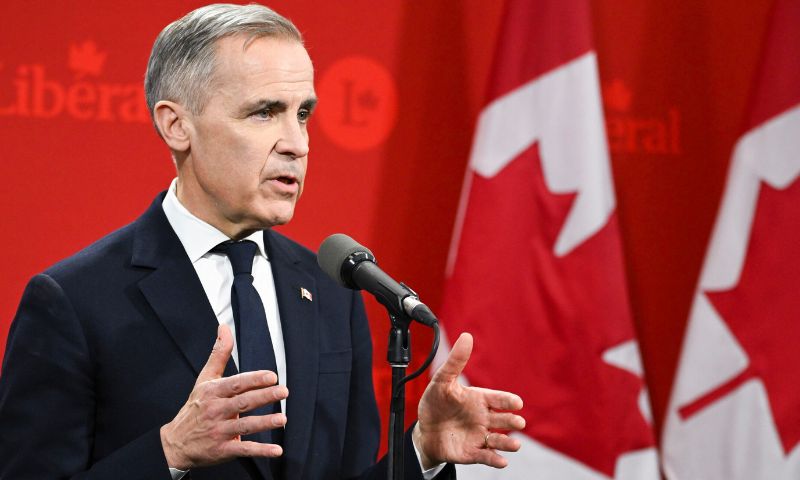



CANADA: Canada’s Prime Minister Mark Carney on Thursday rolled back the requirement that all new vehicles sold in the country be electric by 2035, while unveiling a major investment plan aimed at supporting the auto industry’s transition toward electric vehicles.
Presenting his government’s automotive strategy, Carney said Canada must still prepare for a future dominated by EVs, particularly as tariffs imposed by U.S. President Donald Trump have disrupted tightly integrated cross-border vehicle production chains.
The move marks a clear break from policies introduced under former prime minister Justin Trudeau, whose government had set binding EV sales targets of 20% by 2025, 60% by 2030, and 100% by 2035. Automakers had criticised those targets, citing a lack of charging infrastructure across Canada’s vast geography.
Carney said his approach would prioritise “results and solutions” over mandates.
Under the new plan, the government will offer a C$5,000 subsidy to consumers purchasing electric vehicles, invest C$1.5 billion in charging infrastructure, and allocate C$3 billion to help automakers adapt production, expand capacity, and diversify into new markets. He said Ottawa recognises the industry’s long-term direction and intends to support its transition.
Global EV adoption has been uneven. Trump scrapped U.S. tax credits for electric vehicle purchases last year, while the European Union has proposed easing its planned 2035 ban on combustion-engine vehicles.
Carney said Canada now aims for electric vehicles to account for 75% of new vehicle sales by 2035 and 90% by 2040, while also developing a domestic EV battery supply chain to reduce reliance on foreign inputs.
Industry groups welcomed the added policy clarity, particularly commitments to expand charging networks, while some environmental organisations criticised the rollback of mandatory targets and Carney’s broader energy policy decisions.