
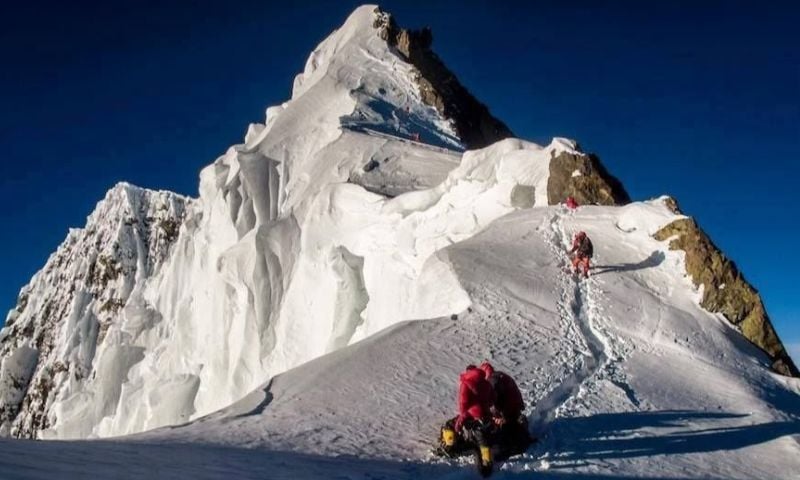
ISLAMABAD: Renowned Pakistani mountaineer Ashraf Sadpara believes the country needs a permanent mountain rescue system with trained rescuers who are always ready to respond to emergencies.
Sadpara, who has successfully climbed K2 three times, said survival becomes very difficult after 24 hours at around 7,000 meters because of freezing temperatures and low oxygen levels.
He was expressing these views regarding the rescue mission following a deadly avalanche on Pakistan’s Broad Peak that killed 10 mountaineers.
The tragedy has also reopened an important discussion in Pakistan’s mountaineering community.
The body of renowned mountaineer Nirmal Purja was found Sunday, three days after an avalanche on Broad Peak killed him and 9 others in PoK’s Gilgit-Baltistan. The Alpine Club of Pakistan said his body was recovered at 5,700m. Three other bodies were sighted but remain… pic.twitter.com/G1JEeHLpYA
— DNA (@dna) August 2, 2026
Renowned Pakistani mountaineer Sarbaz Khan led the rescue mission. Pakistan Army helicopters, experienced mountaineers, local rescuers, and officials from the Alpine Club of Pakistan worked together in extremely difficult conditions.
Earlier, the Alpine Club of Pakistan (ACP) said that the 10-member team, which included six Nepalese climbers, a Pakistani, an Omani, an American, and a climber from China, was confirmed dead.

The climbers from Nepal were identified as renowned mountaineer Nirmal Purja, Pur Bahadur Gurung, Kili Pemba Sherpa, Nima Sherpa, Nawang Thindu Sherpa and Gyalu Sherpa.
It identified the remaining climbers as Nadhira Ahmed Abdullah Al Harthy from Oman, Pakistani climber Sohail Sakhi, Wang Zhong from China and Mallory Geis from the United States.
Broad Peak, the world’s 12th-highest mountain, rises to 8,047 metres in Pakistan’s Karakoram range. It is regarded as one of the most technically demanding of the world’s 14 peaks above 8,000 metres.
The mountain was first successfully climbed in 1957 by an Austrian expedition.
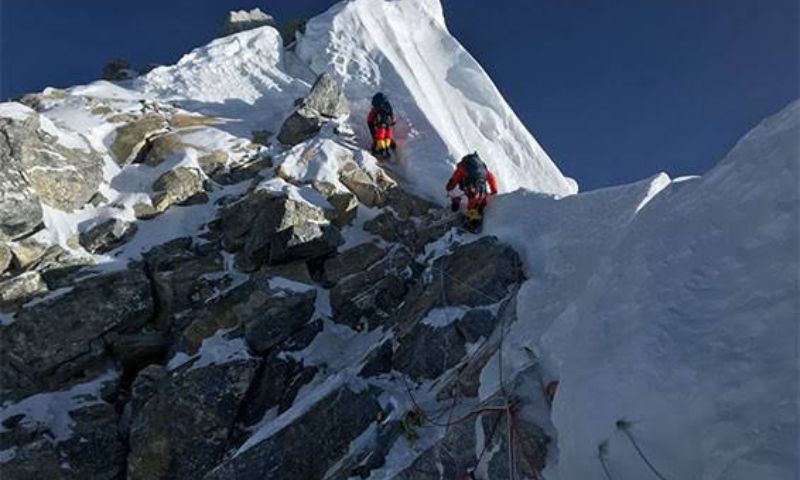
Ashraf Sadpara added that heavy snowfall during the past week made the mountain especially dangerous.
He noted mountaineers usually wait for fresh snow to settle before climbing, but this time the avalanche may have been triggered because the climb started too soon after the snowfall.
More snow than usual on Pakistan’s high mountains
“This year, there is much more snow than usual on Pakistan’s high mountains,” he said. “Sometimes the mountain tells you the conditions are not safe. If you ignore those signs, accidents can happen,” he noted.
Ayaz Shigri, General Secretary of the Alpine Club of Pakistan, said Pakistan Army helicopters quickly transported rescue teams to the Broad Peak and K2 Base Camp area after the accident was reported.
Public, private sector coordination
He also supported stronger rescue capacity, saying both public institutions and the private sector should work together to improve mountain rescue services in the future.
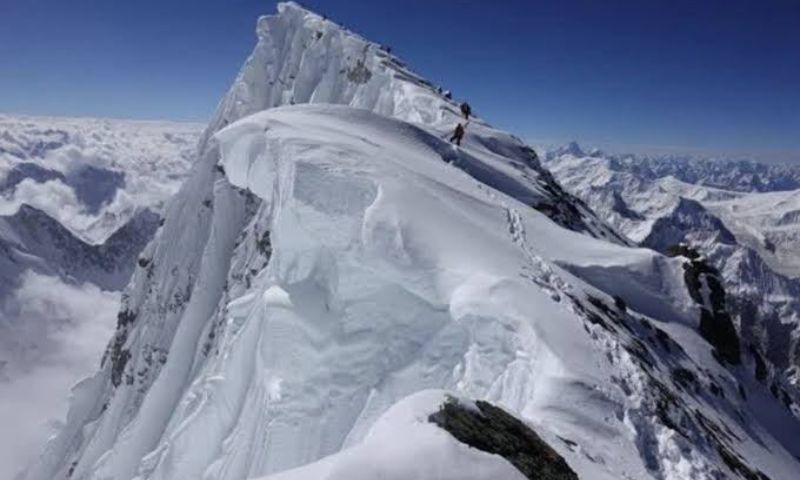
District Commissioner of Shigar, Sher Afzal, said local authorities, the Pakistan Army, the Tourism Police, tour companies, and experienced high-altitude porters worked together after the avalanche struck the mountaineers.
Also Read: Mountaineer Nirmal Purja, Nine Others Die in Broad Peak Avalanche in Pakistan
He said all government departments remained on alert and were ready to provide any additional support needed for the rescue operation.
Pakistan is home to five of the world’s fourteen peaks above 8,000 meters and attracts climbers from across the globe every year. As adventure tourism continues to grow, mountaineers say improving rescue systems is becoming just as important as reaching the summit.