
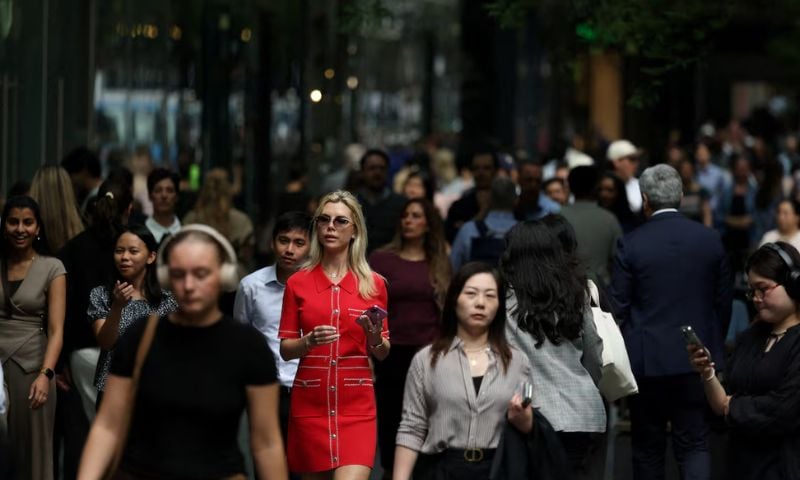
SYDNEY: Australia expects deaths to outnumber births for the first time in the 2060s, highlighting the growing economic challenges posed by an ageing population, declining fertility and slowing immigration, the government said on Monday.
The projection was contained in the latest Intergenerational Report, which examines the long-term economic outlook and identifies five major forces likely to shape Australia over the next four decades: artificial intelligence, geopolitical fragmentation, the energy transition, an ageing population and the shift towards a service-based economy.
Australia has relied heavily on immigration for decades to sustain population growth as birth rates have fallen. But with net overseas migration expected to decline, population growth is also forecast to slow.
The Treasury expects Australia’s population to grow by an average of 0.9% a year over the next 40 years, down from an average annual increase of 1.4% over the past four decades. “Australia’s population will age more quickly and grow more slowly than projected,” the Treasury said.
“Deaths are projected to outnumber births by the 2060s – the first time this has been forecast in an IGR – at which point natural increase will no longer be a driver of population growth.”
The demographic shift is expected to put further pressure on the country’s labour market, particularly in healthcare and aged care, where demand for workers is projected to increase as the population ages.
READ ALSO: Australia To Detain Tourists Who Overstay Visa: Minister
The Treasury warned that areas with older populations could face greater labour shortages, while both sectors remain heavily reliant on migrant workers. The report comes after the centre-left Labor government tightened immigration rules last week amid growing political pressure over migration.
Prime Minister Anthony Albanese is also facing increased support for the right-wing One Nation party, which has pledged to significantly reduce immigration. The report also highlighted potential pressure on future government budgets, including the scope for tax cuts, as policymakers seek to provide cost-of-living relief amid elevated inflation, higher mortgage rates and expensive housing.