SYDNEY: Australian authorities on Tuesday announced plans to vaccinate bird species considered particularly vulnerable to the highly contagious H5 avian influenza virus, as the disease continues to spread among the country’s wildlife.
The vaccination programme will target both captive and wild birds, although officials acknowledged that immunising wild species would be challenging because many birds would need to be captured and vaccinated more than once.
Environment Minister Murray Watt said authorities would focus primarily on birds kept in captivity, while vaccinations for wild birds would be carried out wherever feasible.
“It is difficult to vaccinate birds in the wild – it does take two vaccination doses to vaccinate birds,” Watt said. “It is difficult to catch wild birds once, let alone twice,” he added, stressing that protecting captive birds would remain the priority.
Australia had remained the only continental landmass without the H5 strain for many years. The virus, which has spread across several parts of the world, can cause severe illness and death among poultry and wild bird populations.
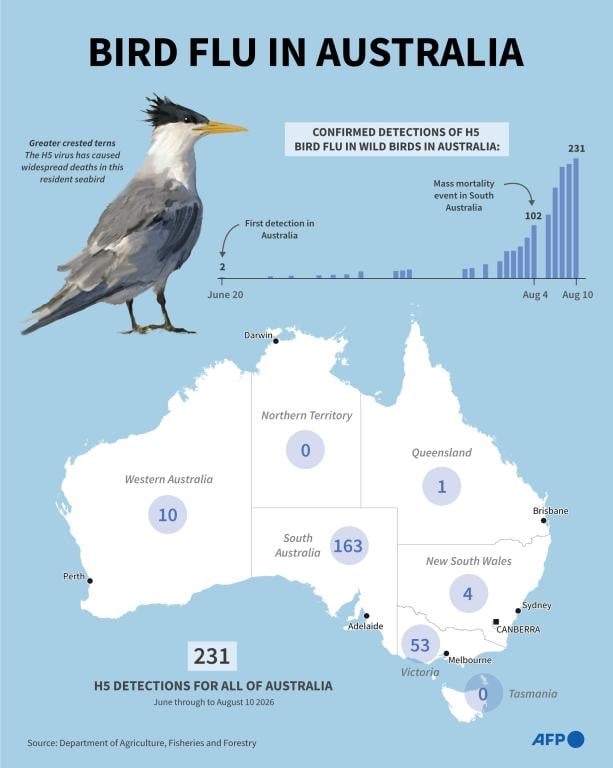
The first Australian detection was recorded in a migratory seabird in June. Authorities last week also confirmed the country’s first mass wildlife mortality event linked to the virus, raising concerns about its potential impact on native species.
Agriculture Minister Julie Collins warned that Australia should expect further outbreaks and mass deaths among wild birds as the virus spreads. “This will continue to spread across the country,” Collins said.
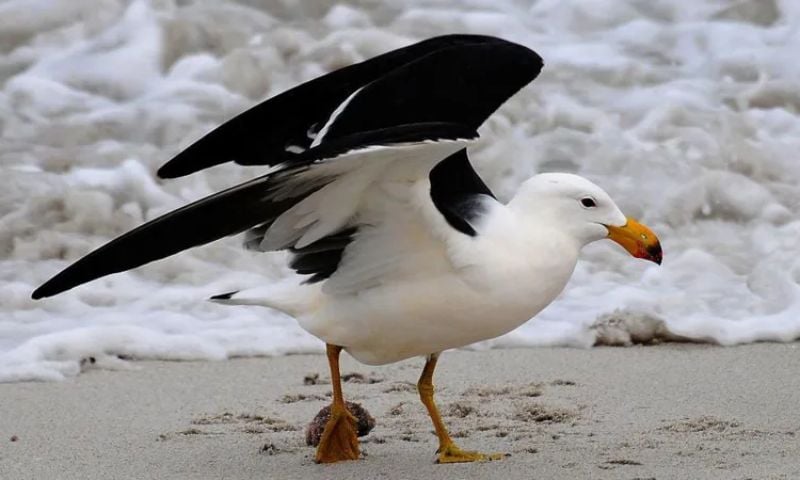
Waterfowl, shorebirds, seabirds and birds of prey are among the wild bird groups that have been particularly affected by H5 avian influenza.
As of Monday, Australian authorities had recorded 231 confirmed or presumed positive detections of H5 bird flu across the country. However, no cases had been detected in poultry or within Australia’s agricultural production sector.
READ ALSO: H5 Bird Flu Detected in Second Australian State
The outbreak poses a particular concern for Australia because of the country’s unique biodiversity. Almost half of its wild bird species and around 83 per cent of its mammal species are found nowhere else in the world.
The scale of the threat was highlighted in June when Australian scientists reported that H5 bird flu had killed more than 13,000 elephant seal pups after spreading through a breeding colony on the remote Heard and McDonald Islands.
Officials are now seeking to limit the impact of the virus through targeted vaccination, surveillance and other measures, with captive birds expected to receive priority because they can be more readily identified, handled and vaccinated than birds living in the wild.
The authorities’ strategy comes as Australia prepares for the possibility of further wildlife losses while seeking to prevent the virus from entering the country’s poultry and agricultural production systems.