Key Points:
- New US tariffs hit Australian exports
- Canberra rejects forced labour justification
- Australia seeks exemption through diplomacy
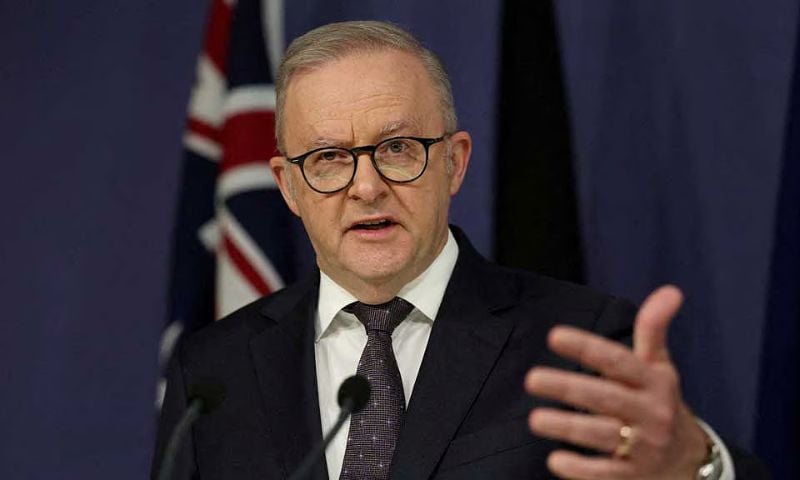
ISLAMABAD: Australian Prime Minister Anthony Albanese said on Sunday that he would raise concerns directly with US President Donald Trump over newly imposed tariffs on Australian exports, describing the measures as unjustified despite the close alliance between the two countries.
The Trump administration has imposed a 12.5 per cent tariff on Australian imports as part of a broader package affecting dozens of trading partners.
Washington said the tariffs were linked to concerns that affected countries had not done enough to prevent goods produced through forced labour from entering global supply chains.
“Absolutely,” Albanese said when asked whether he would discuss the issue with Trump, adding that Australia had strengthened its modern slavery laws and supply chain safeguards.
The Australian leader said his government would continue engaging with the United States “at all levels” to seek the removal of the tariffs, stressing that protectionist measures undermine free and fair trade principles.
Australia, a longstanding US ally and member of the AUKUS security partnership, had previously been affected by US tariffs on steel and aluminium. The latest measures are expected to add pressure to bilateral trade ties at a time of growing uncertainty in the global economy.
Trump’s new tariff regime
The new tariff regime affects 60 countries, with 37 nations facing a 12.5 per cent tariff rate and others subject to varying duties depending on Washington’s assessment of their trade practices.
Analysts have warned that the tariffs could increase costs for American consumers and further disrupt global supply chains already strained by geopolitical tensions.
Donald Trump’s tariff policy has become one of the defining features of his second administration, marking a significant shift in U.S. trade policy from decades of relatively open markets toward a more protectionist approach.
ALSO READ: Trump Imposes 10% Global Tariff After Supreme Court Setback
Trump first used tariffs extensively during his 2017–2021 presidency, targeting China, steel, aluminium and a range of imports from allies and rivals alike.
He argued that foreign countries had benefited unfairly from access to the U.S. market, contributing to trade deficits, manufacturing job losses and supply chain vulnerabilities.
Upon returning to office in January 2025, Trump revived and expanded the policy under what his administration calls an “America First Trade Agenda.”
The White House has imposed tariffs on imports from more than 60 countries, citing reasons ranging from trade imbalances and national security concerns to the use of forced labour in supply chains.
The administration’s latest tariff framework categorises countries into different bands, including rates of 10 per cent, 12.5 per cent and higher for specific sectors.
Officials say the measures are intended to encourage companies to relocate manufacturing to the United States, reduce dependence on foreign suppliers and pressure trading partners into negotiating more favourable trade terms.
China remains the primary target of Trump’s trade strategy. Since 2025, Washington has imposed successive rounds of duties on Chinese goods, including electric vehicles, batteries, semiconductors and critical minerals.
However, traditional allies such as Canada, Mexico, the European Union, Japan, South Korea and Australia have also been affected by various tariff measures.
International organisations, including the World Trade Organization and the International Monetary Fund, have repeatedly warned that escalating tariffs could weaken global trade growth and contribute to inflationary pressures.
Several countries have challenged U.S. measures through diplomatic channels and trade mechanisms, though the Trump administration has maintained that tariffs are an essential tool for protecting American economic interests.
The latest tariffs announced in July 2026 represent the broadest application of Trump’s trade policy to date and underscore the administration’s willingness to impose economic costs on both allies and competitors in pursuit of its trade objectives.