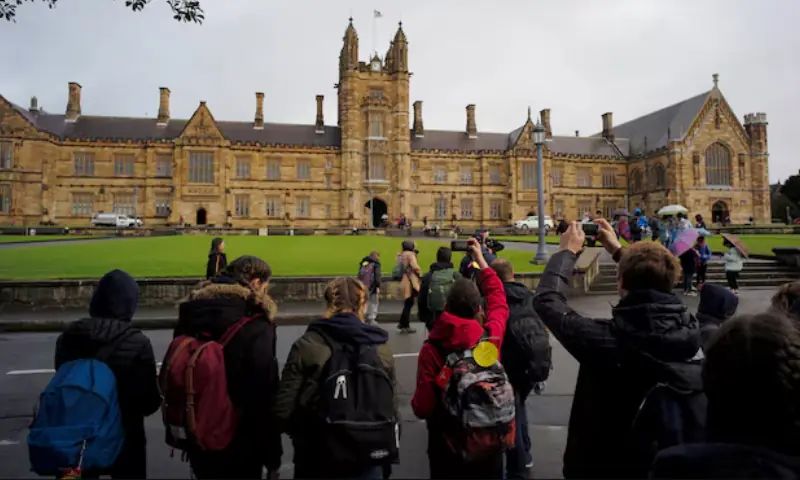
SYDNEY: Australia will prevent most international students from bringing their partners and children with them while they study, as part of a broad package of immigration reforms aimed at reducing temporary migration and tightening the country’s visa system.
Home Affairs Minister Tony Burke announced the measures on Thursday, saying the government would also introduce a ballot system for backpackers seeking to extend their working holiday visas and strengthen enforcement against people who remain in Australia after their visas expire.
Under the new measures, secondary applicants – including partners and dependent children – will generally no longer be allowed on student visas. Exceptions will apply to some students from Pacific Island nations and Southeast Asia.At present, spouses and partners of international students can accompany them to Australia and, subject to visa conditions, work while they are there. The number of hours they can work varies according to the student’s course of study.
Stricter rules for student visas
The government will also tighten rules governing student visa renewals. International students will generally be permitted to renew their student visas only if they progress to a higher level of qualification.
The changes form part of the government’s broader effort to reduce what it regards as excessive temporary migration and to bring annual net migration down to about 225,000 by 2028, compared with roughly 300,000 currently. The target would bring migration closer to pre-pandemic levels.
Australia’s migration numbers rose sharply after the country reopened its borders in February 2022 following almost two years of Covid-19 restrictions. International students, working holidaymakers and temporary workers were among the main drivers of the increase.
Net overseas migration reached a peak of about 518,000 in 2023, although the figure has since fallen. It stood at around 306,000 in the year to June 30, 2025, with international students accounting for more than half of the total.
Backpacker visa ballot
The reforms will introduce a ballot system for backpackers seeking to extend their working holiday visas, adding another layer of selection to a programme that already uses ballots for some nationalities.
Australia’s Department of Home Affairs already operates ballot arrangements for certain Work and Holiday visa applicants, including those from China, India and Vietnam.
The Working Holiday Maker programme allows young people from more than 40 partner countries and jurisdictions to spend up to 12 months in Australia, during which they can undertake short-term work and study.
The government will also introduce a “no further stay” condition on visitor visas, preventing visitors from remaining in Australia while applying for another visa category, such as a partner visa.
Crackdown on visa overstayers
Burke said the government would strengthen enforcement against people who remain in Australia after their visas have expired. The measures include the recruitment of 100 additional compliance officers and consideration of whether a former pandemic quarantine facility in Melbourne could be repurposed to accommodate immigration detainees.
“If you want to come on a temporary basis to Australia, apply for a temporary visa. If you want to come to Australia permanently, apply for a permanent visa,” Burke said, adding that people without valid visas should leave the country.
Political pressure over migration
The announcement comes amid heightened political debate over Australia’s immigration levels. The One Nation party has called for a reduction of 750,000 temporary migrants over three years, arguing that this would provide Australians with greater “breathing space”.
READ ALSO: Australia Moves India to Highest Student Visa Risk Category
Burke rejected suggestions that the government’s measures were a response to One Nation’s growing support, saying the reforms had been under development before the current political debate.
The government has faced sustained public concern over immigration and the cost of living, both of which have featured prominently in recent polling.
International education sector concerned
The reforms could have significant implications for Australia’s international education industry, which remains an important source of export earnings.
International education contributed A$53.6 billion to the Australian economy in the year to June 2025, making it the country’s fourth-largest export, according to the figures cited by Reuters.
Luke Sheehy, chief executive of Universities Australia, warned that the proposed restrictions could undermine confidence in the international education sector. Australia has already introduced a number of measures aimed at slowing the growth of international student numbers.
Student visa application fees have risen sharply in recent years, while English-language requirements and financial requirements for some graduate visa applicants have also been tightened.
The latest measures therefore represent another significant step in the government’s effort to reduce migration while attempting to maintain the economic benefits generated by international education.