
Key Points
- Asian stocks fall sharply on renewed US-Iran strikes
- Oil climbs as Hormuz disruption fears intensify
- Bond yields rise amid renewed inflation concerns
SINGAPORE: Asian stocks tumbled on Wednesday as renewed US-Iran fighting pushed oil prices higher and triggered a broad selloff in global government bonds.
Analysts raised concerns about the revival of inflation and further interest rate increases worldwide.
MSCI’s broadest index of Asia-Pacific stocks outside Japan, which tracks stock markets across major economies in the region, fell 1.5 per cent.
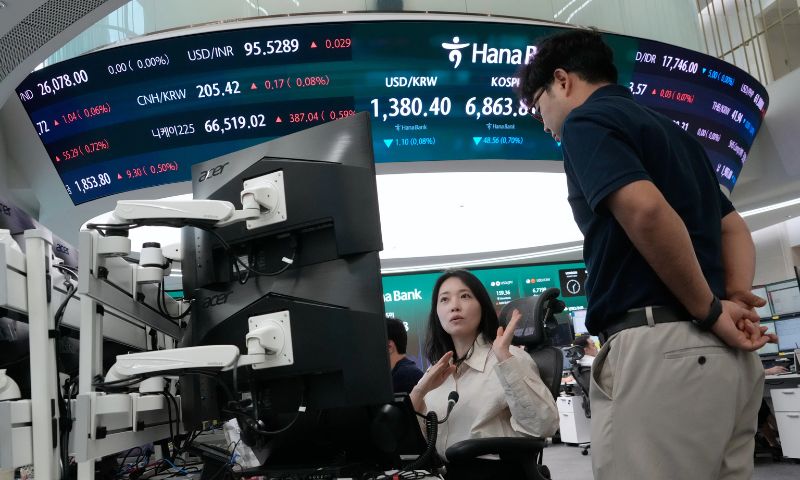
South Korea’s KOSPI, the country’s main stock index, dropped more than 3 per cent.
Japan’s Nikkei 225, a Japanese benchmark stock index, declined 2.6 per cent.
US stock futures, which indicate how Wall Street markets may open, also weakened after US shares ended lower for a third consecutive session.
Brent crude futures, a widely used international benchmark for oil prices, rose 1.3 per cent to $95.91 a barrel in Asian trading. Oil futures extended gains after US forces launched a barrage of airstrikes on Iran on Tuesday.
The renewed escalation heightened fears that fighting could disrupt oil supplies through the Strait of Hormuz, a critical route for global energy shipments.
The rise in oil prices has added to inflation concerns at a time when investors were already worried that major central banks could keep interest rates higher for longer than expected.
Higher energy costs can feed directly into consumer prices and complicate efforts to bring inflation under control.
Bond markets have also come under heavy pressure.
The yield on the US 10-year Treasury note, a key benchmark for global borrowing costs, climbed to 4.8122 per cent. It is the bond’s highest level in almost three years.
Japan’s five-year government bond yield reached a record 2.295 per cent, reflecting a wider global rise in borrowing costs.
The sell-off in bonds has become an additional source of pressure on equities, a term used for company shares. It explains that higher yields increase financing costs and make relatively risky assets less attractive.
Wall Street had already suffered losses on Tuesday, with the S&P 500, an index tracking 500 major US companies, falling 0.7 per cent.
READ ALSO: India Stocks Outlook Cut as Foreign Funds Prefer Asian Rivals
The Dow Jones Industrial Average, which tracks 30 major US companies, lost 0.8 per cent.
The Nasdaq Composite, which has a heavy concentration of technology companies, declined 1 per cent.
Rising oil prices and Treasury yields were among the main factors weighing on investor sentiment and stock traders’ confidence.
Investors are also reassessing expectations for US monetary policy.
Futures markets, where investors trade contracts based on expectations for future interest rates, were pricing in a higher probability of a Federal Reserve rate increase at its September meeting.
Beyond stocks and bonds
The market reaction extends beyond stocks and bonds. The US dollar strengthened as investors sought relatively defensive assets, or investments viewed as safer during periods of market stress.
Gold prices declined under pressure from higher Treasury yields and a firmer dollar.
Asian currencies have also faced pressure because higher oil prices worsen the trade position of major energy-importing economies such as Japan, India, South Korea and Thailand.
The immediate focus for financial markets is the course of the US-Iran conflict and any signs of further disruption to oil flows through the Strait of Hormuz.
A sustained rise in crude prices could intensify global inflationary pressures, increase borrowing costs and deepen the pressure on already elevated asset valuations.
Oil and interest rates have become important drivers of global stocks as investors assess the economic impact of the US-Iran conflict.
The Strait of Hormuz carries a substantial share of internationally traded oil. And any threat to shipping through the waterway is particularly sensitive for energy prices.
The latest escalation has therefore revived concerns about a combination of higher energy costs, persistent inflation and tighter monetary policy, creating pressure across stocks, bonds and currencies.