NEW DELHI: The sinking of the Iranian warship Dina near South Asian waters has raised difficult questions about India’s role in the evolving strategic alignment in the Indian Ocean.
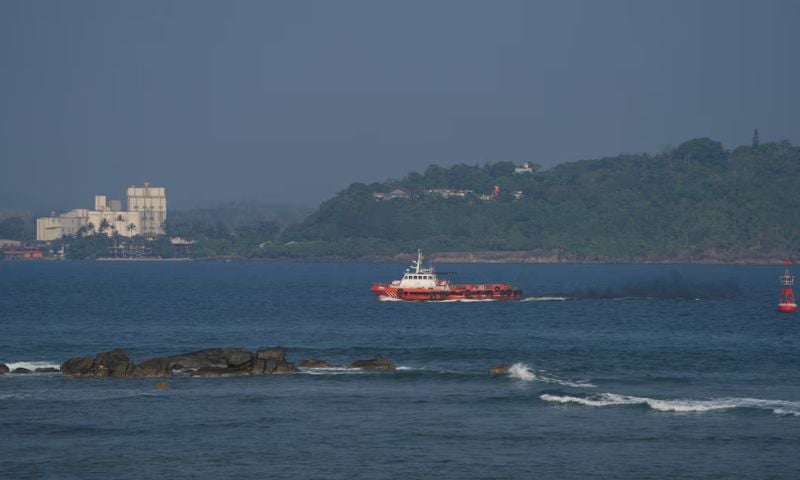
The incident, which involved a United States nuclear-powered submarine, occurred roughly 40 miles off the coast of Sri Lanka — an area geographically close to India’s maritime zone and within a region where New Delhi increasingly positions itself as a key security actor.
Beyond the immediate military implications, the episode has sparked debate about trust, diplomacy, and India’s strategic balancing between long-standing partners and emerging security commitments with the United States.
A Warship That Had Just Visited India
What makes the sinking particularly controversial is the recent diplomatic context surrounding the Iranian vessel. The warship Dina had visited India only weeks earlier to participate in the International Fleet Review held in Visakhapatnam from February 15 to February 25.
The multinational naval event featured warships from 19 foreign countries and was ceremonially reviewed by India’s President, who also serves as the Supreme Commander of the Indian Armed Forces.
International fleet reviews are traditionally designed to build trust, transparency, and professional cooperation among participating navies. They serve as symbolic demonstrations of maritime friendship and diplomatic engagement.
For this reason, Iranian officials later described the loss of Dina as especially tragic. According to Iranian Foreign Minister Abbas Araghchi, the crew aboard the ship believed they were operating in friendly waters. The vessel, he said, was in a non-operational posture following its ceremonial visit.
Its weapons systems were secured, and many of the personnel on board were reportedly non-combatant staff associated with the fleet review.
If these claims are accurate, the destruction of the vessel raises uncomfortable diplomatic questions — particularly for India, which had hosted the ship shortly before the conflict escalated.
In the aftermath of the incident, voices within India have argued that New Delhi should at least express diplomatic concern to Washington over the circumstances of the sinking.
However, critics suggest that India’s growing military partnership with the United States limits its room for maneuver.
The Fifth Fleet’s Presence in the Indian Ocean
Another important element of the broader strategic picture involves the repositioning of U.S. naval forces before the outbreak of the Middle East conflict.
The U.S. Navy’s Fifth Fleet — headquartered in Bahrain and operating under U.S. Central Command — reportedly redeployed significant assets into the Arabian Sea and Indian Ocean region ahead of the war.
Central Command itself operates from an advanced headquarters in Qatar, with overall command based in Tampa, Florida.
Given India’s maritime surveillance capabilities and coordination with the United States, analysts argue that it would have been highly unlikely for the presence of these American naval assets to go unnoticed by Indian naval authorities.
Iran’s Countermoves and the Missile Reloading Problem
The strategic situation became more complicated once the Middle East conflict began.
According to various reports, Iranian forces targeted or disrupted several regional ports that could be used by American naval vessels to reload cruise missiles — particularly Tomahawk missiles, which are launched from vertical launch systems aboard destroyers and submarines.
Reloading such missile systems cannot be performed at sea. It requires specialized port infrastructure capable of handling the complex rearming process.
With several Middle Eastern facilities potentially unavailable, attention has shifted to alternative locations where U.S. naval forces could replenish their missile inventories.
Diego Garcia and the Chagos Archipelago
One such location is Diego Garcia, the strategically vital naval and air base in the Chagos Archipelago in the Indian Ocean.
The island hosts a joint U.S.-UK military base that has long served as a key logistics and strike platform for operations across the Middle East and Asia.
In May 2025, the United Kingdom and Mauritius reportedly finalized a new 99-year lease arrangement governing the continued operation of the base.
As part of the broader geopolitical arrangement surrounding the Chagos Archipelago, India also became indirectly involved in regional security arrangements linked to the base.
New Delhi signed a financial assistance package worth approximately $680 million with Mauritius that includes provisions for establishing a maritime surveillance radar network across the region.
The radar chain is intended to monitor shipping lanes and maritime activity in the western Indian Ocean.
The Diplomatic Dilemma
Nevertheless, the episode presents India with a diplomatic dilemma.
Iran has historically maintained cordial relations with India, particularly in energy trade and regional connectivity projects such as the Chabahar Port development.
Tehran may now question whether India’s expanding strategic alignment with Washington has come at the expense of its traditional policy of strategic autonomy.
Some analysts argue that even if India could not influence the operational decisions that led to the sinking of Dina, it might have attempted some form of diplomatic communication — either warning Tehran about the risks or urging restraint from its American partners.
According to this line of argument, the failure to do so may have damaged perceptions of trust.
A Moment of Strategic Reflection
Ultimately, the sinking of the Iranian vessel near South Asian waters may become more than just a wartime naval incident.
It highlights the shifting geopolitical landscape of the Indian Ocean, where military alliances, logistical networks, and strategic commitments increasingly intersect.
For India, the episode raises a larger question: whether its security partnership with the United States can coexist with its longstanding policy of maintaining balanced relations across competing global powers.
As the Indian Ocean becomes an increasingly contested strategic theater, that balance may become harder to sustain.
Ultimately, the incident raises serious questions about India’s credibility as a neutral and trustworthy partner in the region.
A warship that had recently been welcomed in India’s own naval ceremony was destroyed in waters close to South Asia, yet New Delhi appeared unwilling — or unable — to even diplomatically distance itself from the action.
For Tehran, this may reinforce the perception that India’s growing military and strategic alignment with the United States now takes precedence over its traditional policy of strategic autonomy.
If such perceptions deepen, the episode could mark a turning point in India–Iran relations, suggesting that New Delhi’s expanding role in the U.S.-led security architecture of the Indian Ocean may come at the cost of trust built with other regional partners.