
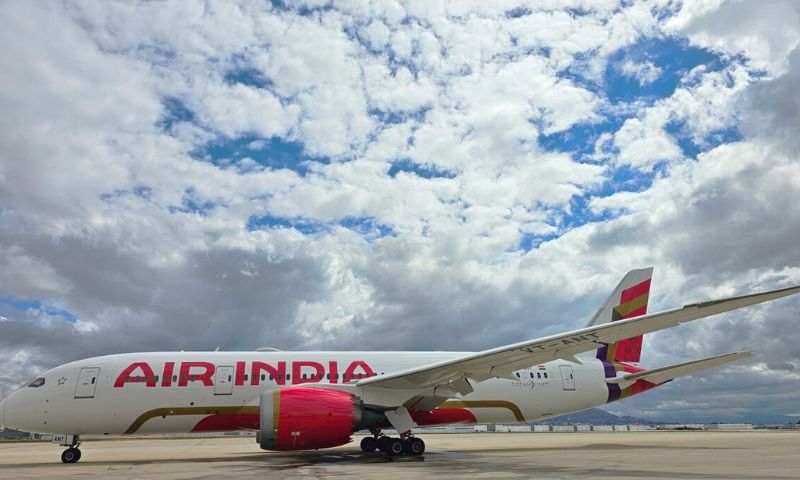



ISLAMABAD: Air India has reported its worst annual financial performance since returning to private ownership, with losses more than doubling during the last fiscal year as Pakistan’s airspace closure and the Middle East fuel shock derailed the airline’s restructuring.
The carrier posted a net loss of $2.3 billion for the financial year ended March 31, compared with a loss of approximately $1.1 billion a year earlier. Revenue declined 9 per cent year-on-year to approximately $7.2 billion, according to Tata Group’s annual report.
The results represent a major setback to the airline’s turnaround strategy, which the Tata Group initiated after reacquiring Air India from the Indian government in January 2022.
The conglomerate inherited an airline burdened by years of mounting debt, ageing aircraft, declining service standards and operational inefficiencies, with a pledge to restore it as a globally competitive carrier.
Tata Group chairman N. Chandrasekaran described the period as “the most challenging year” for the airline, citing a combination of external factors that significantly disrupted recovery plans.
“Few businesses are as vulnerable to war and fuel pressures as aviation,” Chandrasekaran said in the annual report.
Challenges to Air India
According to Tata Group, three principal headwinds weighed on the airline’s performance.
The first was the continued closure of Pakistani airspace to Indian carriers following the 2025 conflict between the two nuclear-armed neighbours.
The restrictions have forced the airline and its peers to reroute westbound flights, adding to fuel consumption, crew expenses and journey times on routes to Europe, North America and the Middle East.
The second factor was the sharp increase in global oil prices amid renewed tensions in the Middle East earlier this year.
Aviation fuel remains the largest cost component for airlines worldwide, and the price spike significantly increased operating expenses across the sector.
The third challenge was foreign-exchange volatility, which affected the airline’s dollar-denominated liabilities, including aircraft leases, maintenance contracts and fuel purchases.
Air India’s troubles were further compounded by the fatal crash of a Boeing 787-8 in Ahmedabad in June 2025.
ALSO READ: A Year After Deadly Air India Crash, Families Await Answers
The accident led to heightened regulatory scrutiny and added reputational pressures at a critical stage of the airline’s transformation programme.
Chandrasekaran acknowledged that Air India’s recovery would take considerably longer than originally envisioned. He stated that the transformation should be viewed as a “five- to ten-year journey” rather than a conventional corporate turnaround.
When Tata regained ownership in 2022, Air India unveiled its ambitious Vihaan.AI strategy, a five-year programme aimed at creating a “world-class global airline.”
The initiative included plans for fleet modernisation, network expansion, service enhancements, digital transformation and organisational restructuring.
However, Tata Group now says persistent global supply chain constraints, shortages of skilled aviation professionals and the scale of overhauling legacy systems have slowed implementation.
“Rebuilding Air India is a long journey: fleet renewal, training, service transformation, network expansion. Every great airline in history was built over decades, not quarters,” Chandrasekaran said.
Despite the financial setback, Air India has continued to invest aggressively in its future. The airline has placed one of the world’s largest aircraft orders with Boeing and Airbus. It has also completed the integration of Vistara, formerly its joint venture with Singapore Airlines, to strengthen its position in one of the world’s fastest-growing aviation markets.
The airline’s performance has also affected Singapore Airlines, which recently reported its first quarterly net loss since the COVID-19 pandemic, partly reflecting the impact of its investment in Air India.
Air India remains India’s second-largest airline by market share and is central to Tata Group’s aviation ambitions. Yet the latest financial results underscore the magnitude of the task ahead as the carrier attempts to reclaim its former status.