
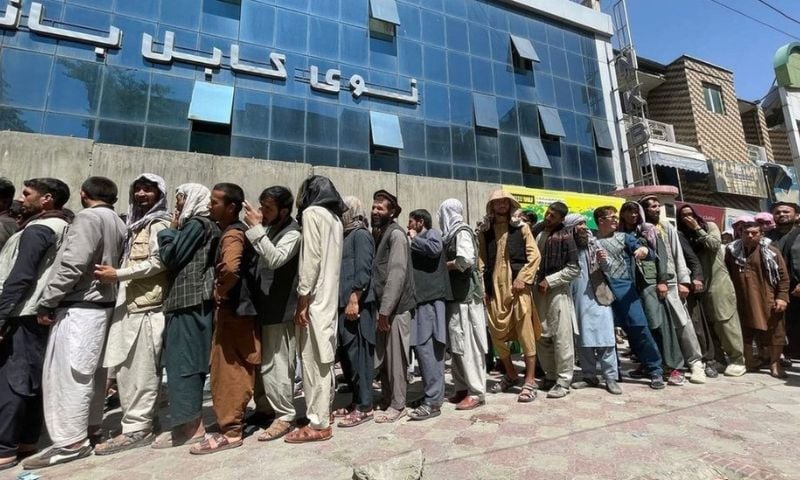
KABUL: Afghanistan’s economy is facing near collapse nearly five years after the Taliban returned to power, as domestic misrule, weak institutions and international isolation continue to block recovery.
The country was already fragile when the Taliban seized control, but analysts say years of poor governance have turned economic weakness into a deeper national crisis.
While sanctions, frozen assets and diplomatic isolation have added pressure, Afghanistan’s economic problems are also rooted in internal failures. These include weak institutional capacity, a narrow economic base, poor infrastructure, fiscal constraints, unemployment and loss of skilled professionals.
Weak governance blamed
The Taliban has claimed some fiscal stability through customs revenues and taxes on transport, mining and other activities. However, these measures have not solved the structural problems needed for long-term growth.
A major challenge is the weakening of financial and administrative institutions. Many experienced professionals who served under the previous government have left the country or been replaced by Taliban loyalists.
Analysts say this has created a severe human capital gap, with key offices now led by people who lack the technical skills required to manage a modern economy.
Poverty deepens
Afghanistan also continues to suffer from falling investment, reduced development assistance and weak regional trade links.
The combination of poverty, joblessness, limited opportunities and poor governance has left millions struggling to meet basic needs.
Experts warn that without inclusive governance, skilled management and restored economic confidence, Afghanistan’s economy will remain trapped in instability.