KABUL, Afghanistan: Millions of Afghans are struggling to afford enough food, with many surviving on little more than bread and tea as a worsening economic and humanitarian crisis deepens under the Taliban regime, the World Food Programme (WFP) has warned.
John Aylieff, WFP’s country director in Afghanistan, said food remained available in markets across the country, including fruit, vegetables, grains and rice. But many Afghans could not afford to buy enough of it.
"There is food in the markets. The supply of fruits and vegetables is there, and there is also grain and rice," says John Aylieff, WFP #Afghanistan Country Director. "But people simply don’t have the money to buy it."
Read more:👇https://t.co/xCpnXTQhau@schwerin_von @NZZ
— WFP in Afghanistan (@WFP_Afghanistan) August 18, 2026
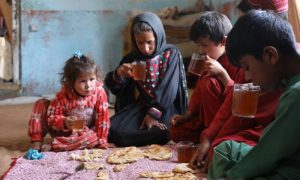
“According to our studies, a worker is lucky to find informal work two days a week. That brings in a few dollars, but it’s not enough to properly feed a family. Many Afghans today live on bread and tea,” Aylieff told Swiss newspaper Neue Zürcher Zeitung (NZZ).
His comments come as the WFP warns of a deepening malnutrition crisis and severe funding shortages that are forcing it to turn away most people seeking treatment.
Malnutrition crisis in Afghanistan
The WFP says it is currently turning away six out of every seven acutely malnourished women and children seeking treatment because it lacks sufficient funds.
In its latest Afghanistan country brief, the UN agency said wasting among children had deteriorated in more than three-quarters of Afghanistan’s 34 provinces compared with 2025.
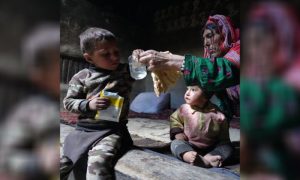
The agency said the malnutrition crisis had reached critical levels in one-third of the country’s provinces and was expected to worsen through October.
Wasting is the most severe form of malnutrition. The WFP warned that malnutrition significantly increases children’s risk of death and said expanded treatment and prevention programmes were urgently needed.
The agency estimates that nearly 14 million people in Afghanistan are suffering from malnutrition. It has projected that 3.7 million children and 1.2 million pregnant and breastfeeding women will face acute malnutrition this year.
The United Nations has also warned that one in three Afghans is facing hunger, with conditions expected to deteriorate further during the winter.
Funding shortage
The worsening crisis has coincided with a severe funding gap for humanitarian operations.
The WFP says it needs $502 million to finance its Afghanistan operations from August through January. So far, it has received only 14% of that amount.
Also Read: Afghanistan Crisis Deepens in Taliban’s 5-Year
The wider UN humanitarian appeal for Afghanistan seeks $1.71 billion for 2026. Less than 20% of the required funding had been received by the first half of the year, according to the information provided.
Aylieff said the funding shortage had left the WFP unable to reach many people in need.
“Today we have to turn away six out of seven malnourished women and children at our centers because we simply don’t have the money to provide for them,” he said.
Humanitarian agencies have also been affected by a sharp decline in US foreign assistance. The United States previously financed up to 40% of humanitarian aid for Afghanistan.