Key Points:
- Resistance fighting spreads across several Afghan provinces
- Taliban yet to comment on latest battlefield claims
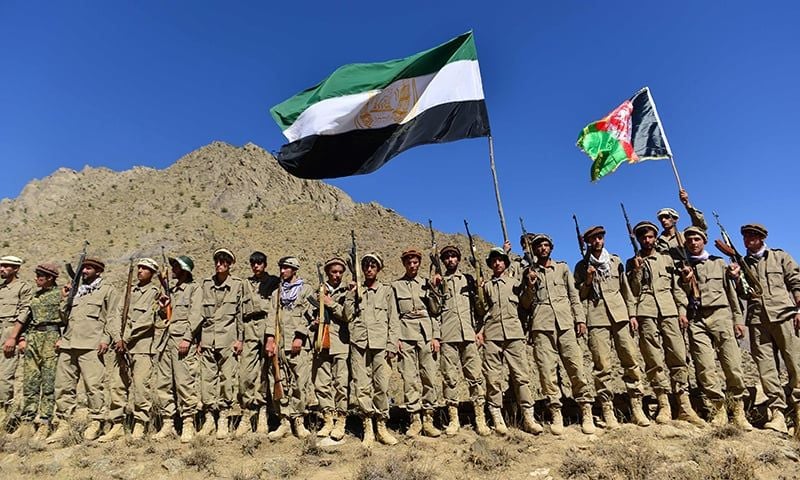
ISLAMABAD: Afghan resistance groups reported on Saturday to have inflicted significant losses on Taliban forces in northeastern Afghanistan, saying they destroyed a military convoy in Baghlan province and killed four senior Taliban commanders.
It is one of the most consequential anti-Taliban operations reported this year.
According to the Afghanistan Freedom Front (AFF), its fighters ambushed a Taliban reinforcement convoy in Doshi district of Baghlan after tracking its movement from Kabul through the strategic Salang corridor, a key route linking the Afghan capital with the country’s north.
The group said the convoy, which was carrying troops, weapons and military equipment to Badakhshan province, was destroyed in a rocket attack.
According to resistance forces, seven Taliban fighters were killed and six others wounded, adding that all resistance fighters involved in the operation withdrew safely.
In neighboring Badakhshan province, the AFF said resistance fighters killed four senior Taliban commanders during ongoing operations in Zibak district near the border with Tajikistan.
Those named by the group included district commander Mullah Shadab and border company commanders Maulvi Gul Ahmadi, Mullah Faridullah and Qari Umari Lazari.
The resistance group further stated to have overrun several Taliban checkpoints and captured strategically important high-ground positions around the Zibak border battalion headquarters.
The reported attacks come amid an apparent expansion of anti-Taliban activity across Afghanistan’s north and northeast.
Afghan resistance operations
Resistance groups, including the AFF and the National Resistance Front, have in recent months reported operations in Badakhshan, Baghlan, Takhar, Kunduz, Kapisa, Balkh, Herat, Panjshir and the Andarab valley.
Contrary to the Taliban claim of restoring nationwide security since returning to power in August 2021 following the withdrawal of US-led forces, armed opposition groups continue to stage periodic attacks, particularly in mountainous regions that have historically served as centres of resistance.
Latest operations follow earlier resistance attacks in Yaftali Sufla and elsewhere in Badakhshan, with the campaign now extending into Baghlan, Takhar, Kunduz, Kapisa, Balkh, Herat, Panjshir and Andarab, underscoring the widening geographic scope of armed opposition.
The resistance gains suggest that Badakhshan has emerged as a key flashpoint in Afghanistan’s evolving security landscape, highlighting the continued challenge faced by the Taliban nearly five years after regaining control of the country.