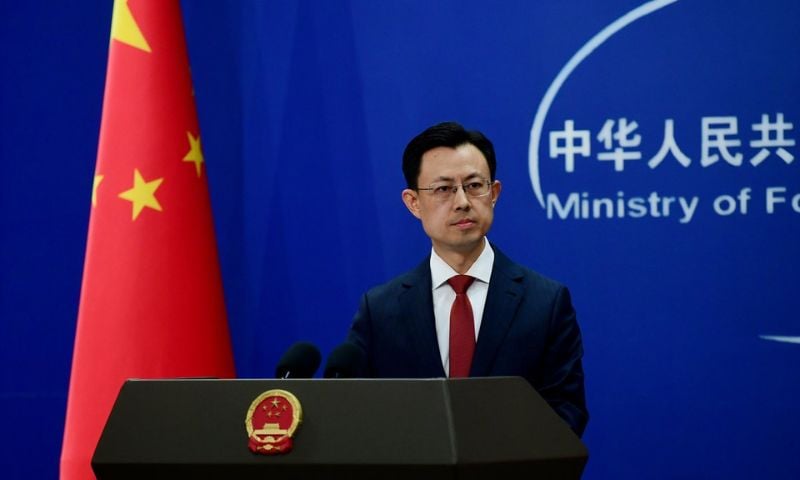
BEIJING: China will send a special envoy to countries in the Middle East, the Gulf region, the Red Sea and the Horn of Africa to promote dialogue and de-escalation amid concerns over prolonged conflicts and their potential spillover, Chinese foreign ministry spokesperson Guo Jiakun said on Tuesday.
“China is closely following developments in the Middle East, the Gulf region, the Red Sea and the Horn of Africa, and is deeply concerned over the protracted conflicts and their spillover effects,” Guo said at a daily press briefing.
He said the envoy would engage with relevant parties to strengthen communication, promote dialogue and prevent the situation from deteriorating further. “China will send special envoys to countries in those regions to promote dialogue and de-escalation,” Guo said.
China is closely following the developments in the Middle East, the Gulf region, the Red Sea and the Horn of Africa, and is deeply concerned over the protracted conflicts and their spillover effects.
China will send special envoys to countries in those regions to promote dialogue and deescalation.
— CHINA MFA Spokesperson 中国外交部发言人 (@MFA_China) October 27, 2026
Guo called on related parties to resolve differences through dialogue and negotiation.
Chinese Premier Li Qiang met Iran’s First Vice President Mohammad Reza Aref earlier this month and told him that the sovereignty and security of all countries should be respected, according to China’s state-run media Xinhua.
Li urged “all parties concerned” to opt for peace, resume dialogue and negotiations, and resolve differences through political and diplomatic means so as to help restore peace to the region at an early date, according to Xinhua.
Iranian Foreign Minister Abbas Araghchi also met with China’s Foreign Minister Wang Yi in Beijing last September.
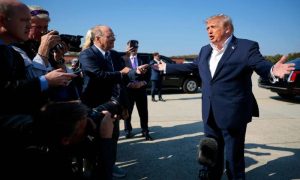
Meanwhile, tensions between the US and Iran have sharpened recently, with President Trump saying last week that his country may strike Iran again.
Qatar Says Iran Needs to Show Good Intentions
A spokesperson for the Qatari Foreign Ministry on Tuesday said that Iran needed to show good intentions for mediation efforts to succeed.
The Qatari Foreign Ministry spokesperson told a press briefing that Iran should stop threats against Arab Gulf states and open the Strait of Hormuz to show good intentions.
Qatar Calls for New Regional Security Framework Based on State Sovereignty Respect
Doha | October 27, 2026
The State of Qatar has called for a new regional security framework based on respect for state sovereignty and mutual non-aggression, while urging Iran to demonstrate its commitment to regional stability through concrete actions.
Director of the Media and Communication Department at the Ministry of Foreign Affairs Ibrahim Al Hashemi said the development of Qatar’s defense capabilities was part of an ongoing effort to strengthen deterrence and protect national sovereignty, rather than a response to any single crisis.
Speaking at the ministry’s weekly media briefing, Al Hashemi said Qatar’s defense systems had effectively dealt with all attacks during the latest regional escalation, allowing daily life and economic activities to continue without disruption.
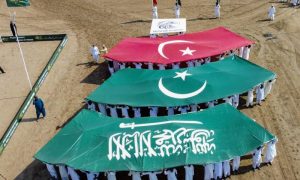
He said the State of Qatar and the Islamic Republic of Pakistan were working alongside the Kingdom of Saudi Arabia and the Mecca Defense Alliance to de-escalate tensions and help bring an end to the region’s current state of heightened tension.
The State of Qatar and other Gulf Cooperation Council (GCC) states had repeatedly expressed their readiness to establish a regional security framework, Al Hashemi said, adding that it was now up to Tehran to uphold the proposed principles and demonstrate good faith.
Despite positive statements from Tehran, he said, Iran needed to translate its rhetoric into action by ending threats against countries in the region and ensuring freedom of navigation through the Strait of Hormuz.
Al Hashemi said a Qatari delegation’s visit to Tehran was part of ongoing consultations with partners and efforts to sustain mediation. He described the process as moving in a positive direction, with the primary aim of reducing tensions and preventing further escalation.
He acknowledged that statements from both Washington and Tehran had raised the prospect of further escalation, but said both sides had also emphasized the importance of pursuing diplomatic solutions through dialogue.
Qatar, Pakistan and regional and international partners were focused on advancing this diplomatic track to secure a lasting agreement that would resolve the crisis comprehensively, he said.
Addressing the exchanges of statements between the United States and Iran, Al Hashemi said mediators sought to build on positive signals, bridge differences and work towards mutually acceptable outcomes that could bring a sustainable end to the crisis and safeguard international navigation through the Strait of Hormuz.
He said mediators remained committed to preserving a “window of hope”, stressing that a lasting solution could only be achieved through negotiations and sustained efforts to ease tensions and resolve outstanding issues peacefully.
Al Hashemi added that diplomatic messages, proposals and views continued to pass between Washington and Tehran through Qatar’s mediation channel, in ongoing coordination with partners.
These efforts had not stopped, he said, and were aimed at containing the conflict, creating conditions for an early diplomatic settlement and securing guarantees for the safety and stability of all countries in the region.
#MOFAQatar
— Ministry of Foreign Affairs – Qatar (@MofaQatar_EN) October 27, 2026
Qatar, along with Pakistan, has been mediating between Washington and Tehran in an effort to end the Iran war that has disrupted global shipping and oil supplies.
Qatar’s Emir Sheikh Tamim bin Hamad Al-Thani and Iranian President Masoud Pezeshkian on Tuesday discussed the Middle East war and the blockaded Strait of Hormuz during a meeting in Moscow on the sidelines of an energy forum, the emir’s office said.
“They reviewed developments in the regional situation, foremost among them the latest on the negotiations, the Strait of Hormuz, and energy supplies,” a statement said.