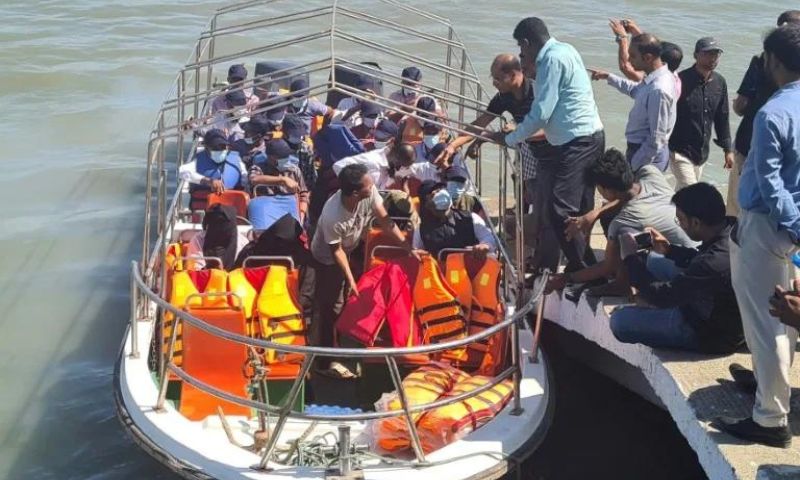
TEKNAF, Bangladesh: A Rohingya delegation left Bangladesh for Myanmar on Friday to check the new facilities created as part of a long-stalled effort to bring the persecuted minority back to their country of origin.
A million or so Rohingya live in Bangladesh, most of whom fled a military crackdown in Myanmar in 2017.
Later that year, both Bangladesh and Myanmar agreed to return the refugees, but little has changed since then, as the UN warned that the circumstances were not ideal for their return.
Bangladesh officials said that 20 Rohingya refugees and seven officials were visiting two model villages erected for refugees in Myanmar.
The delegation departed from Teknaf jetty for neighbouring Maungdaw township with 20 Rohingyas, including three women, Mohammed Khalid Hossain, Bangladesh’s deputy refugee commissioner told AFP.
He said that they will see the numerous facilities put in place for the purpose of safe repatriation to Myanmar.
Bangladesh refugee commissioner Mizanur Rahman told AFP that the new facilities included a market, a hospital and a reception centre for expected repatriations that may begin later this month.
Since the plan was made public in March, Rohingya refugees, who have spent nearly six years living in congested and filthy camps in Bangladesh, have regularly expressed scepticism about it.
They say that no one has responded to any of their questions regarding security or the acknowledgment of their right to citizenship in Myanmar.
Despite having roots in Myanmar dating back hundreds of years, the Rohingya are frequently seen as outsiders from Bangladesh.
‘Must be voluntary’
The journey was being made “under a bilateral arrangement between Bangladesh and Myanmar,” according to the UN agency for refugees, which confirmed that they were aware of it.
“UNHCR did not organise this visit,” Regina De La Portilla, a spokesperson for the agency, told AFP adding that every refugee has an unalienable right to return to their place of origin.
She said, “Refugee returns must be voluntary, safe and dignified. No refugee ought to be pressured to do this.:
Myanmar’s security forces are accused of raping, killing, and setting entire Rohingya communities on fire.
Because of worries that the Rohingya would not be secure if they returned, the repatriation plan agreed upon in 2017 has not advanced significantly in the later years.