
Key Points
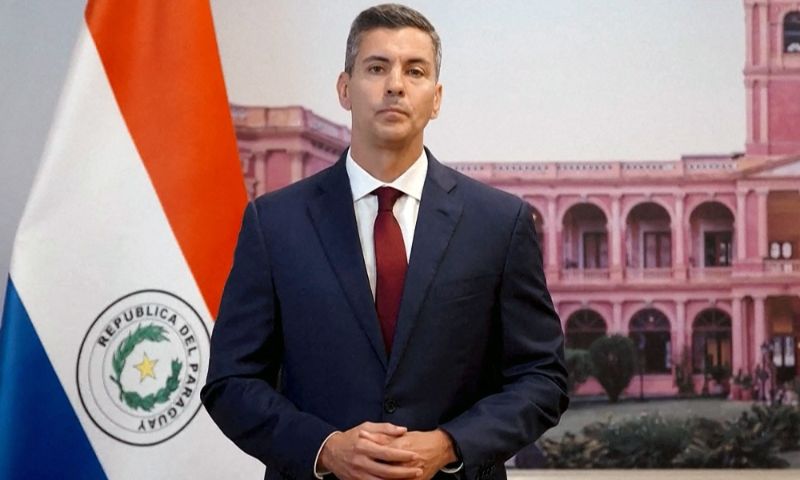
- President Santiago Peña announces his resignation after a major digital bank collapse
- The failure of Ueno Bank has disrupted access to deposits held by millions of customers
- Congress has to formally accept Peña’s resignation, leaving the country’s leadership transition uncertain
ASUNCION: Paraguayan President Santiago Peña has announced his resignation after a banking crisis that has shaken public confidence, triggered street protests and plunged the South American country into political uncertainty.
Peña announced his decision on Thursday, November 5, as the fallout from the collapse of Ueno Bank intensified.
The lender’s failure disrupted access to customer deposits and exposed questions about financial supervision, public funds and the bank’s political connections.
READ ALSO: Paraguay’s President Faces Impeachment Over Banking Scam
The President’s resignation, however, has not yet taken legal effect, as Congress has not formally approved his departure.
Vice President Pedro Alliana is expected to succeed the President.
Bank collapse sparks nationwide anger
The crisis centres on Ueno Bank, a rapidly expanding digital lender that served nearly three million customers in a country with a population of around 6.5 million.
Paraguay’s Central Bank intervened after identifying serious financial weaknesses, including questionable lending practices and inadequate capital.
An examination of the lender’s accounts found that its capital had fallen below half the legally required minimum.
The intervention disrupted access to customer accounts, savings and payment services, prompting protests by depositors demanding the return of their money.
The bank also held substantial public funds, including deposits belonging to state pension and health institutions, bringing government financial oversight under scrutiny.
Political connections compound crisis
The banking failure became a political scandal after questions emerged about Peña’s previous financial connections to Ueno’s parent company.
The president held shares in a company with the lender before selling his interest in 2025.
His relationship with the bank and the government’s handling of its financial difficulties became major points of public criticism.
Central Bank chief Carlos Carvallo also resigned following the intervention. Prosecutors opened investigations into alleged financial misconduct, questionable lending and the handling of public funds.
Several bank executives have faced criminal proceedings, further intensifying pressure on the government.
Uncertain transition
Peña’s resignation announcement has not immediately resolved the political crisis. Congress has yet to complete the formal process, while impeachment proceedings have added uncertainty to the transition.
Alliana would assume the presidency if Peña’s departure. However, the immediate priority remains restoring depositors’ access to their money and containing the financial fallout.
The crisis has raised questions about banking supervision, the protection of public deposits and the risks associated with the rapid expansion of digital financial institutions.