
Key Points
- Finance Minister Muhammad Aurangzeb says a rollover would ease pressure on upfront external payments
- Foreign exchange reserves of $21.5 billion suffice for 3 months of imports
- Pakistan plans to prefer international bond markets over a proposed $10 billion US liquidity facility
ISLAMABAD: Saudi Arabia has extended repayment of its $3 billion loan to Pakistan to cushion Islamabad’s $21.5 billion external financing requirements during the current fiscal year.
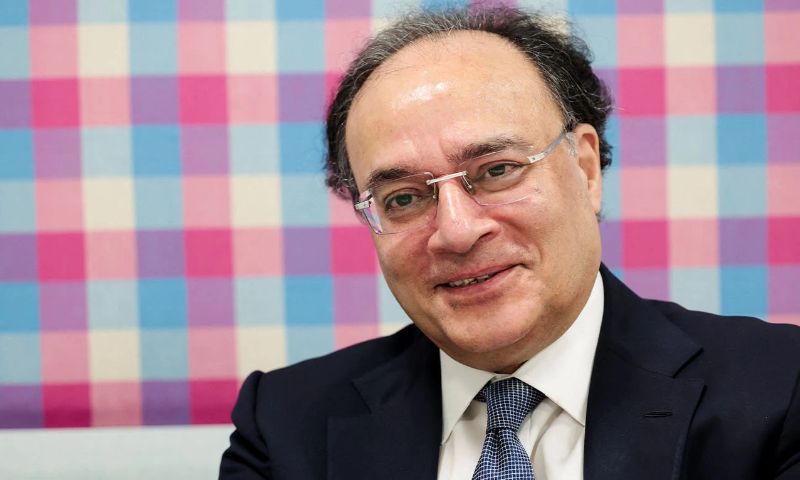
Finance Minister Muhammad Aurangzeb confirmed the extension, saying Riyadh had agreed to defer repayment for a “reasonable period”, although he did not disclose the new maturity date.
“It has been rolled over. You don’t need to worry. It has been extended for a reasonable period,” Aurangzeb told reporters at Parliament House after attending a meeting of the Senate Standing Committee on Finance.
The $3 billion facility matured in October, and the extension gave Pakistan breathing space as the government works to meet external debt obligations, maintain foreign exchange reserves and reduce dependence on short-term borrowing.
Aurangzeb said Pakistan’s external financial position remained comfortable even without the proposed $10 billion liquidity support facility from the United States.
“If the $10 billion liquidity support facility comes, fantastic. If it doesn’t come, we will, Insha’Allah, continue to work,” he said.
READ ALSO: Pakistan Finance Minister Urges Stronger ‘Moral Economy’ Through Corporate Philanthropy
The minister said Pakistan did not require additional financial assistance from Saudi Arabia at present, adding that the country’s foreign exchange reserves stood at approximately $21.5 billion, providing three months of import cover.
The government and the State Bank of Pakistan are working to increase import cover to four months by the end of the current fiscal year.
Alternative financing options
Aurangzeb said Pakistan requested the $10 billion US liquidity support facility in July as Islamabad was seeking to restore access to international capital markets.
Pakistan subsequently raised $3 billion through an international bond issuance in September, attracting orders worth $6 billion.
The government now plans to meet its external financing requirements through further Eurobond issuances, Panda bonds and dollar-settled rupee-linked bonds.
Aurangzeb said US financial institutions, including the Export-Import Bank of the United States and the Development Finance Corporation, could also support American exporters and investors operating in Pakistan.
He argued that financing for investment and commercial activities would provide more substantive economic support than a liquidity facility directed at the sovereign.
Saudi Arabia has provided Pakistan with $8 billion in short-term financing. The brotherly Islamic country has already rolled over $5 billion until December 2028.
Aurangzeb said the government was also working to avoid concentrating large debt repayments in any single fiscal year. New borrowing arrangements had been structured to spread repayment obligations over longer periods.
External debt repayments arranged
Separately, Finance Secretary Imdadullah Bosal briefed the Senate Standing Committee on Finance that Pakistan has made arrangements to meet its external debt repayment obligations during the current fiscal year.
The country’s external financing requirements stand at $21.5 billion, including $17.5 billion in principal repayments.
Of the principal, bilateral and commercial creditors are expected to roll over $10.5 billion, while net principal and interest payments will amount to about $11 billion.
Bosal said Pakistan had already repaid $5 billion during the first four months of the fiscal year.
He told the committee that the government’s debt management strategy focused on extending repayment maturities, reducing interest costs and bringing down the debt-to-GDP ratio.
Pakistan’s debt-to-GDP ratio has declined to 68 per cent from 75 per cent in 2023, while the annual rate of debt accumulation has slowed to 7.7 per cent from 28 per cent, according to the finance secretary.
He attributed the improvement partly to primary budget surpluses maintained over the past three consecutive years, which had helped contain additional borrowing.
Committee members, however, observed that exchange-rate stability had also played an important role in limiting the increase in the country’s debt burden.
Aurangzeb also said the International Monetary Fund’s executive board was tentatively scheduled to consider approving two loan tranches worth about $1.2 billion in December.