VISAKHAPATNAM: Ferocious winds and torrential rain battered India’s southeastern coast on Wednesday after Cyclone Arnab made landfall in Andhra Pradesh, prompting the evacuation of tens of thousands of people, although no deaths had initially been reported, according to officials.
The India Meteorological Department (IMD) classified the storm as a “very severe cyclonic storm”, reporting sustained wind speeds of 115–125 kilometres per hour, with gusts reaching 140 kph, in its update issued at 8.30 am local time.
Authorities warned of possible flash floods along the coast between Bapatla and Visakhapatnam, while emergency measures were intensified in vulnerable areas.
Around 50,000 people were directed to move to safer locations in Andhra Pradesh, while another 48,000 were evacuated in neighbouring Odisha state as the storm threatened coastal communities.
This is not Tsunami, this is Cyclone-India’s east coast is now getting battered by Cyclone Arnab! https://t.co/2elH2Lpxgj
— Ashok Swain (@ashoswai) October 27, 2026
Andhra Pradesh Chief Minister Nara Chandrababu Naidu said no deaths had been reported in the initial assessment. His office said he had praised government officials for working through the night and expressed satisfaction with the preventive measures taken to protect lives.
However, the scale of the evacuations and the threat of flooding underscored the vulnerability of coastal communities to increasingly severe weather events.
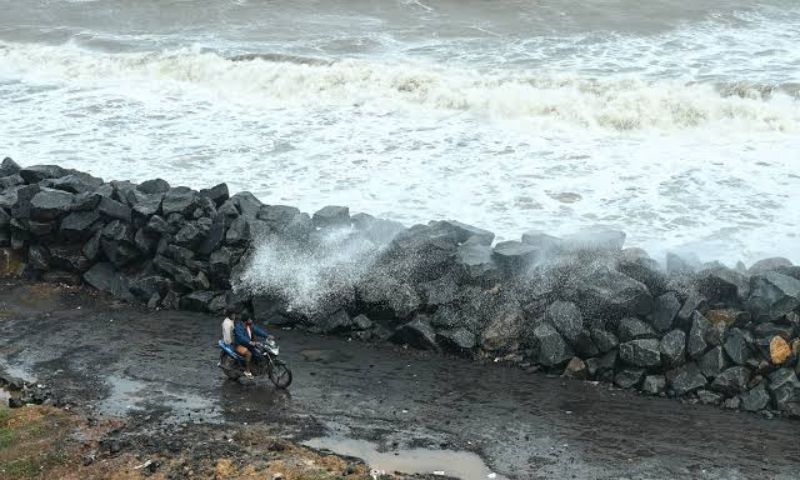
In Kakinada, a port city close to the storm’s path, strong winds brought down trees and heavy rain flooded streets overnight, while powerful waves battered the shoreline. Residents emerged at dawn to assess the damage, which appeared limited in some parts of the city.
“Thank God, there was not as much damage this time,” said Hussain, a 43-year-old businessman. He said the sea remained extremely rough, with fallen trees and damage to sheds and advertising hoardings. A two-day school holiday had also been announced, allowing people to remain indoors.
Rajeshwari, 65, who had been moved to a government-run shelter near Kakinada, described the difficulties faced by residents in flood-prone areas. “Our homes get flooded, and we have to stay in the water,” she said.
READ ALSO: Tens of Thousands Evacuated as Cyclone Arnab Nears India’s East Coast
Another resident, Sadiq, 40, said conditions had become “very dangerous” on Tuesday night, but early warnings had helped people prepare and seek safer locations.
The storm also prompted precautionary measures beyond India. Sri Lanka closed schools amid warnings of flash floods and mudslides, while Nepal’s disaster management authorities warned that the weather system could move inland towards the Himalayas, bringing heavy rainfall and increasing the risk of snowfall, snowstorms and avalanches.
Nepal is still recovering from a devastating flood on August 26, triggered by a glacial mountain collapse, which reportedly killed more than 1,400 people and left over 5,000 missing.
Cyclones are a recurring threat in the Bay of Bengal and the northern Indian Ocean, where coastal populations face risks from destructive winds, storm surges and flooding.
While the initial absence of reported deaths in Andhra Pradesh offered some relief, the full extent of the damage and the storm’s wider impact remained to be assessed.