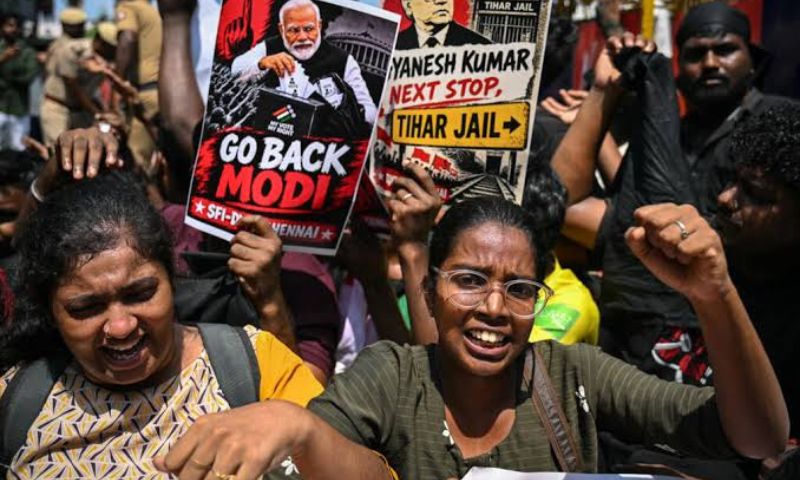
NEW DELHI: A controversial revision of India’s electoral rolls has fuelled protests by opposition parties and youth activists, bringing renewed scrutiny to election procedures, public institutions and Prime Minister Narendra Modi’s government.
The revision, known as the Special Intensive Revision (SIR), has removed more than 130 million names from voter lists since the exercise began last year, according to figures cited by Indian media.
The Election Commission says the process is intended to remove deceased, duplicate and ineligible entries. Opposition parties and campaigners, however, say eligible voters have also been excluded to benefit Modi’s ruling Bharatiya Janata Party (BJP).
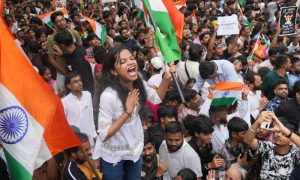
The dispute has brought opposition politicians together with the youth-led Cockroach Janta Party (CJP), a movement that previously mobilised students over examination-paper leaks.
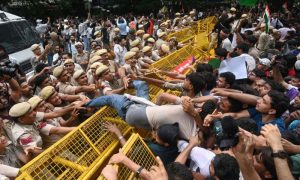
Protesters are demanding the resignation of Chief Election Commissioner Gyanesh Kumar and changes to the electoral revision process.
The demonstrations have also raised concerns about the authorities’ response. Police detained thousands of people during protests in New Delhi, while restrictions, internet disruptions and the closure of protest sites drew criticism from rights groups and United Nations experts.
The dispute comes amid wider youth frustration over unemployment, access to economic opportunities and the accountability of public institutions. With several important state elections scheduled for 2027, the controversy presents a test of public confidence in India’s electoral system.
Controversy over Voter Registration
The SIR is a large-scale exercise to verify and update electoral rolls across India.
Approximately 130 million names have been removed from voter lists.
Critics argue that the scale and pace of the exercise risk excluding eligible citizens, particularly people who lack documentation or have difficulty navigating administrative procedures. Opposition parties have also alleged that the removals disproportionately affect Muslims and other communities.
The allegations have intensified scrutiny of the Election Commission’s independence and the safeguards available to voters who challenge their exclusion.
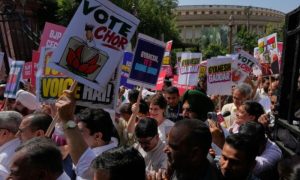
West Bengal became a major focus of the controversy ahead of its April 2026 assembly elections. Approximately 9.1 million names were removed from the state’s electoral rolls, according to election-monitoring organisations.
The deletions included about 2.7 million voters. More than 80 percent of those affected appealed, but only 1,607 were reinstated in time to vote.
The figures have prompted questions about the initial screening process and whether appeals could be resolved quickly enough to protect voting rights before polling.
The BJP won West Bengal’s assembly election in 2026 after previously failing to secure a majority in the state legislature. Opposition figures have questioned whether the voter-roll revision affected the political outcome.
Youth Movement Widens the Protests
The electoral dispute has attracted support from young people whose grievances extend beyond voter registration. Concerns over employment, education and public accountability have helped the CJP build a following among students and other young activists.
The movement first gained prominence through protests over examination-paper leaks. Those demonstrations ended with the resignation of Education Minister Dharmendra Pradhan in July.
A subsequent leak involving a medical entrance examination and the cancellation of the test also prompted student protests.
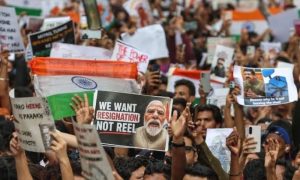
The movement has framed its campaign around demands for accountability and greater responsiveness from public institutions. Its supporters have since joined opposition parties in challenging the electoral revision and calling for Kumar to resign.
Youth unemployment remains a central concern. For many young demonstrators, the voter-roll controversy has become part of a wider debate about whether public institutions are transparent, fair and accountable.
Earlier this month, opposition parties and the CJP organised separate but parallel campaigns demanding Kumar’s resignation and the reversal of the SIR process. Demonstrations spread across several cities.
On October 12, opposition supporters marched to India’s Supreme Court in New Delhi to challenge the voter-list changes. Authorities closed metro stations and restricted traffic ahead of the demonstration.
Police Crackdown Draws Criticism
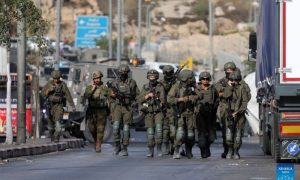
Indian police detained thousands of demonstrators, opposition politicians and student activists during a crackdown in New Delhi in October, according to the Associated Press. Police also established checkpoints, erected barricades, restricted mobile internet access and detained journalists.
The authorities removed Jantar Mantar, a prominent protest site in the capital, from the list of authorised demonstration venues on October 12. The decision prompted criticism because the location has long been used for political demonstrations near the seat of government.
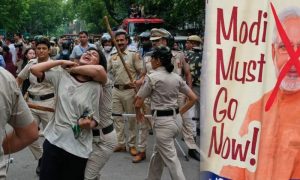
Two CJP leaders, Saurav Das and Ashutosh Ranka, were released from judicial custody on October 21, a week after their arrest.
United Nations independent experts have urged India to stop the use of excessive force against demonstrators and called for an impartial investigation into abuses.
In a statement on October 20, the experts cited reports of baton charges, ill-treatment, restrictions on peaceful assembly, digital surveillance and internet disruptions.
The protests pose a challenge to the BJP-led government as it prepares for state assembly elections in 2027. Uttar Pradesh, India’s most populous state, has 403 assembly seats. Punjab has 117, while Gujarat, Modi’s home state, has 182.
The elections will provide an important test of the political environment.