MUMBAI: An Indian court on Tuesday suspended until November 2 a notice directing US-born actor Imran Khan to leave the country by October 28, after he challenged the order issued following his participation in a protest against electoral manipulation.
The Bombay High Court said the notice issued by the Foreigners Regional Registration Office (FRRO) would remain in abeyance until the next hearing. Additional Solicitor General Anil Singh gave an oral assurance that no coercive action would be taken against Khan in the meantime.
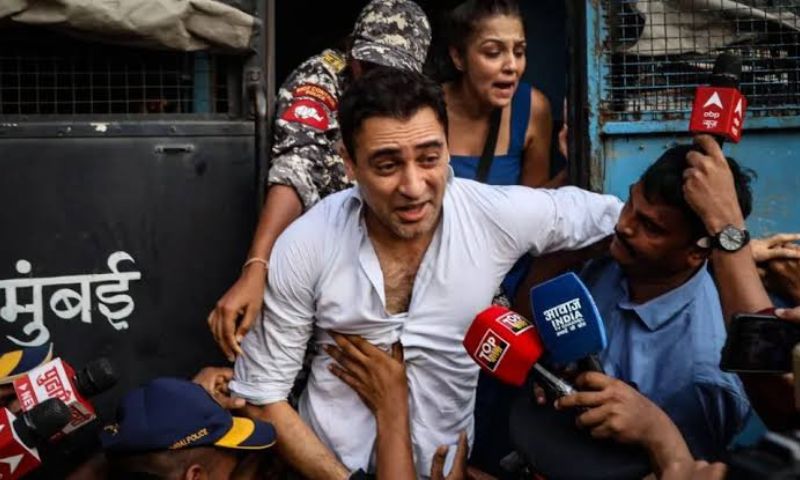
The 43-year-old actor, who was detained during a demonstration in Mumbai on October 10, has challenged the authorities’ action. The protest was held in solidarity with a wider agitation demanding the resignation of Chief Election Commissioner Gyanesh Kumar over the revision of electoral rolls.
Imran Khan Gets Relief From Court!
An Indian court allowed Bollywood actor Imran Khan to remain in the country until at least November 2.
#ImranKhan #Bollywood #BollywoodNews #BombayHighCourt #IndiaNews #CourtCase #DeportationOrder #Mumbai #AamirKhan #IndianCinema #Express247 https://t.co/4m7LAsi5qc
— Express 24/7 (@Express247PK) October 27, 2026
In his petition, actor Imran Khan sought the quashing of the notice and asked the court to restrain the authorities from taking coercive steps while his case was pending.
The petition described the notice as “illegal, arbitrary, perverse and drastic”. It alleged that the action reflected a failure to apply the law properly and the arbitrary targeting of Khan because of his public profile.
Khan also challenged a show-cause notice from the FRRO seeking an explanation as to why his Overseas Citizen of India (OCI) status should not be revoked.
The notice directed Khan to leave India on or before October 28 and warned that deportation proceedings could follow if he failed to comply.
The actor, who is the nephew of Bollywood star Aamir Khan, has appeared in several Hindi-language films. He was briefly detained during the October 10 demonstration at Mumbai’s August Kranti Maidan.
Protests Against Electoral Manipulation
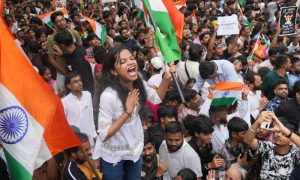
Khan’s legal challenge comes amid protests against India’s Special Intensive Revision (SIR) of electoral rolls, which opposition parties and student movements say has excluded millions of eligible voters.
The Election Commission announced the revision exercise in 2025 ahead of state elections. Under the process, voters were required to establish their eligibility by submitting documents from an approved list.
Critics have questioned the requirement for already registered voters to prove their eligibility again on such a large scale. They argue that the documentation rules risk excluding people who lack access to official records or face difficulties navigating administrative procedures.
The exclusion of 130 million voters has raised concerns among opposition parties and civil society groups over access to the right to vote.
West Bengal has emerged as a major focus of the controversy. Around nine million people, or approximately 12 percent of the electorate, were reportedly excluded from the rolls there.
The process disproportionately affects vulnerable communities and religious minorities, particularly Muslims.
Youth-Led Movement Challenges PM Modi
The electoral dispute has brought together opposition politicians, lawyers, journalists and young people concerned about unemployment and government accountability.
The Cockroach Janta Party (CJP), a youth-led group that has become involved in the protests, has demanded Kumar’s resignation and the reversal of the electoral revision.
Its founder, Abhijeet Dipke, 31, told The Observer that the movement retained public support despite a crackdown on demonstrators.
“The last few days have been really difficult for us,” Dipke said. “But we still have the crowds, we still have the support of the people.”
The cockroach movement emerged after an Indian judge referred to unemployed young people as “cockroaches”. It has since become a prominent voice in youth-led protests against the government.
Dipke said the movement would continue to challenge Prime Minister Narendra Modi’s government. He has been arrested twice and remains under surveillance. Two of his associates, Saurav Das and Ashutosh Ranka, were jailed for a week, Dipke said.
“That is the spirit of India’s Gen Z, too,” he said. “We are not afraid of questioning the government.”
Crackdown Against Protesters
According to Indian media reports, police beat protesters and arrested journalists during demonstrations in New Delhi. Some journalists were reportedly dragged away by their hair.
The report said more than 20,000 police and paramilitary personnel were deployed in the capital on October 13 ahead of a planned demonstration at Jantar Mantar, a traditional protest site. The city centre was barricaded and internet access was suspended, it said.
More than 7,000 people, including opposition leaders, lawyers and journalists, were detained by evening. Thousands nevertheless turned out to protest, demanding Kumar’s resignation and the reversal of the SIR process.
The Bharatiya Janata Party (BJP), led by Modi, has won successive general elections and become India’s dominant national political force. Its critics argue that electoral victories do not remove the government’s responsibility to protect democratic institutions and the rights of its opponents.